
Short answer: A gutter repair cost calculator is an online tool that turns a few facts about your home into a price range for fixing, replacing, or installing gutters. You enter linear feet, number of stories, material, and the type of work, and it applies typical per-foot rates to those inputs. The result is an estimate, not a quote. The best tools show a low, an average, and a high figure, so you see the spread instead of a single number. Ready for quotes? Compare local pros →
In this guide
That spread matters because gutter pricing confuses first-time buyers. A leaking seam, a sagging section, and a full replacement can sit hundreds or thousands of dollars apart, and few contractors explain why. At Guardian Gutter Guide we publish cost guides and run our own cost estimator, so we know where these tools help and where they mislead.
This article covers why a calculator is worth using, how to feed it accurate inputs, what per-foot prices look like for repair, replacement, and installation, which costs the output leaves out, and how to turn the estimate into a fair quote.
Why a gutter repair cost calculator is worth using
A calculator is worth using because it gives you a price benchmark before anyone with a stake in the sale gives you one. For work you may buy once a decade, that benchmark is the difference between negotiating and guessing.
It shows you what a normal price looks like
Most homeowners call a contractor with no number in mind. The first quote then becomes the anchor, fair or not. Running a calculator first gives you a realistic range for your home’s size and material, so a quote far outside it prompts a question instead of a signature. It also helps you notice when a per-foot price is padded, or when a bid is low enough to suggest cut corners on materials or insurance.
A price range in your head before the first phone call is the cheapest negotiating tool you have.
It settles the repair-or-replace question
Price the same gutters both ways. Run the calculator for a repair, then for full replacement of the same footage. If the repair quote climbs past roughly half the replacement estimate, or the problems show up on several sides of the house, replacement usually wins. You pay for the ladder and the labor either way, and new gutters reset the clock.
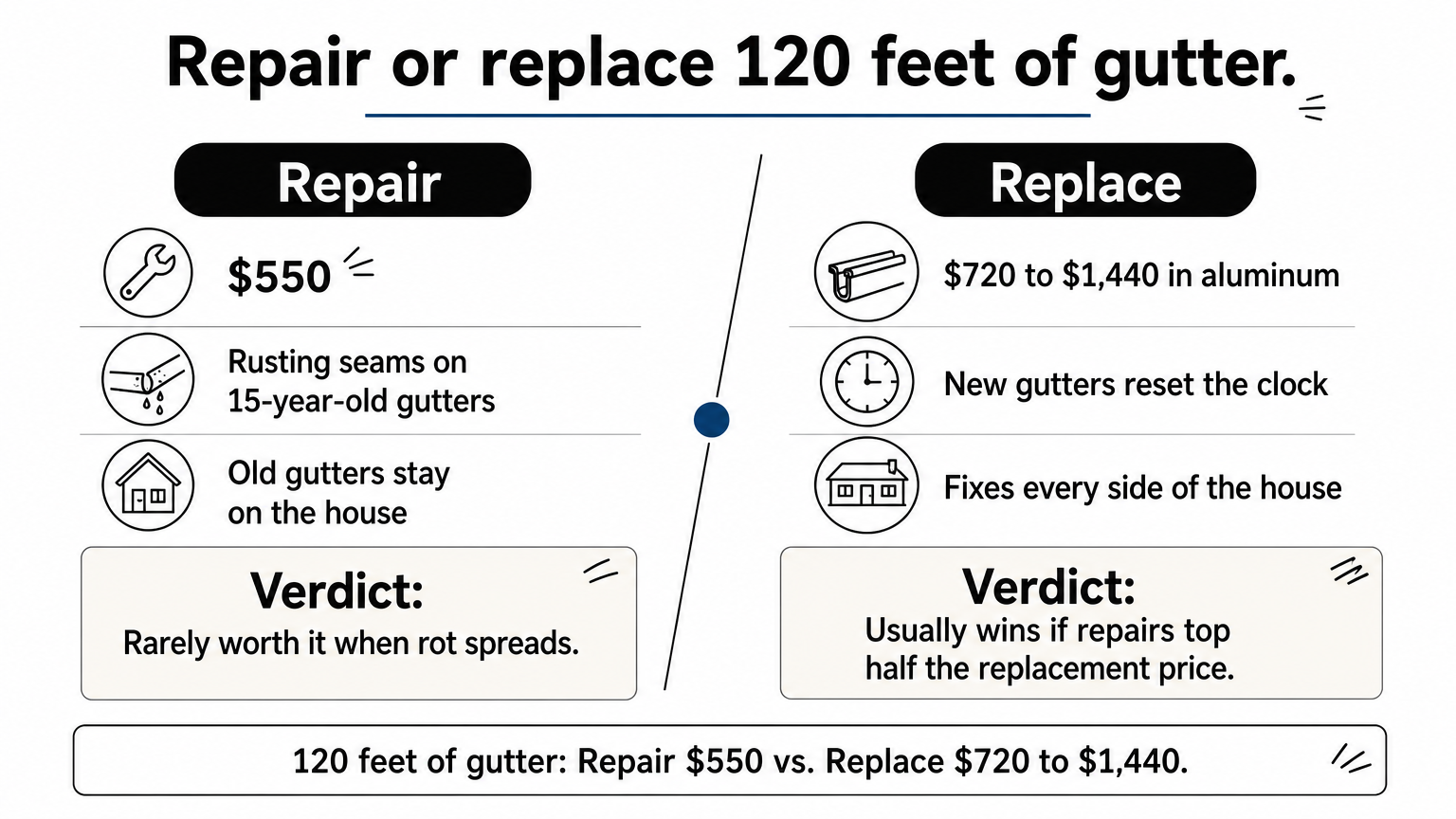
Here is an example. Replacing 120 feet of aluminum gutter runs about $720 to $1,440 at the benchmarks below. A $550 repair on 15-year-old gutters that are rusting at the seams buys you very little for that money.
What it cannot do
A calculator cannot climb a ladder. It does not see rotted fascia, a pitch that sends water the wrong way, or hangers that pulled out of soft wood. It also does not know your local labor market. Treat the output as a budgeting range that tells you whether a quote is plausible. It is not a price you can hold a contractor to.
What should this cost you?
Answer four questions and get a fair price range for your home.
How to use a gutter cost calculator step by step
To use a gutter cost calculator well, collect six inputs before you start and run it more than once. Garbage in, garbage out applies here. A 20-foot measuring error moves the answer more than any other setting.
Gather the inputs
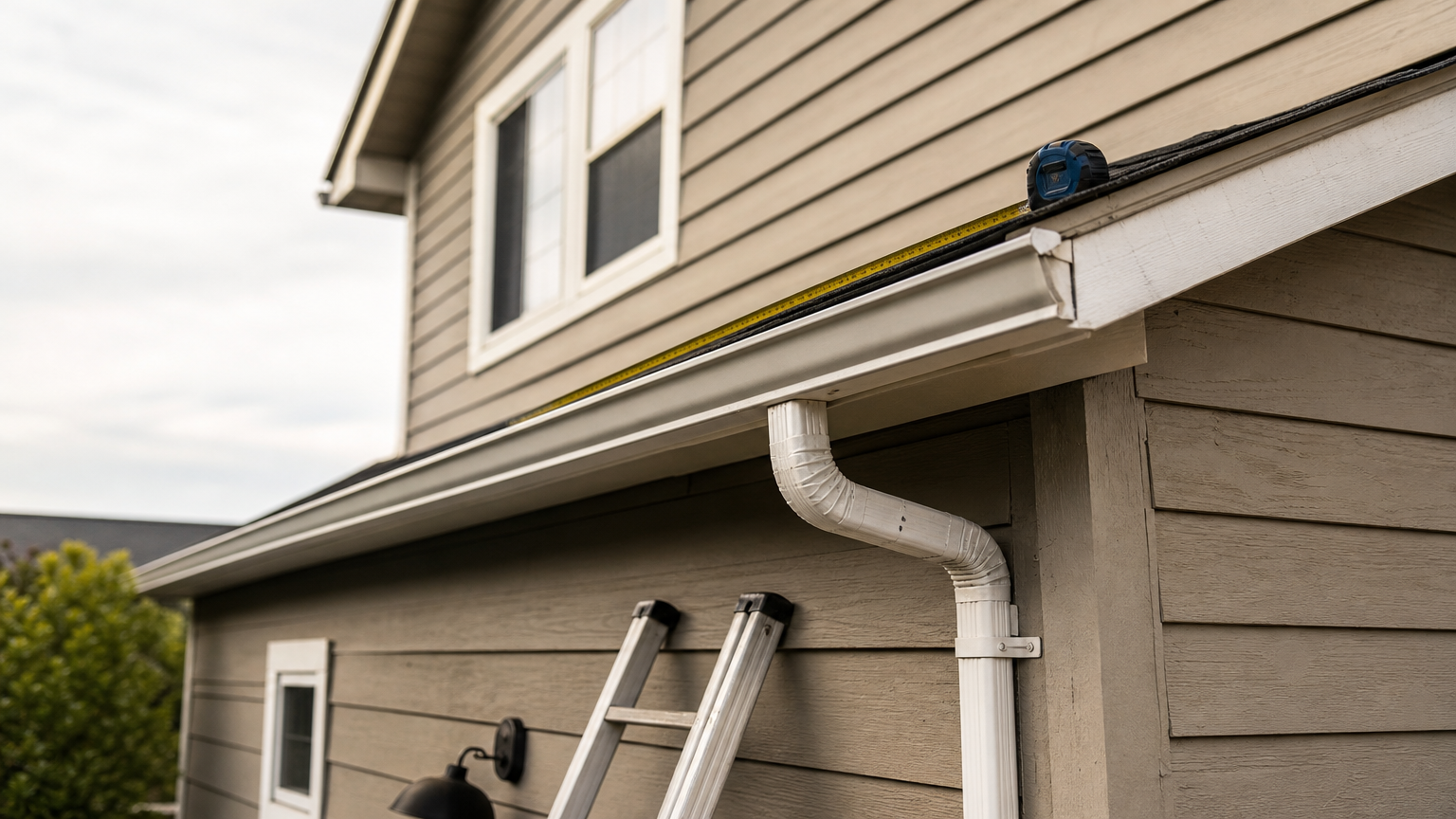
- Linear feet of gutter. Measure every roof edge that carries a gutter. Do not measure the whole house perimeter unless gutters run on every side.
- Stories. Taller homes need longer ladders or scaffolding, which raises labor.
- Downspouts. Count them. Allow roughly 10 feet of downspout per story.
- Material. Vinyl, aluminum, galvanized steel, or copper.
- Scope. Repair, replacement, new installation, and whether you want guards.
- Condition and region. Heavy debris, damaged fascia, and your part of the country all shift the range.
Here is a measuring example. A house with a 40 by 30 foot footprint and a gable roof usually has gutters only on the two 40-foot eaves, so you enter 80 feet. A hip roof of the same size has eaves on all four sides, so you enter 140 feet. At $6 to $12 per foot for aluminum, that is $480 to $960 versus $840 to $1,680. Getting the roof shape right matters more than which button you click.
Run it at least three times
Run the calculator once for your preferred material, once for the next cheaper option, and once for the next more durable one. You are not looking for the "right" number. You are looking for how much each upgrade costs on your footage. Then run repair and replacement scenarios side by side, as described above, so the decision rests on your own figures.
Read the output as a range
Use the low figure as a floor, not a target. Use the high figure as a warning level. Our own estimator takes project type, home size, linear feet, stories, guard type, material, debris level, and region, and returns a low, a national average, and a high number. Those figures come from written quotes homeowners share, published installer rate sheets, and material pricing at national home improvement retailers. We review the cost guides every six months, and again whenever material prices move by more than ten percent.
Enter your real footage, run three scenarios, and read the result as a range instead of a price.
Gutter repair and replacement cost per foot
Gutter pricing is mostly per linear foot, and installed prices for common materials run from about $5 to $40 or more per foot. Repairs are usually billed by the job. The table below applies per-foot figures to a 120-foot run, a realistic length for many mid-size homes.
Installed price by material
| Material | Installed cost per linear foot | Total for 120 feet |
|---|---|---|
| Vinyl | $5 to $10 | $600 to $1,200 |
| Aluminum | $6 to $12 | $720 to $1,440 |
| Galvanized steel | $9 to $18 | $1,080 to $2,160 |
| Copper | $20 to $40 or more | $2,400 to $4,800 or more |
Other published national ranges for basic installation run a little higher, about $10.41 to $15.77 per foot, which works out to roughly $1,249 to $1,892 for 120 feet. The gap is normal. Sources count different things, such as downspouts, old gutter removal, and seamless fabrication on site. Whole-house averages also vary widely, with typical totals from about $1,000 to $10,000 depending on size and material, and a common midrange of roughly $2,800 to $5,200. Always ask whether a per-foot price includes downspouts and haul-away.
For a 120-foot run, expect roughly $720 to $1,440 for aluminum and $1,250 to $1,900 under a broader national installation range.
What repairs and tune-ups cost
Gutter repair costs rarely follow a clean per-foot formula. Re-hanging a sagging section, resealing a seam, swapping a downspout, or replacing a few hangers is typically priced per job, often in the low hundreds of dollars. Many companies also set a minimum service charge, so a ten-minute fix can cost about as much as an hour of work.
A basic tune-up, meaning cleaning plus minor adjustments, has a published national range of about $1.65 to $2.03 per linear foot. On 120 feet, that is $198 to $244. If a company quotes far more for a simple tune-up, ask what else is in the price.
A worked example
Take a two-story home with 120 feet of 5-inch aluminum gutter. Replacement runs about $720 to $1,440 before extras. A contractor offers to repair the worst two sections for $550. The sections are 20 feet each, so you are paying to fix a third of the run at about 38% to 76% of the replacement price. The rest of the gutters stay old. In that case, price the full replacement before you decide.
What a calculator leaves out of your estimate
Calculators leave out the costs that depend on what is hidden behind your gutters and on your local market. The output usually covers materials and basic labor. Real quotes include more.
Costs that rarely appear in the output
| Often missing | Why it matters |
|---|---|
| Removal and disposal of old gutters | Some quotes bundle it, others charge extra |
| Fascia or soffit repair | Rot found after removal must be fixed before new gutters hang |
| Downspout extensions and splash blocks | They move water away from the foundation |
| Gutter guards | Priced separately, per foot |
| Sales tax and permits | Permits are uncommon for gutters alone, but ask |
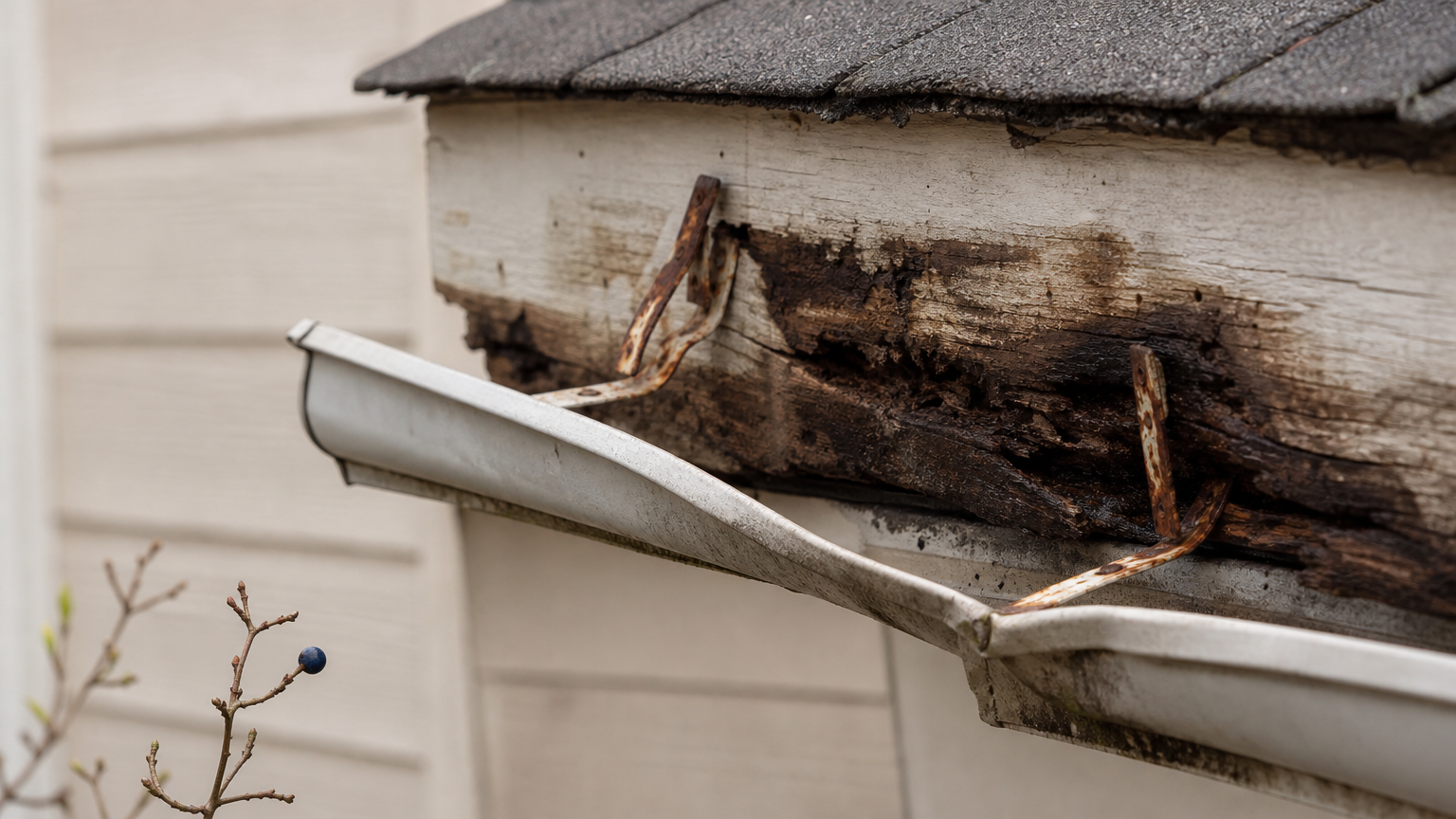
Fascia damage is the one that surprises people most. Gutters that have overflowed for years often soak the board behind them. A contractor cannot hang new gutters on soft wood, so the repair comes first. Ask for the fascia repair price as a separate line, so you can compare it against other bids.
Factors that move your price
Several variables shift the per-foot rate. Stories and access come first, since a third-floor eave needs scaffolding. A complex roofline with many corners needs extra fittings and labor at each one. Seamless gutters, formed on site, cost more than sectional gutters but have fewer joints that can leak. A 6-inch gutter costs more than a 5-inch one. Local labor rates and the season also matter, since fall is the busy time for many gutter companies.
The more corners, stories, and rotted wood your house has, the further your real quote will sit above the calculator.
Does insurance cover gutter work?
Homeowners insurance generally covers sudden, accidental damage from a covered event, such as a tree falling on the gutters or a storm. It generally does not cover wear, rust, clogs, or damage from neglect. Even when a claim qualifies, your deductible may be larger than a small repair, so a claim often makes sense only for major storm damage. Read your policy and call your insurer before you hire anyone.
How to turn an estimate into a fair quote
You turn an estimate into a fair quote by collecting itemized written bids and checking each against your calculator range. The calculator tells you where to look. The bids tell you what you will actually pay.
Collect three itemized quotes
Ask for at least three written quotes, and make sure each lists the same things:
- Material type, gauge or thickness, and gutter size
- Linear feet of gutter and number of downspouts
- Removal and disposal of old gutters
- Fascia or other repair, listed as separate lines
- Labor, warranty terms, and the start and finish timeline
Quotes that follow the same format let you compare apples to apples. A bid that is just one number gives you nothing to negotiate.
Check each bid against your range
A quote inside your calculator range deserves a normal follow-up. A quote well above it should come with a reason, such as steep access or rotted fascia. A quote well below it is a warning. It may mean thinner material, no liability insurance, or extras added later. Ask to see proof of insurance before work begins, and check licensing requirements in your state, since they vary.
Decide what to do yourself
Small jobs are reasonable DIY projects if you are comfortable on a ladder: re-securing a loose hanger, resealing a seam with gutter sealant, or clearing a clogged downspout. Anything on a second story, anything involving fascia, and any full replacement is better left to a pro. A fall costs more than any installer’s labor.
Guardian Gutter Guide is not a contractor, and we cannot diagnose gutters from a photo or recommend a specific company. Marcus Delaney, a former gutter installer with 12 years of experience, writes our guides. Dana Whitfield, a residential home inspector with 9 years of experience, reviews them. The method above is what they would tell a friend.
Use the number, then verify it
A gutter repair cost calculator is a planning tool. Measure carefully, run a few scenarios, and compare repair against replacement on your own footage. Then remember what the number leaves out: fascia, removal, downspouts, and your local labor rates. Treat the range as the yardstick for every bid you receive.
When you are ready to see real prices, request a free gutter repair estimate. We may earn a referral fee when you connect with a pro through our links. Referral fees do not change our price ranges, our product recommendations or which problems we tell you to fix yourself.
What should this cost you?
Answer four questions and get a fair price range for your home.