
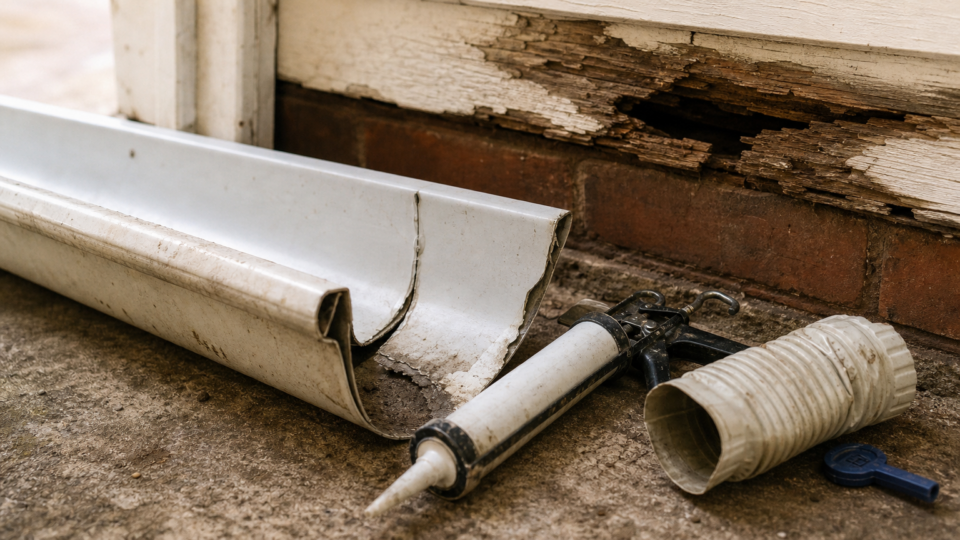
Short answer: Most gutters leaking into house problems come from one of five causes: failed seams, clogs, sagging runs, loose hangers with rotting fascia, or a roof edge that sheds water behind the gutter. Seams and clogs are the best DIY jobs, often under $20 in supplies. Sag, fascia damage, and roof-edge problems usually call for a pro, especially above the first story. Ready for quotes? Compare local pros →
In this guide
The hard part is that water stains on a wall, a wet basement corner, or a dripping soffit can come from the gutter or the roof, and the fix is different for each. A 15-minute hose test, described under item 5, separates the two. Guardian Gutter Guide is not a contractor, so nothing here is a sales pitch. It is the same checklist a gutter installer would run through.
Each item below shows how to spot the cause, how to fix it, and what it costs. Prices are national ballparks, and real quotes vary with roof access, home height, and local labor rates.
1. Leaking seams and end caps
Seams and end caps are the most common leak points because sealant dries out and metal moves with the weather. If water drips from the bottom of the gutter during rain, start here.
How to spot it
Watch the gutter during steady rain. Drips from a joint or corner point to a failed seam. Check dry days too for these signs:
- Wet streaks or staining on the fascia below a joint
- Cracked, peeling, or missing sealant
- Rust pinholes along the bottom of the trough
- A visible gap at an end cap or inside corner
How to fix it
Work on a dry day, with the ladder on level ground.
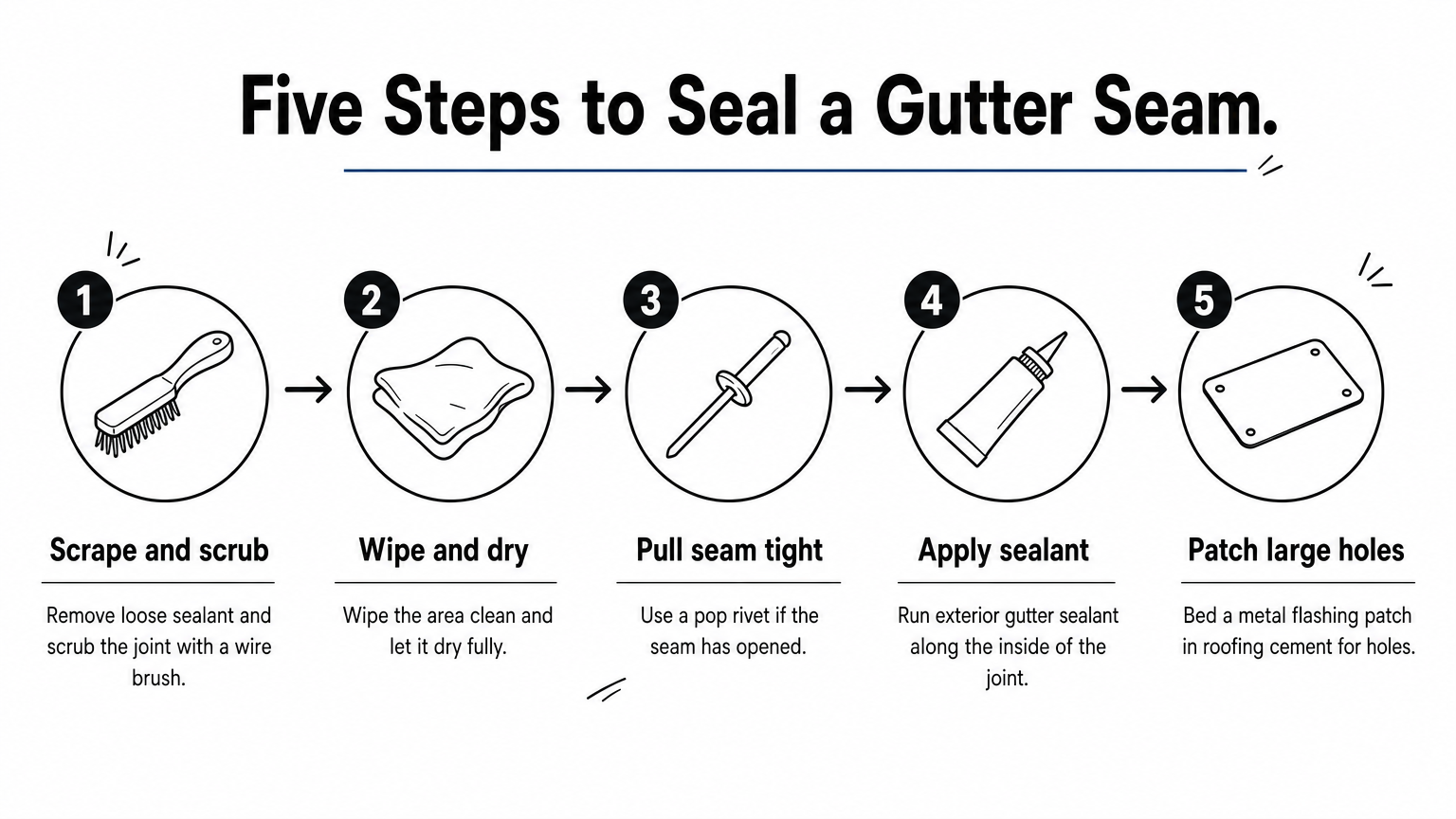
- Scrape off loose sealant and scrub the area with a wire brush.
- Wipe it clean and let it dry fully.
- If the seam has opened, pull it tight with a pop rivet first.
- Apply exterior gutter sealant or silicone along the inside of the joint.
- For a hole bigger than a nail hole, bed a flashing patch of the same metal in roofing cement and feather the edges so water flows smoothly.
Sealant only sticks to clean, dry metal, so the prep matters more than the product.
What it costs
A tube of gutter sealant runs roughly $6 to $15, and a few seams take under an hour. The gutter repair cost for a pro visit covering several seams commonly lands in the low hundreds of dollars. If seams are failing along the whole run, replacement may beat repeated patching.
What should this cost you?
Answer four questions and get a fair price range for your home.
2. Clogs and downspouts that dump at the foundation
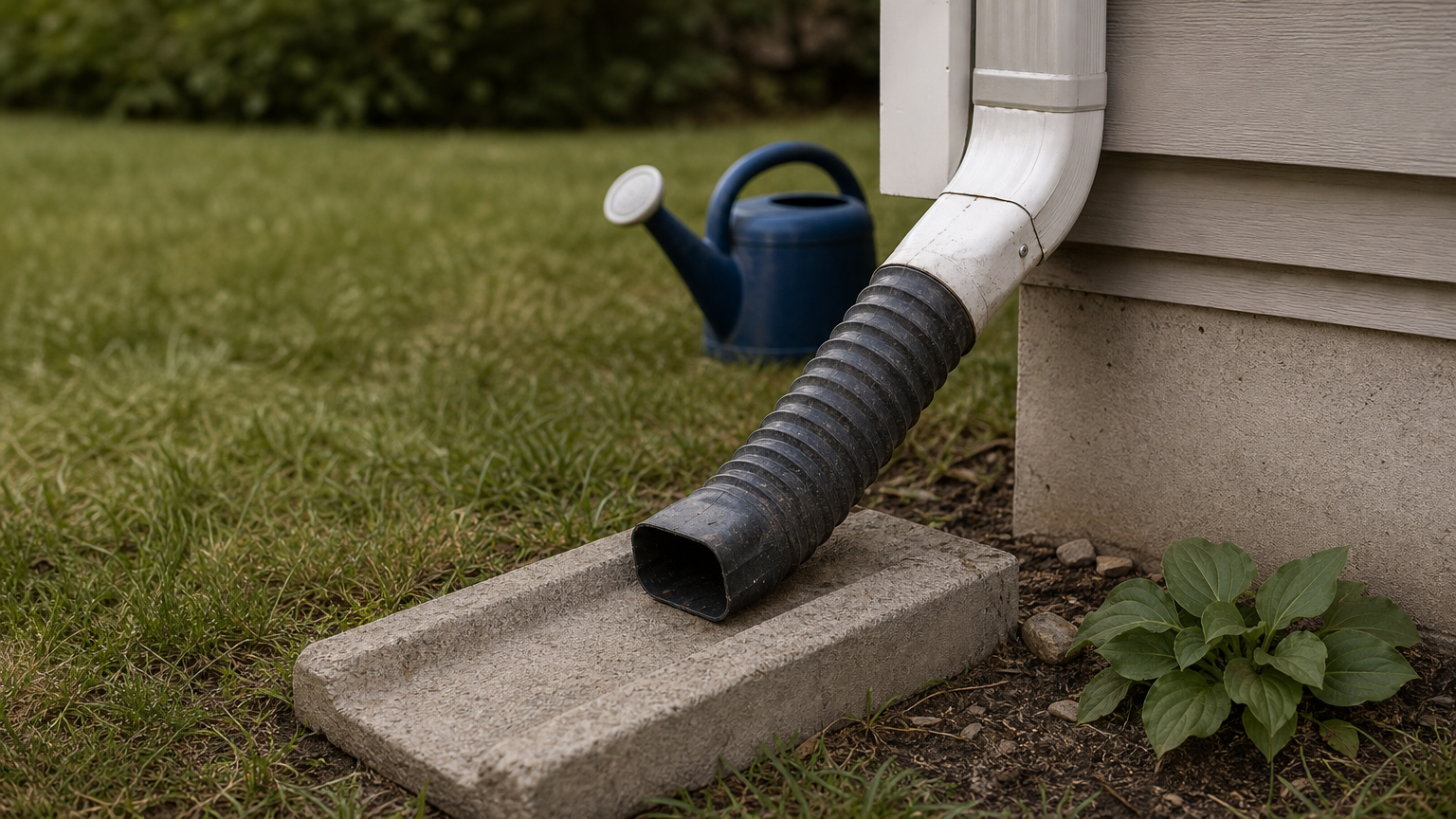
Clogged gutters overflow over the front edge, and the water runs down the siding or soaks the ground at the foundation. Short or disconnected downspouts cause the same wet-wall result.
How to spot it
Overflow in a moderate rain means a clog. In a true downpour, even clean gutters can exceed their capacity, so a little spill then is not alarming. Water standing in the trough for days or nothing coming out of the downspout points to a blockage. Dripping when it has not rained is usually trapped water draining slowly from a partial clog. Also look for pooling or soggy soil next to the foundation under each downspout.
How to fix it
Scoop out debris by hand, then flush the trough and downspout with a hose. If the water backs up, the clog is in the elbow or downspout. Add an extension so water lands at least 4 to 6 feet from the foundation, and slope the soil away from the wall. Clean at least twice a year, and more if trees overhang the roof.
A clean gutter that dumps water at your foundation still leaks into your house, just from underneath.
What it costs
DIY cleaning costs only your time and a ladder. A downspout extension is about $10 to $25 at a home center. Pro cleaning prices depend on home size and stories, so get a quote before you assume a number.
3. Sagging gutters and the wrong slope
A gutter must fall toward the downspout. When it sags, water sits in the low spot, spills over the edge, and soaks the wall below.
How to spot it
After rain, look for standing water or a visible dip in the run. Lay a level in the trough to check the pitch. A properly hung gutter drops about a quarter inch for every 10 feet. Overflow at one spot on an otherwise clean gutter is the classic sign.
How to fix it
Clear the debris first, since a heavy load of wet leaves is often what bent the run. Then replace worn or missing hangers and add more where the gaps are wide. Re-hang the sagging section to the correct pitch. A bent section can sometimes be reshaped by hand, but a badly kinked run needs replacing.
Water weight sags gutters, and sagging gutters hold more water, so the problem feeds itself.
What it costs
Hangers cost a few dollars each, so a first-story fix is cheap. Re-hanging a long or upper-story run is better left to a pro, and the price depends on length and height. If the whole system is bent and rusted, ask about replacement before paying for repeated re-hangs.
4. Loose hangers and rotting fascia
When gutters pull away from the house, water runs behind them and into the fascia, soffit, and sometimes the wall. This is the cause behind many "leaking between the gutter and the house" complaints.
How to spot it
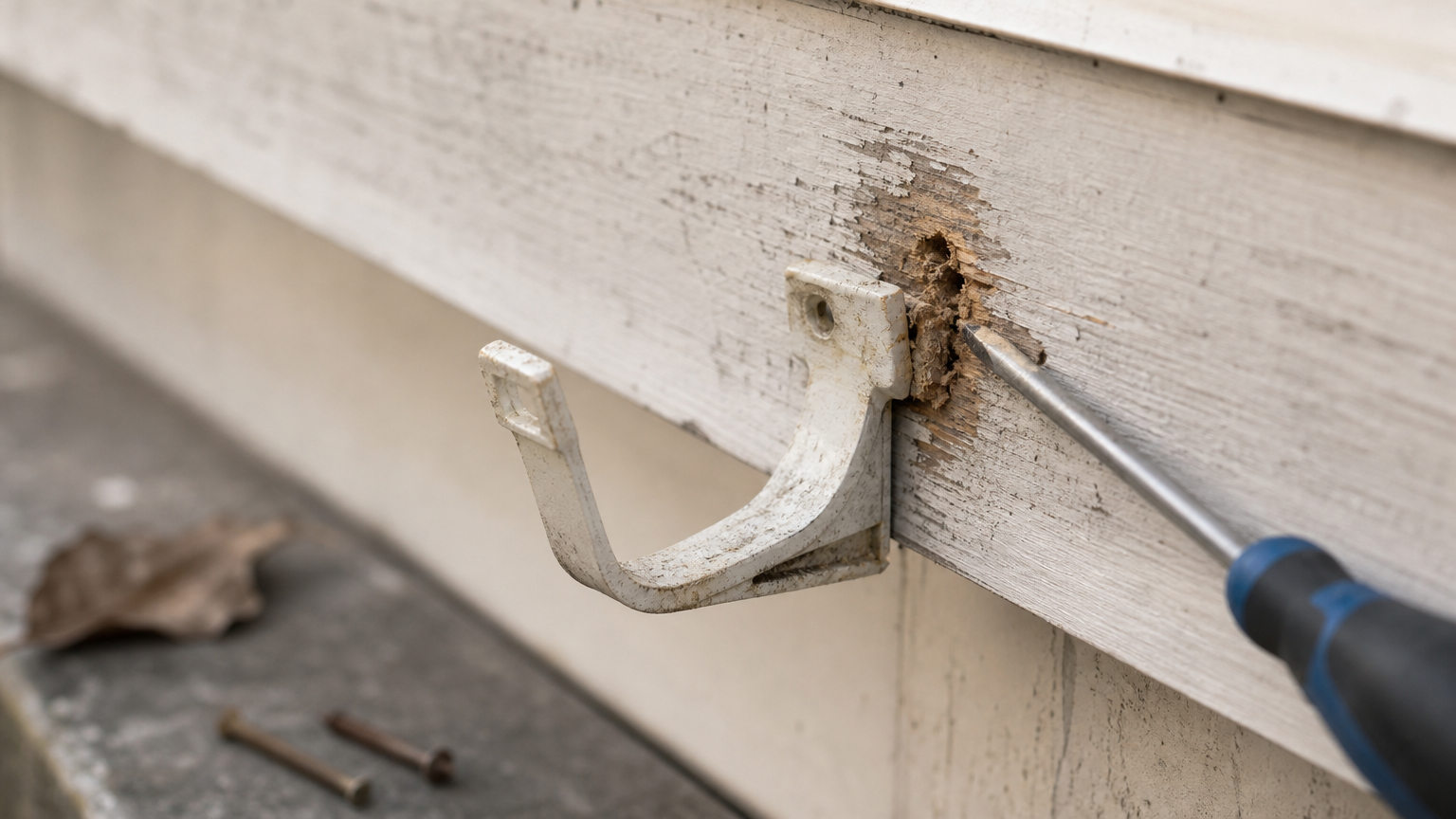
Look for a gap between the gutter and the fascia, or water running down the back of the trough. Press a screwdriver tip into the fascia board. Soft wood means rot. Peeling paint, stained soffits, and spots on the ceiling near an exterior wall are later warnings.
How to fix it
Replace the rotten fascia section first, because new fasteners will not hold in soft wood. Then re-hang the gutter with hidden hangers or long screws that reach solid framing. Make sure the roof edge sheds water into the trough, not behind it (see item 5). Above the first story, hire a pro. A fall from a roof edge is not worth the savings.
Fasteners can’t hold in rotten fascia, so repair the board before you rehang the gutter.
What it costs
Fascia repair plus re-hanging usually costs more than a seam patch, and price rises with the length of damaged board. Insurance generally covers sudden, accidental damage and not water damage from neglected maintenance, so check your policy and call your insurer before you decide.
5. Roof-edge problems that mimic a gutter leak
Sometimes the gutter is fine and the roof edge is the culprit. Without drip edge flashing, or with shingles that stop flush with the fascia, water curls under the edge and runs behind the gutter.
How to spot it
Do a hose test with a helper inside. Start low and soak the gutter only, with the hose aimed into the trough. If the leak appears, it is a gutter problem. If not, move up and soak the roof edge, then higher sections, one area at a time and a few minutes each. Water that appears only in wind-driven rain, or a stain near the top of an exterior wall, points to the roof.
How to fix it
Drip edge flashing and a shingle overhang of roughly half an inch past the fascia direct water into the trough. A few feet of drip edge is cheap, but installing it means lifting shingles, which is roofer work. Failed flashing or worn shingles belong to a roofer too, not a gutter contractor.
If the hose test only leaks when you wet the roof, no amount of gutter sealant will fix it.
What it costs
Drip edge material costs a few dollars per 10-foot piece. Labor depends on roof pitch, height, and length, so get written quotes for both the roof edge and the gutter work.
Start with the cheapest check
Work down the list in order. Check seams and clogs first because they are cheap, then slope, then the fascia, and use the hose test to rule the roof in or out. Most leaks end at items 1 and 2.
If you find sag, rot, or a roof-edge problem, or the leak is above the first story, get a quote. You can request a free repair quote from a local gutter pro and compare it against the ranges above.
What should this cost you?
Answer four questions and get a fair price range for your home.