
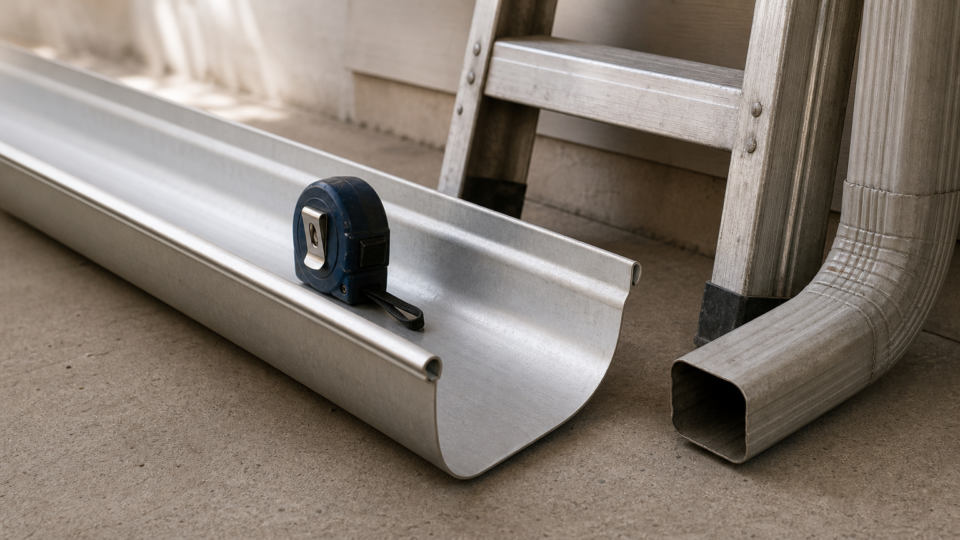
Short answer: Getting a real number for new gutters shouldn’t require three contractor visits and a week of waiting around for callbacks. A gutter replacement cost calculator gives you a working price range in minutes, based on the details that actually drive cost: your home’s linear footage, number of stories, material choice, and where you live. That’s enough to walk into any quote conversation knowing whether a number is fair or padded. Ready for quotes? Compare local pros →
In this guide
This guide walks you through how these calculators work and what to plug in for an accurate gutter replacement cost estimate. We built ours around real installation data, not marketing math, because the goal is to show you what installers actually charge in your region, whether that’s aluminum in Ohio or copper in coastal California.
Below, you’ll find the calculator itself, plus a breakdown of what changes the price most: material (vinyl versus seamless aluminum versus steel), home size, and regional labor rates. We’ll also cover why a new gutters cost calculator for California often spits out different numbers than one for Texas, and what to do with your estimate once you have it.
Why use a gutter replacement cost calculator
Homeowners who skip the estimate step usually make one of two mistakes: they accept the first quote because they have nothing to compare it against, or they assume every bid is inflated and end up haggling with a contractor who was quoting fairly. A gutter replacement cost calculator solves both problems by giving you a baseline number before anyone shows up with a clipboard. You plug in your home’s details, get a price range grounded in real installation data, and suddenly you’re negotiating from a position of knowledge instead of guesswork.

It protects you from overpaying
Contractors know that most homeowners have no idea what gutters should cost. That knowledge gap is where markup hides. A solid new gutters cost estimator closes that gap by showing you what installers in your area actually charge for your specific combination of material, linear footage, and home height. If a quote comes back 40% above what the calculator predicts, that’s your cue to ask why, not to just sign and hope for the best.
A calculator turns you from a guesser into a negotiator before the first contractor even calls back.
It saves you from wasted site visits
Getting three contractors to your house for in-person estimates can eat up a week or more, especially if you’re dealing with scheduling conflicts or a contractor who’s backed up two months. Running the numbers yourself first means you only invite out the companies whose ballpark pricing already makes sense for your budget. You’re not wasting anyone’s time, including your own.
It gives you a framework for comparing bids
Without a reference point, it’s nearly impossible to tell if a $3,200 bid and a $5,800 bid for the same job are both reasonable, or if one of them is a red flag. A calculator breaks the total down by the variables that matter, so you can see exactly where the price difference is coming from. Maybe one contractor priced in seamless aluminum and the other quoted steel. Maybe one included downspout replacement and the other didn’t. That clarity is worth more than the estimate itself.
| Without a calculator | With a calculator |
|---|---|
| First quote sets your expectations | You already know a fair price range |
| Hard to tell if a bid is padded | You can spot outliers immediately |
| Comparing bids means comparing guesses | Comparing bids means comparing line items |
| Contractors control the conversation | You control the conversation |
It accounts for where you live
Gutter pricing isn’t uniform across the country, and a generic national average won’t tell you much if you’re trying to budget for a job in a high-labor-cost market. Running a roof gutter replacement cost calculator built with regional data matters because labor rates, material availability, and even local permit requirements shift the total. A homeowner searching for a new gutters cost calculator near California is often working with different numbers than someone using a new gutters cost calculator near Texas, sometimes by a difference of a few dollars per linear foot, which adds up fast over a 150-foot perimeter.
It sets realistic expectations before you commit
Going into a project blind makes it easy to fall for either extreme: sticker shock that scares you away from a job you actually need, or a lowball quote that turns out to be missing corner pieces, fascia repair, or proper downspout extensions. Seeing a realistic range upfront, tied to your home’s actual specs, keeps your expectations grounded and your budget conversation with contractors a lot shorter.
What should this cost you?
Answer four questions and get a fair price range for your home.
How to use a gutter replacement cost calculator
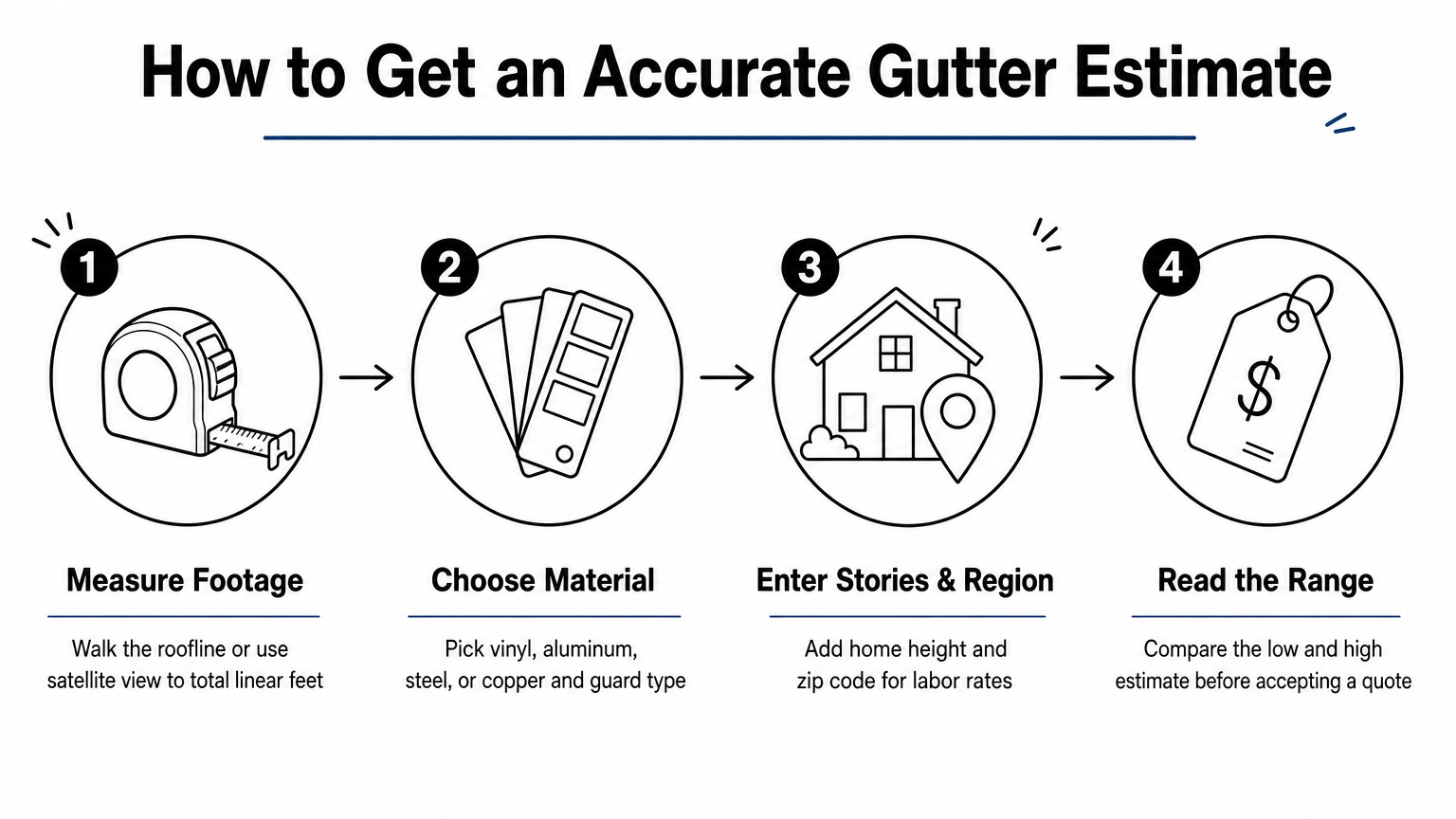
Running the numbers takes less time than reading a single contractor’s marketing brochure, but the output is only as good as the input. Before you touch the sliders on any gutter replacement cost estimator, gather four pieces of information about your home: total linear footage, number of stories, current gutter material (if you’re replacing rather than installing fresh), and your zip code. Skip any of these and the range you get back will be wider and less useful than it should be.
Measure your linear footage first
Walk the perimeter of your roofline, or pull up a satellite image and estimate from there if climbing a ladder isn’t in the cards. Most single-story homes run between 150 and 200 linear feet of gutter, while larger two-story houses can push past 250 feet. Don’t forget downspouts; a typical home needs one downspout for every 30 to 40 feet of gutter, and each one adds to the total.
Choose your material and guard type
Next, decide what you’re pricing out. Seamless aluminum is the default for most homeowners because it balances cost and durability, but vinyl, galvanized steel, and copper all show up in the calculator with their own per-foot rates. If you’re also adding gutter guards, whether micro-mesh, screen, reverse-curve, or foam, factor that in separately since what guards cost per foot by style and home size runs on its own scale and can add anywhere from $4 to $12 per linear foot depending on the type.
The calculator is only as accurate as the measurements you feed it, so a five-minute walk around your house is worth more than any guess.
Enter your home’s stories and region
Finally, plug in how many stories your home has and where you live. Story count matters because ladder work, staging, and safety equipment for a two-story install cost more in labor than a single-story job, even with identical material and footage. Location matters just as much: a new gutters cost calculator near Texas will typically return lower labor rates than one built for coastal California or the Northeast, where licensing, insurance, and cost of living push contractor rates higher.
Read the range, not just the number
Once you submit, you’ll get a price range rather than a single figure. Treat the low end as what you’d pay with a straightforward job, standard material, and a competitive local contractor. Treat the high end as your ceiling before a quote deserves a second look. Anything landing outside that range, in either direction, is worth a follow-up question before you sign anything.
What affects your gutter replacement cost estimate
Several variables push your number up or down, and understanding each one helps you spot which quotes are padded and which are justified. Material selection is the single biggest lever: seamless aluminum sits in the middle of the price range, vinyl runs cheaper, and copper or steel can double or triple your total. Home complexity, meaning roof pitch, number of corners, and how many stories you’re working with, adds labor cost fast because steeper roofs and taller ladders slow the crew down and require extra safety gear.
Removal and disposal of old gutters
Tearing out failing gutters before installing new ones isn’t always included in a base quote, and it should be. Expect an extra $1 to $2 per linear foot for removal and haul-away, more if the old system is galvanized steel or has years of trapped debris weighing it down. If a bid seems unusually low compared to your calculator estimate, ask whether removal is bundled in or billed separately.
Fascia and soffit condition
Gutters attach directly to your fascia board, so rot or water damage there turns a straightforward install into a repair job, which is why it helps to know what pricing gutters, soffit, and fascia together looks like. A contractor who finds soft or rotted wood during installation will need to handle the rotted fascia board repair behind the gutters before hanging new ones, and that can add several hundred dollars depending on how much of the roofline is affected. This is one of the most common reasons a final invoice runs higher than the initial estimate, so ask about fascia condition upfront rather than after the crew arrives.
The gap between your estimate and your final invoice almost always comes down to what’s hiding behind the old gutters, not the gutters themselves.
Regional labor and permit costs
Where you live shapes the labor portion of your bill more than most homeowners expect. Licensing requirements, insurance costs, and even local permit fees vary by state and sometimes by county.
| Factor | Typical cost impact |
|---|---|
| Material upgrade (aluminum to copper) | +100% to +200% |
| Two-story vs. single-story labor | +15% to +30% |
| Old gutter removal and disposal | +$1 to $2 per linear foot |
| Fascia or soffit repair | +$300 to $800+ |
| High-cost-of-living region | +10% to +25% on labor |
Yet another factor worth checking is whether gutter guards are part of the same job. Bundling guard installation with replacement often costs less per foot than hiring a separate crew later, since the labor for access and staging overlaps, so it’s worth having local pros price guard installation alongside the new gutters.
Average gutter replacement costs by size and material
Most homeowners want a ballpark before they dig into brackets and quote sheets, so here’s what you’ll really pay to replace gutters in 2026 based on real installations. Home size and material choice together account for most of the swing you’ll see between a $2,400 job and a $9,000 job, with everything else acting as a modifier on top of those two numbers. Use the ranges below as your starting point, then adjust for stories, region, and any guard system you’re adding.
Cost by home size
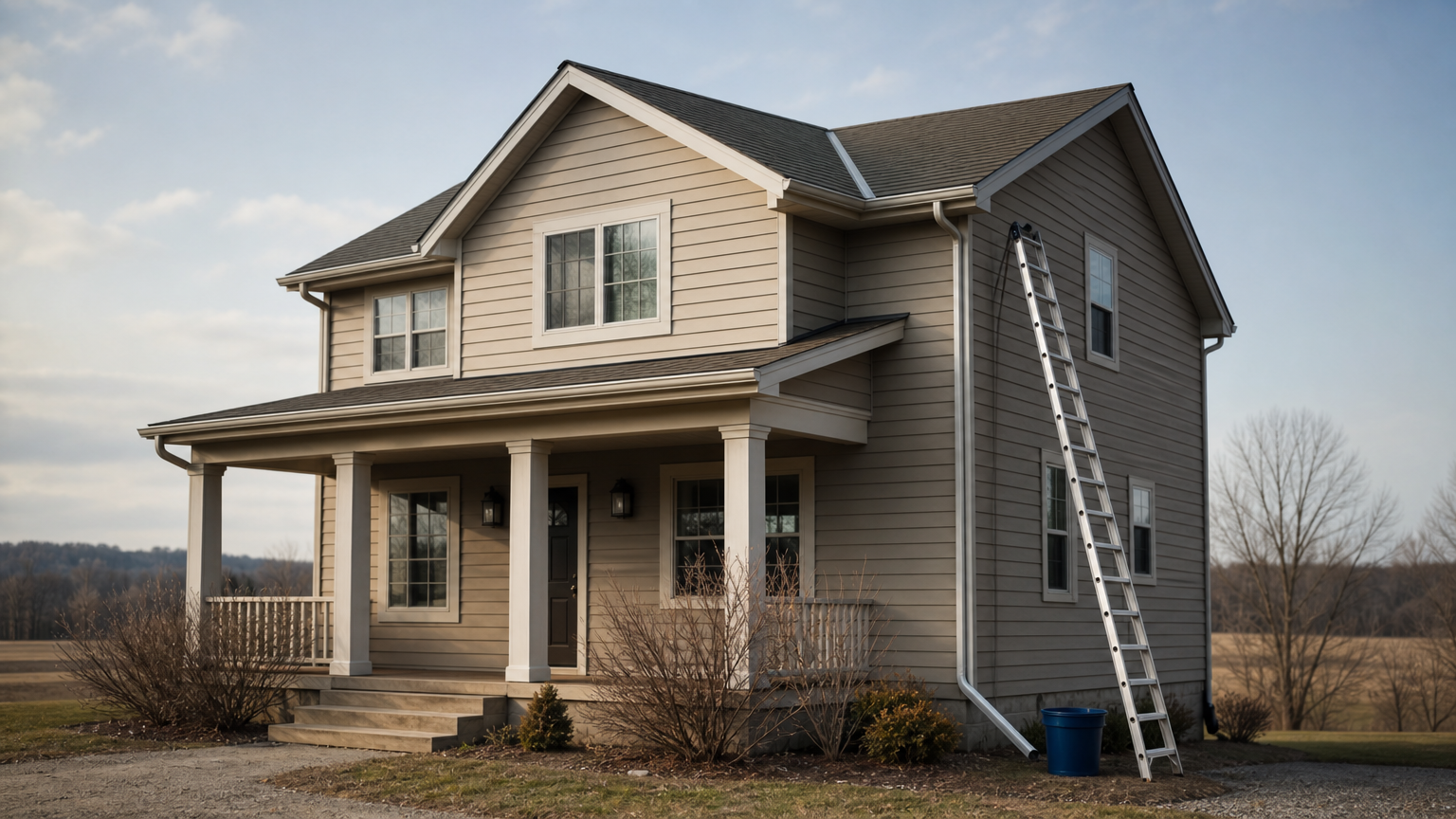
Linear footage drives the labor and material total more than any other single input, since installers price per foot before adding extras like corners, end caps, and downspouts. A small ranch home with a tight footprint costs far less to wrap than a sprawling two-story with multiple roof planes.
| Home size | Typical linear footage | Estimated cost range (aluminum) |
|---|---|---|
| Small (1,000-1,500 sq ft) | 100-150 ft | $1,200-$2,400 |
| Medium (1,500-2,500 sq ft) | 150-200 ft | $1,800-$3,600 |
| Large (2,500-3,500 sq ft) | 200-250 ft | $2,400-$4,800 |
| Very large (3,500+ sq ft) | 250-300+ ft | $3,600-$6,500+ |
Square footage tells you how big the job is, but material tells you how big the bill gets.
Cost by material
Once you know your footage, material sets the per-foot rate that multiplies against it. Seamless aluminum remains the workhorse choice for a reason: it holds up well, resists rust, and comes in dozens of colors without pushing the budget into copper territory, though it’s worth comparing per-foot prices for aluminum, steel, and copper seamless gutters before you decide.
| Material | Cost per linear foot | Notes |
|---|---|---|
| Vinyl | $3-$6 | Cheapest option, less durable in extreme cold |
| Seamless aluminum | $6-$12 | Most common choice, good durability-to-cost ratio |
| Galvanized steel | $8-$15 | Stronger, heavier, prone to rust over decades |
| Copper | $20-$40+ | Longest lifespan, highest upfront cost |
Regional examples worth knowing
Running the same 200-foot job through a new gutters cost calculator near california often returns a higher estimate than the identical inputs run through a calculator near Texas, sometimes by $2 to $4 per foot once you factor in labor and licensing costs. That gap isn’t padding. It reflects real differences in contractor overhead, insurance requirements, and demand. Checking your specific region against a national average is the only way to know if a quote fits your market or if you’re being charged like you live somewhere pricier.
Getting an accurate quote beyond the estimate
A gutter replacement cost calculator gets you close, but only an in-person or detailed virtual estimate accounts for the quirks a calculator can’t see: a rotted fascia board tucked behind old gutters, a tricky roofline with six corners instead of four, or a downspout that needs to be rerouted around a patio. Think of your calculator number as the opening bid you bring into the conversation, not the final word.
What a contractor checks that a calculator can’t
When a contractor walks your property, they’re looking for details that change labor time and material needs in ways no online tool can predict. Expect them to check:
- Fascia and soffit condition behind the current gutters, since rot means added repair cost
- Roof pitch and accessibility, which affects how much staging or ladder work the crew needs
- Downspout placement and drainage, especially if water is pooling near your foundation
- Existing damage from ice dams or storm impact, which can hide structural issues
- Local code requirements, like whether your municipality mandates specific downspout extensions
A calculator prices the gutters. A contractor prices the whole job, including everything hiding behind them.
Questions to ask before you sign
Once a contractor’s quote lands in your inbox, compare it line by line against your calculator estimate rather than just looking at the bottom-line total. Ask whether removal and disposal of the old system are included, whether the price covers fascia repair if they find damage, and whether the warranty covers labor as well as material. A gutter replacement cost estimate that’s missing these line items often looks cheaper on paper but costs more once the crew starts pulling down the old system and finds problems that weren’t priced in.
Getting multiple quotes without the runaround
Once your calculator range gives you a realistic ceiling and floor, you’re in a good position to request quotes without wasting time on contractors who are wildly out of range. If you’d rather skip the cold-calling and let vetted local pros come to you, Guardian Gutter Guide’s contractor referral connects you with installers through Angi who can quote against your specific numbers. That way, the estimate you ran becomes a real conversation instead of a guessing game, and you’ll know within one or two calls whether you’re getting a fair price for your home.
Turning your estimate into a plan
A number from a gutter replacement cost calculator only matters if you act on it. Once you know your realistic range, whether that’s aluminum on a mid-size ranch or copper on a sprawling two-story, you’ve got the leverage to walk into any contractor conversation without getting talked into extras you don’t need. Use that range to filter out bids that don’t add up, and push back when a quote runs far outside what your inputs predicted.
Don’t let the estimate sit in a browser tab for three months while your gutters keep sagging. Pricing shifts with material costs and contractor availability, so treat your number as current, not permanent. When you’re ready to turn that range into real bids from installers who’ll quote against your specific numbers, have a local installer price your new gutter system for free and see how your calculator range holds up against actual local pricing.
What should this cost you?
Answer four questions and get a fair price range for your home.