
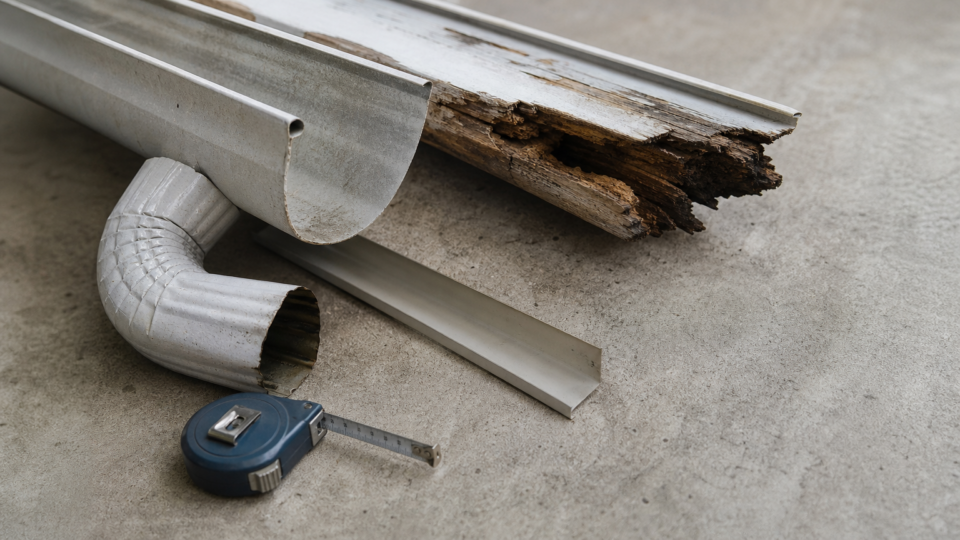
Short answer: If a contractor quoted you a number for new gutters and a fascia swap, you probably wonder if it’s fair. The fascia board and gutter replacement cost depends on a handful of line items, and once you see them separately, a quote gets much easier to judge. Fascia is the board your gutters hang from. When it rots, the gutters sag no matter how new they are. Ready for quotes? Compare local pros →
In this guide
Here is the short answer. Most homeowners pay roughly $6 to $20 per linear foot for new gutters installed, and $6 to $25 per linear foot for fascia replacement, depending on material and rot damage. Done together, a typical home often lands between $2,500 and $6,500. Copper, two-story homes, and painted trim push that higher. Doing both at once usually saves on labor, since the crew removes the old gutters only one time.
Below, we break down per-foot prices by material, what drives labor costs, and what a fair total looks like for different home sizes. We also point out common add-ons that inflate quotes. This guide was written by a former gutter installer and reviewed by a home inspector, so the numbers reflect real jobs.
Why fascia and gutter replacement costs vary so much
Two quotes for the same house can differ by thousands of dollars, and the gap rarely comes from one thing. Four factors do most of the work: material, labor and height, hidden rot, and whether you bundle the jobs. Your gutter fascia board replacement cost moves with each one.
Material sets the baseline
Material is the first line item, and it sets the floor. Seamless aluminum is the most common choice, while copper sits in a different price class. These are installed prices per linear foot, and they show why material choice alone can double a quote.
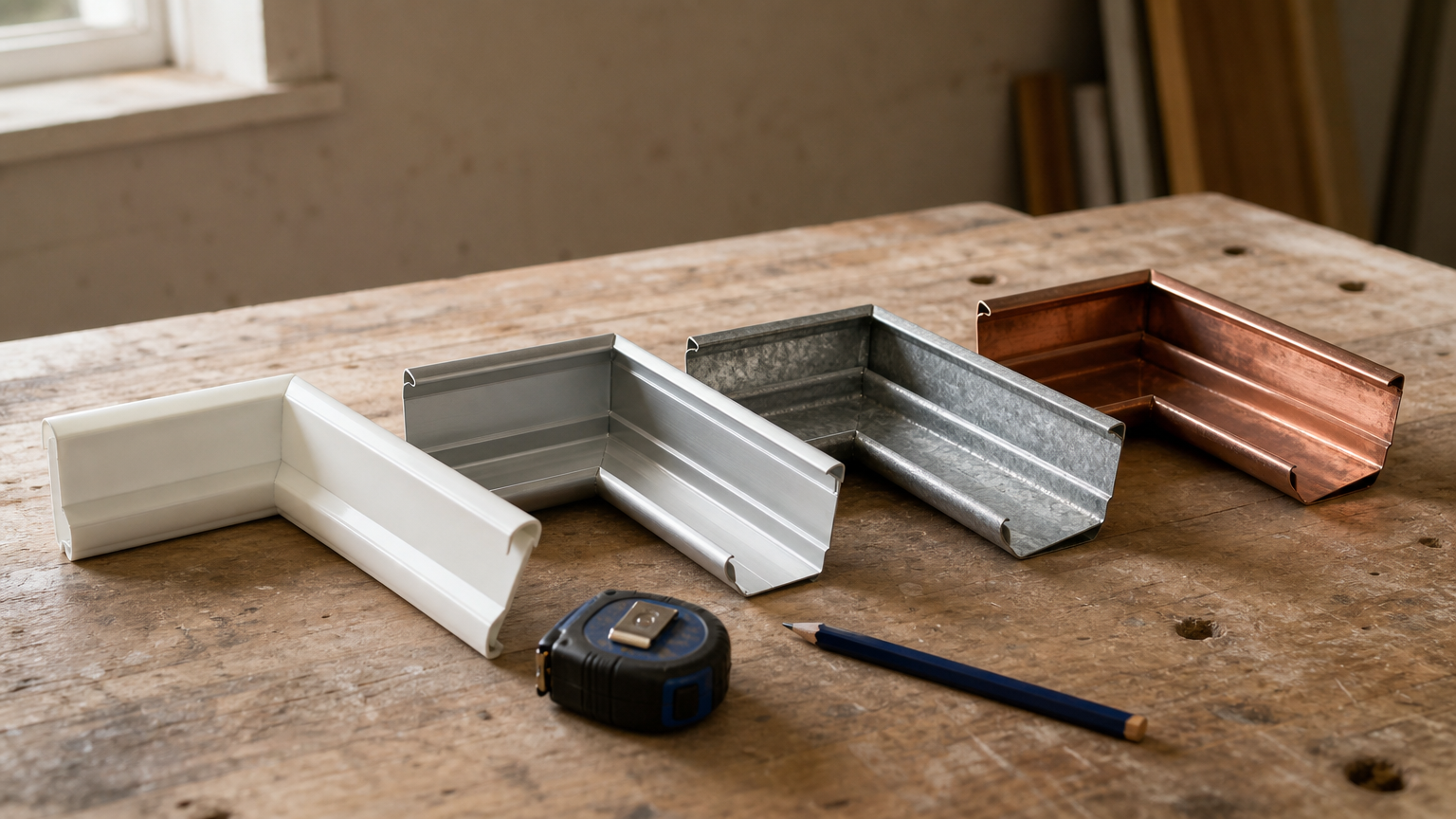
| Item | Typical installed cost per linear foot |
|---|---|
| Vinyl gutters | $5 to $8 |
| Seamless aluminum gutters | $8 to $15 |
| Galvanized steel gutters | $10 to $18 |
| Copper gutters | $20 to $40 |
| Wood fascia (pine, cedar) | $6 to $15 |
| PVC or composite fascia | $8 to $20 |
| Aluminum-wrapped fascia | $10 to $25 |
Labor, height, and hidden rot
Labor usually makes up 40 to 60 percent of the bill. Two-story homes add roughly 25 to 50 percent because crews need taller ladders or scaffolding. A roofline with many corners and valleys also slows the crew and raises the price.
Rot is the wild card. Nobody can see behind the gutter until it comes off, so a contractor often quotes the best case. If water soaked the board, it may also have reached the rafter tails or soffit, and those repairs get priced separately.
Rot you can’t see until the gutter comes off is the biggest swing in any fascia quote.
Why bundling changes the math
Doing both jobs together saves money because the crew removes the old gutters once. Replace the fascia alone, and you pay to take down and rehang the gutters, then pay again when you install new ones later. That is why new gutters and fascia cost often runs below the sum of two separate quotes.
Add-ons also move the total. Painted or primed trim, new drip edge, larger downspouts, and haul-away fees each add a few hundred dollars. Ask for them as separate lines so you can see what you are paying for.
What should this cost you?
Answer four questions and get a fair price range for your home.
How to estimate your fascia and gutter replacement cost
Start with your linear feet
Every estimate begins with one number. Walk the ground along your roofline and measure each edge that has a gutter, or pace it off at about 2.5 feet per step. Gutters and fascia run the same length, so one measurement covers both. Most single-family homes land between 120 and 220 linear feet.
Run the math with a worked example
Take a 180-foot, single-story home with seamless aluminum gutters and wood fascia. Use the low and high ends from the table above.
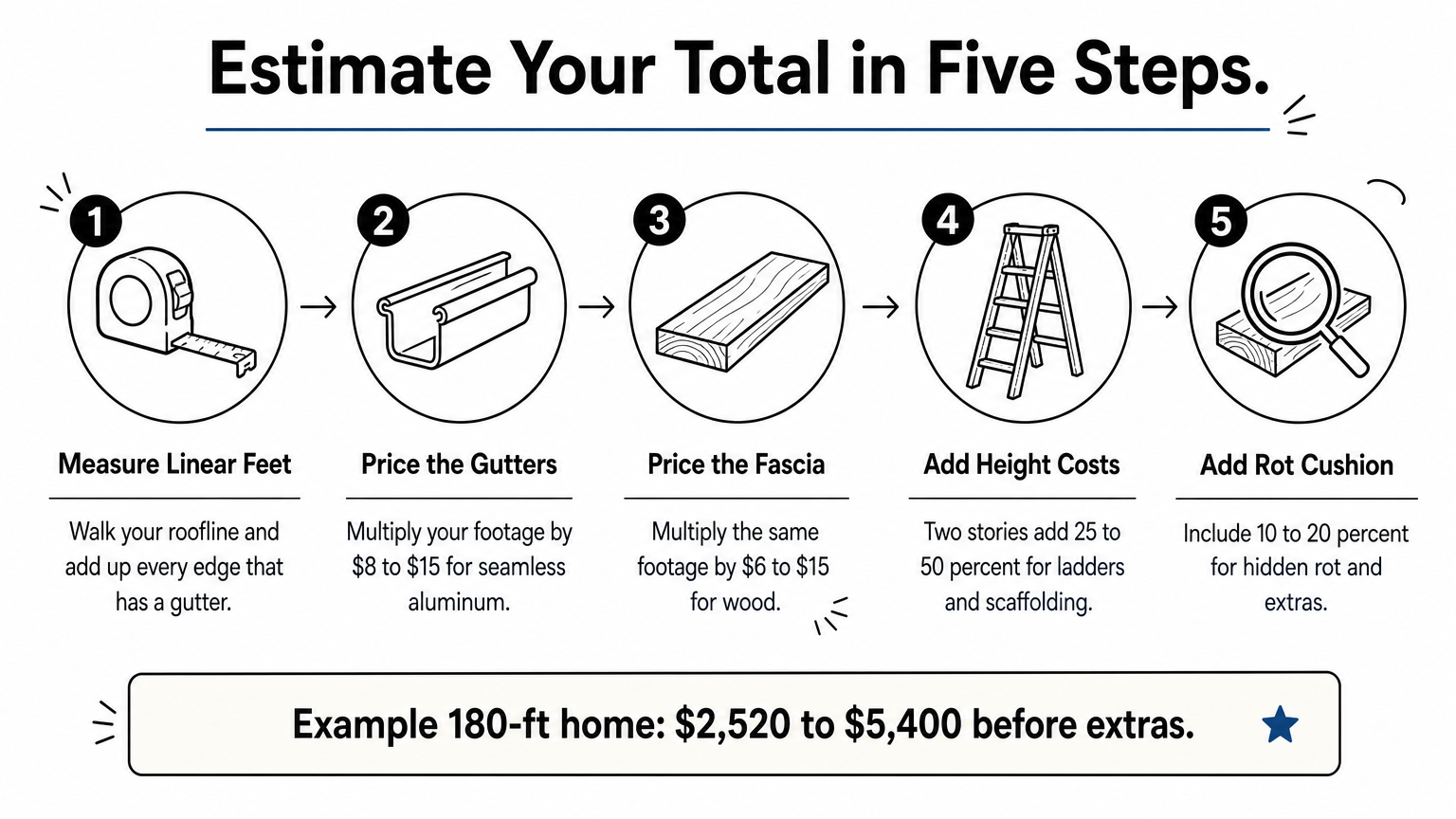
- Gutters: 180 ft × $8 to $15 = $1,440 to $2,700
- Fascia: 180 ft × $6 to $15 = $1,080 to $2,700
- Subtotal: $2,520 to $5,400
- Two stories? Add 25 to 50 percent.
- Add 10 to 20 percent for rot and extras.
That range is wide on purpose. Where you land inside it depends on your region, your roof’s complexity, and how much trim paint you want.
Pad the total for rot
Finally, build in a cushion before you call anyone. Rot behind the gutter is common on homes with overflow problems, and it usually shows up only after demolition. A 10 to 20 percent buffer keeps a surprise from wrecking your budget.
Measure once, multiply by two price ranges, then add a rot cushion.
You can also run your numbers through our cost estimator tool, which adjusts for stories, guard type, and region. Treat any result as a planning range, not a bid. Only a contractor standing at your house can confirm the final price.
How to judge a contractor’s quote
A quote only helps if you can test it against your own math. Take the range you built above and hold it next to the fascia board and gutter replacement cost on the page. Three checks will tell you most of what you need.
Look for an itemized breakdown
Ask for separate line items instead of one lump sum. A lump sum hides where the money goes, and it makes comparing bids almost impossible. A fair quote shows:
- Linear feet of gutter and fascia
- Gutter material and thickness (.027 or .032 aluminum, for example)
- Fascia material and the price per foot
- Downspout count and size
- Paint, drip edge, and haul-away
- Warranty terms for labor and materials
Divide the total by your footage
Divide the bid by your linear feet. For aluminum gutters and wood fascia, the tables above put the combined price near $14 to $30 per foot. A 180-foot home quoted at $9,000 works out to $50 per foot. Unless you have copper, steep two-story rooflines, or heavy rot, that number needs an explanation.
Low bids deserve the same scrutiny. A price far under your range often means thin gutter stock, no fascia prep, or a plan to cover old rotted wood.
Pin down the rot policy
Finally, ask what happens if the crew finds soft wood. A good contractor names a per-foot price for extra board replacement before work starts. Get it in writing, along with whether they will photograph the damage and call you first.
A quote that hides its rot price can grow after the gutters come down.
Collect at least three bids, and compare them line by line rather than by total.
Fascia repair vs. replacement, and when to do both
Not every damaged board needs to come off. A repair costs far less than a new run, but it only works when the wood underneath is still sound. Knowing which case you have keeps the fascia board and gutter replacement cost from growing past what the job needs.
When a repair is enough
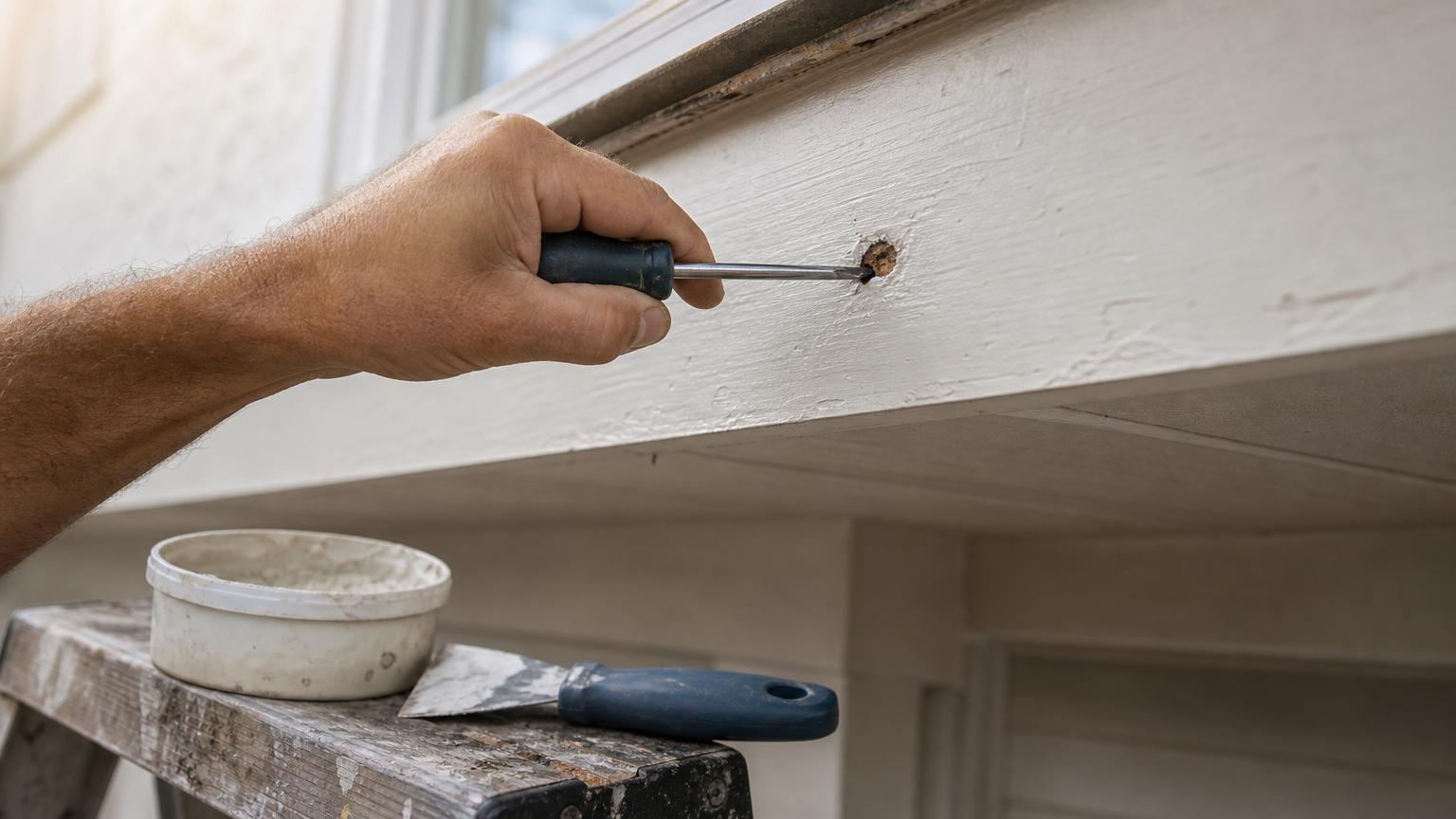
Probe the board with a screwdriver. If the wood is firm and only a few spots are soft, a crew can dig them out, fill them with epoxy, then prime and paint. Longer rotted stretches can be cut out and spliced with new board, which usually runs a few hundred dollars instead of a full replacement.
| What you find | Usual fix |
|---|---|
| Small soft spots, firm wood around them | Epoxy fill, prime, paint |
| Rot in one 4 to 8 foot stretch | Cut out and splice new board |
| Soft wood along most of a side | Replace the full run |
| Soft rafter tails or soffit | Replace fascia and repair framing |
When to do both together
Replace the fascia and gutters at the same time if rot runs along most of one side, or if the gutters are already near the end of their life. Gutters have to come down for any fascia work. Doing the jobs separately means paying that labor twice, so your new gutters and fascia cost is lowest when you bundle.
If the gutters are coming down anyway, that is the cheapest moment to fix the fascia.
Before you agree to a patch, ask the crew to photograph the exposed board once the gutters are off. A repair that looked fine from the ground can turn into a replacement. Photos let you approve the change at your agreed per-foot price, not a number invented on the ladder.
How to lower your cost and handle insurance and DIY
You have more control over the fascia board and gutter replacement cost than a quote suggests. Most savings come from scope and timing, plus knowing what insurance will and won’t pay.
Ways to cut the bill
Start with three itemized bids, because the spread between contractors is often 20 percent or more. Then trim the scope, not the quality:
- Bundle gutters and fascia into one visit.
- Ask about off-season scheduling, since some crews discount when work is slow.
- Buy primed board and paint the trim yourself.
- Skip upgrades the roof doesn’t need, like oversized downspouts on a small roof.
When insurance pays
Homeowners policies usually cover sudden, accidental damage, such as a fallen limb or a hailstorm. They rarely cover rot from slow leaks or age. Compare the repair to your deductible first. A $2,000 job under a $2,500 deductible makes a claim pointless.
Insurance pays for storms, not for neglect.
Photograph the damage and call your agent before you hire anyone. Ask whether the fascia counts as part of the covered roofline damage.
What DIY can and can’t save
Repairing fascia on a single-story home is a realistic weekend job if you’re comfortable on a ladder. Since labor runs 40 to 60 percent of the bill, you can save $1,000 or more. Seamless gutters are different. Crews roll them on site, so DIY usually means sectional vinyl or aluminum, which has more seams to leak. Hire a pro for two-story homes, where a fall is the real cost of a bad DIY.
What to budget before you call a contractor
Plan around three numbers before anyone visits your house. Measure your linear feet, multiply by the per-foot ranges for your materials, and add 10 to 20 percent for hidden rot. For a typical single-story home, the fascia board and gutter replacement cost lands between about $2,500 and $6,500, and higher with copper or a second story.
Then use that range as your yardstick. Ask for itemized bids with a written rot price, divide each total by your footage, and bundle both jobs so the crew takes the gutters down only once. That is where most of the savings come from.
If your gutters sag or the fascia feels soft, you are ready for real numbers. Get a free estimate for gutter replacement from a local installer, then compare the bid against the math you just did.
What should this cost you?
Answer four questions and get a fair price range for your home.