
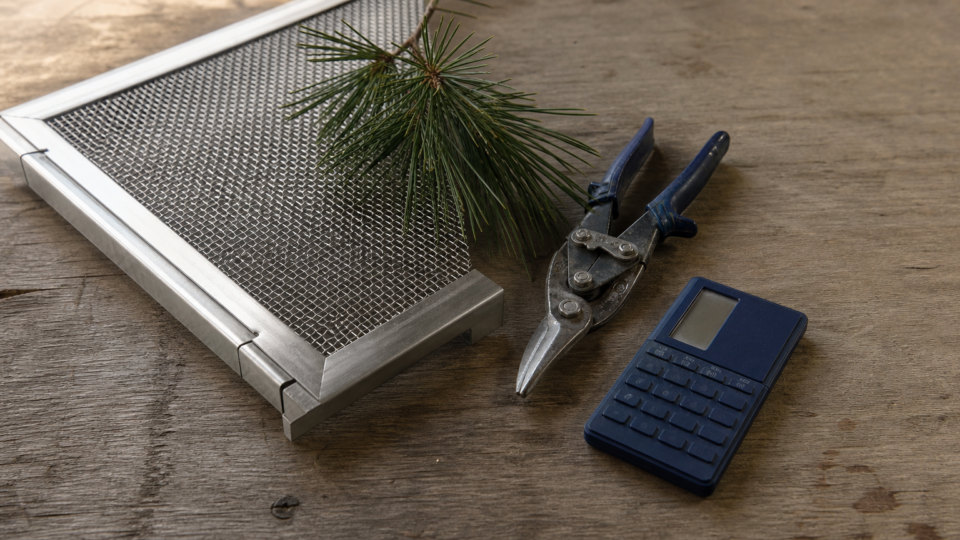
Short answer: Micro mesh gutter guards are fine screens, usually stainless steel on a rigid frame, with openings as small as 30 to 50 microns. They let rainwater through and keep out leaves, pine needles, and shingle grit. The cost of micro mesh gutter guards runs about $1.50 to $3.00 per foot for do-it-yourself materials and $5 to $10 per foot installed by a pro. For a typical 150 to 200 foot house, that works out to roughly $225 to $600 DIY or $750 to $2,000 installed. Ready for quotes? Compare local pros →
In this guide
This article shows where those numbers come from. You will see why micro mesh is priced the way it is, how to calculate your own total from your gutter length, and what you save by installing the guards yourself. It also covers whether the money pays back and which specs separate a good product from an overpriced one.
Guardian Gutter Guide is an independent resource, not a contractor, so we do not sell or install anything. Our price ranges come from written quotes homeowners share, published installer rate sheets, and material pricing at national home improvement retailers. Treat every figure below as a national range. Your actual quote will move with roof access, the installer, and local labor rates.
Why micro mesh costs what it does
Micro mesh sits in the middle of the gutter guard price range. It costs more than basic screens, about the same as foam or brush inserts, and less than premium reverse-curve covers. You are paying for fine filtration, a durable metal, and a long warranty.
What you are paying for
Prices inside the micro mesh category swing widely, from about $1 to $10 per foot across retail and installed listings. Four factors explain most of the gap:
- Mesh material. Stainless steel lasts about 20 years and resists rust. Aluminum costs less. Plastic is cheapest but wears out sooner.
- Frame and build. A rigid frame holds its shape under leaf weight. Thin, flexible sheets cost less but can sag.
- Gutter width. Most kits fit 5-inch gutters. Versions for 6-inch and 7-inch gutters exist, but not every brand makes them, so confirm width before you order.
- Warranty. Many manufacturers back micro mesh for 20 years or more, and some offer a lifetime warranty. That coverage is built into the price.
You are paying for filtration and longevity, not for the mesh alone.
How it compares with other guard types
Other guard types look cheaper or pricier per foot, but they trade off differently on what they block. The table shows typical material costs per linear foot from published ranges.
| Guard type | Material cost per foot | What it handles |
|---|---|---|
| Screen | $0.50 to $3.50 | Medium and large debris, but leaf fragments get through |
| Mesh | $1 to $4 | Most debris, though smaller particles get in |
| Foam | $2 to $3.50 | Larger debris, and needs frequent cleaning to avoid mold |
| Micro mesh | $1.50 to $3.00 for most retail kits | The finest debris, including pine needles and grit |
| Bottle brush | $3 to $4.50 | Medium to large debris |
| Reverse curve | $3.50 to $10 | Moves debris off, and needs professional installation |
Cheap screens and foam look like bargains, but they let small debris in or need regular cleaning. Micro mesh costs a little more and stops the smallest debris. That is why it suits homes under pine trees or trees with small leaves.
What should this cost you?
Answer four questions and get a fair price range for your home.
How to estimate your total cost
Multiply your gutter length in feet by the per-foot price, then add extras for fasteners, tools, or labor. Use $1.50 to $3.00 per foot for DIY materials and $5 to $10 per foot for a professional installation.
Measure your gutter run
Your gutter length is the number that drives the whole budget, so measure it before you shop. Do it from the ground with a tape, or from a roof plan if you have one.
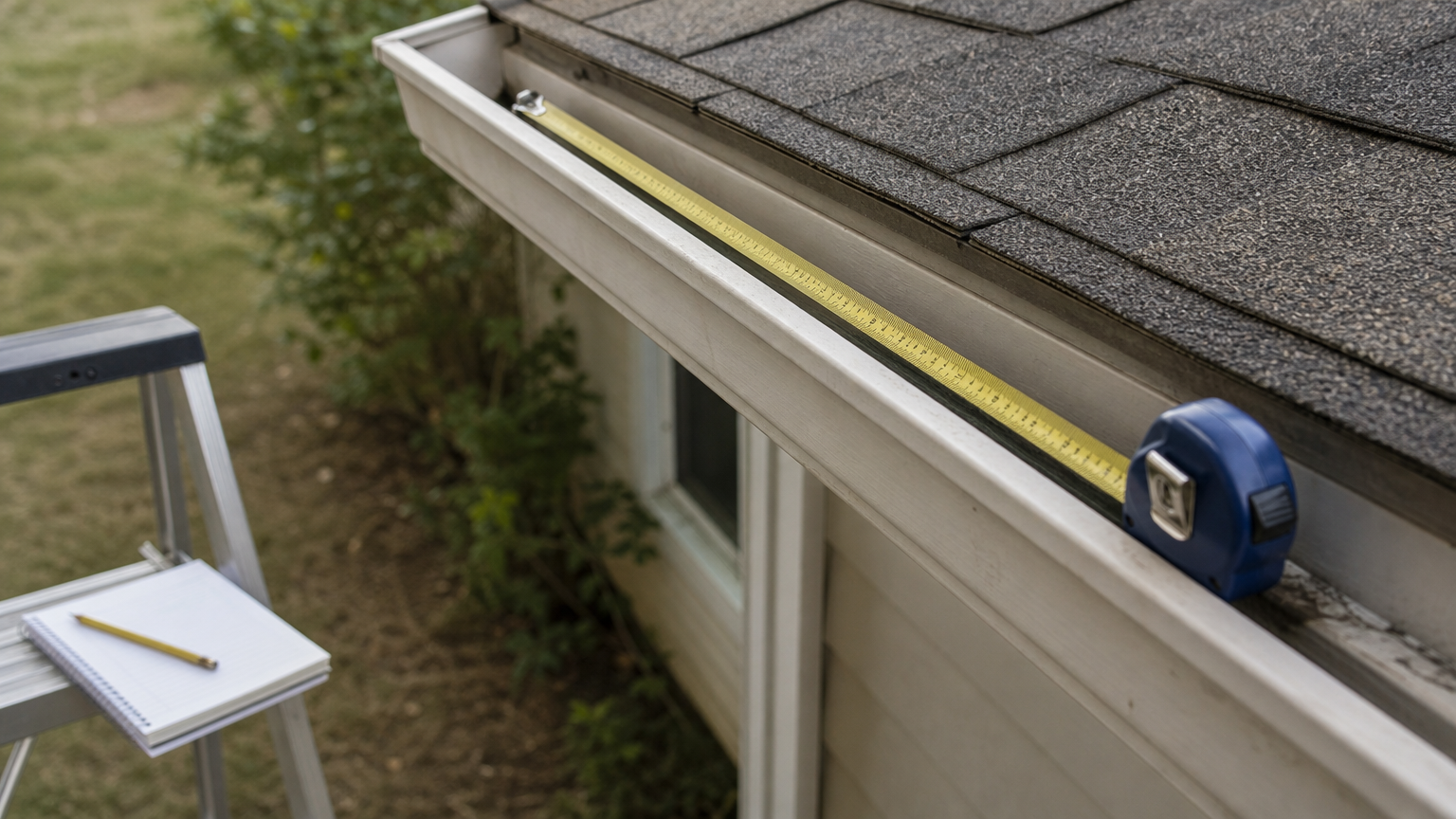
- Measure the gutter along each eave of the house.
- Add the runs together. Many homes land between 150 and 200 feet.
- Round up, because pieces overlap by a few inches at each joint.
- Note the number of stories, since a second floor adds ladder time and risk.
What the per-foot price includes
Retail prices cover only the guard. A stainless steel 80-foot kit at a national home improvement retailer lists around $199, or $2.49 per foot. A 100-foot box of powder-coated aluminum micro mesh from an online gutter supplier lists around $270, or $2.70 per foot. Budget products start near $1.50 per foot.
Installed prices add labor, fasteners, and ladder work. Guards are sold by the linear foot, not the square foot. A 5-inch guard covers about 0.42 square feet per linear foot, so $2.50 per foot works out to roughly $6 per square foot of guard.
Totals by gutter length
The table applies both rates to common gutter lengths. Fasteners and tools you do not own are extra for DIY.
| Gutter length | DIY materials ($1.50 to $3.00/ft) | Pro installed ($5 to $10/ft) |
|---|---|---|
| 100 ft | $150 to $300 | $500 to $1,000 |
| 150 ft | $225 to $450 | $750 to $1,500 |
| 200 ft | $300 to $600 | $1,000 to $2,000 |
| 250 ft | $375 to $750 | $1,250 to $2,500 |
Take a 150-foot house as the worked example. You would pay $225 to $450 in materials, or $750 to $1,500 from a pro. Published professional ranges of $650 to $2,400 bracket these figures, with the top end reflecting larger or harder jobs.
Measure first, then multiply: $1.50 to $3 per foot DIY, $5 to $10 installed.
DIY or professional installation
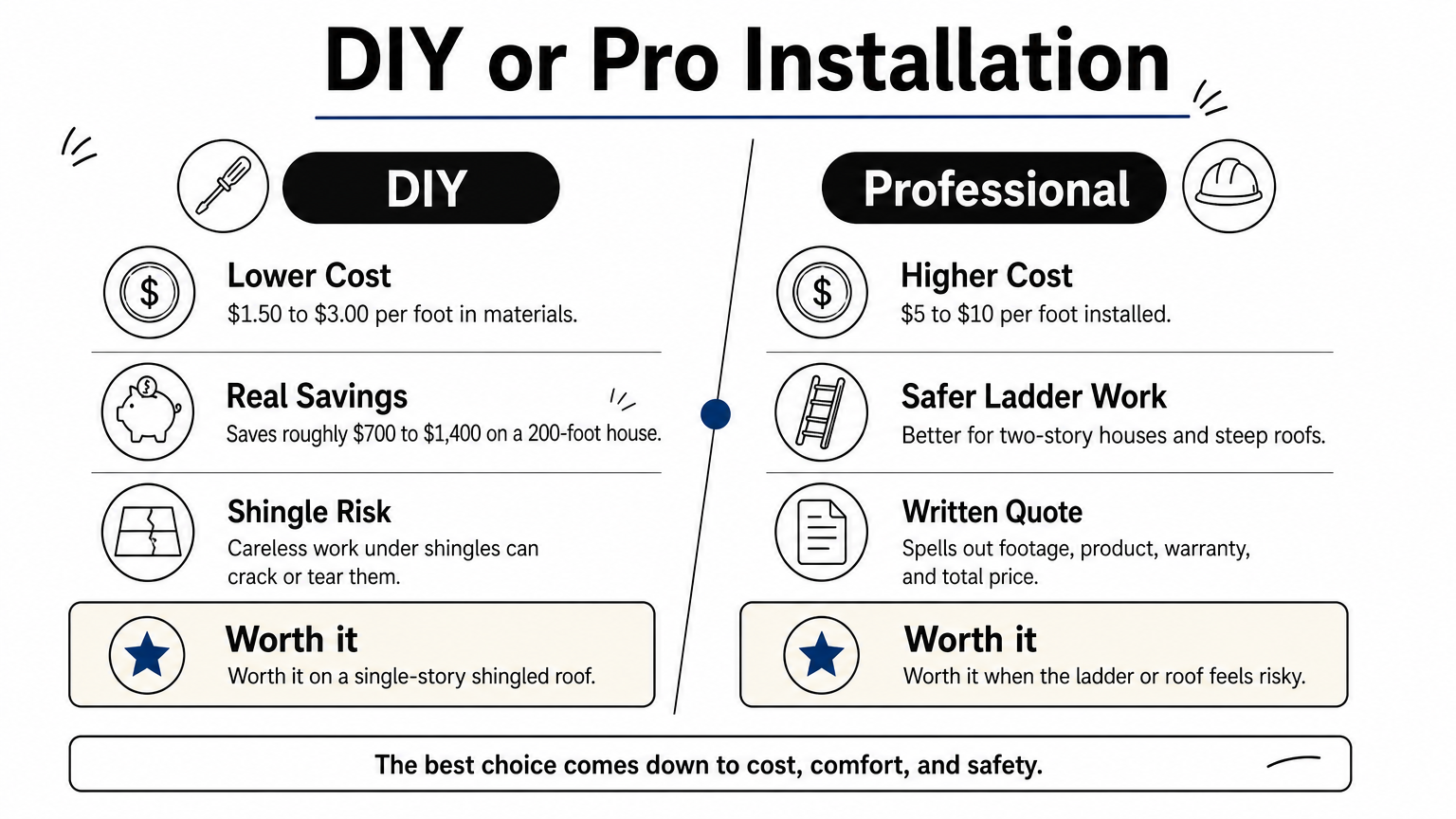
Doing it yourself costs about 30 percent of the professional price. On a 200-foot house, that saves roughly $700 to $1,400. The savings are real, but only if the job suits your roof and your skills.
What DIY takes
Micro mesh guards slide under the first row of shingles and screw to the outside of the gutter. That is manageable on a single-story house with a shingled roof, a stable ladder, and a pair of snips for cutting pieces to length.
The risk sits at the shingle edge. Careless work under shingles can crack or tear them, and a repair bill there eats the savings. If you have never done roof-edge work, the job can be hard and dangerous.
When to pay a pro
Hire an installer for two-story houses, steep roofs, roofs that are not shingled, or any job where you do not trust your ladder footing. A fall costs far more than the $700 or more you would save.
Whoever you hire, get the details in writing. A solid quote states:
- The total gutter footage covered
- The product name and mesh material
- The gutter width the guard fits
- Warranty terms for both the product and the labor
- Whether existing gutters are cleaned and repaired first
- The total price, with labor separated from materials
If the job needs a ladder you are not comfortable on, the savings are not worth it.
Are micro mesh gutter guards worth the cost?
Usually yes, if trees drop small debris on your roof and you plan to stay for years. Stainless steel lasts about 20 years, so a $1,500 installation costs $75 per year of use.
The payback math
Compare the price against what you pay to keep gutters clear. Suppose a cleaning costs $150 and you book two a year, which is $300 annually. Your local price will differ, so plug in your own number. A $1,500 installation then pays for itself in about 5 years, and a $450 DIY job pays back in about a year and a half.
Guards also protect the gutters themselves. Clogged gutters hold dirt and water, which corrodes metal and invites mold, pests, and ice dams in cold climates.
What micro mesh does not do
No guard ends maintenance. Dust, seed pods, and matted debris can collect on top of the mesh, so you still need to sweep the surface now and then. Plan at least one gutter check a year, even with guards installed.
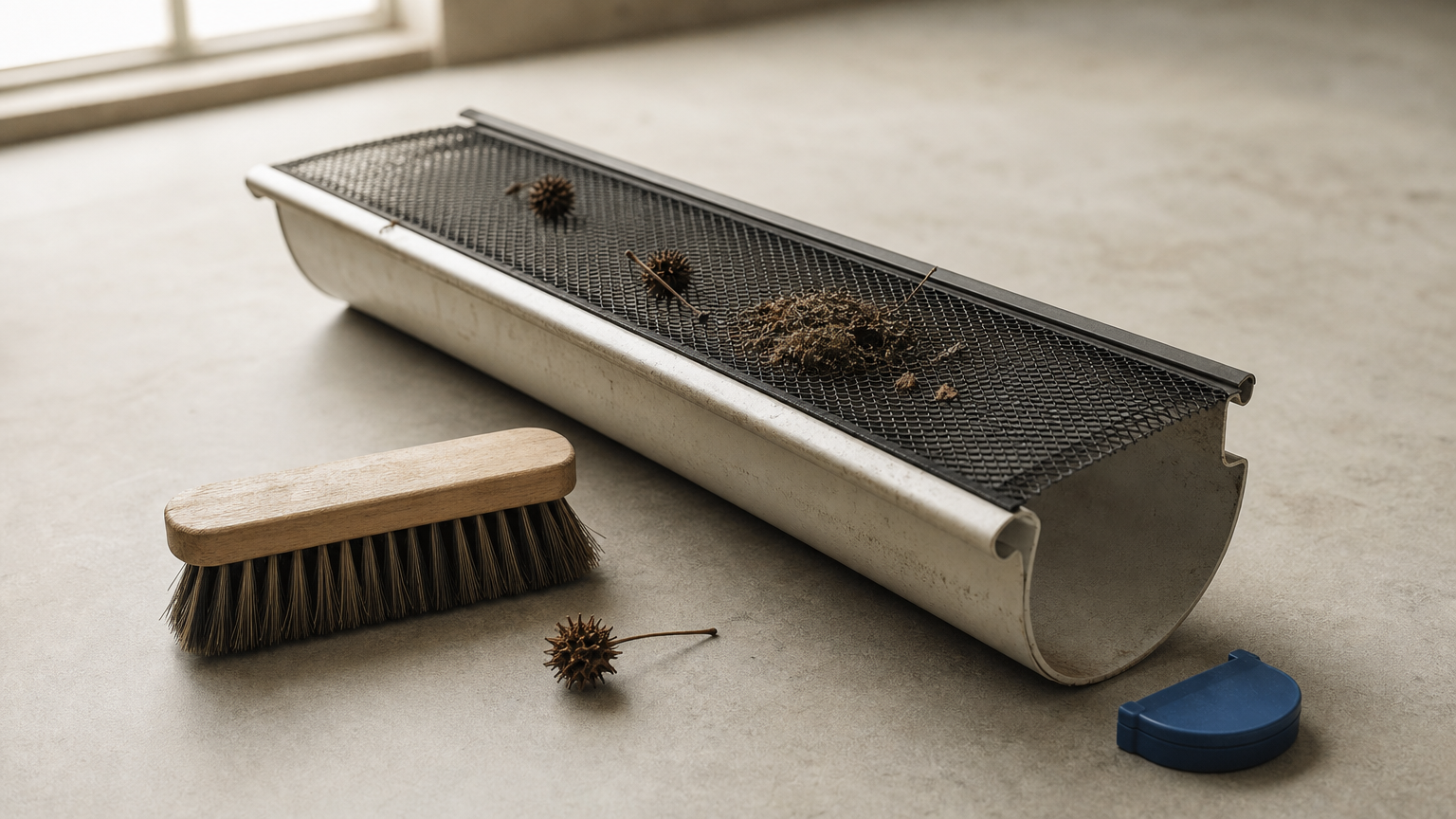
Micro mesh is a poor buy in a few cases. If your gutters already sag or leak, fix them first, because guards will not repair a pulled-away gutter. If few trees overhang the roof, a cheaper option or occasional cleaning may cost less overall.
Guards cut cleaning, but they do not end it, so count that upkeep in your budget.
How to choose the best micro mesh gutter guards
Choose by specification, not by a ranking. Look for stainless steel mesh, a rigid frame, the right width for your gutters, and a written warranty of 20 years or more. Old lists of the best micro mesh gutter guards, from 2019 or any earlier year, go stale as products and prices change. Specs do not.
Specs worth checking
Use the table as a buying checklist when you compare products.
| Spec | What to look for | Why it matters |
|---|---|---|
| Mesh material | Stainless steel | Resists rust and lasts about 20 years |
| Opening size | About 30 to 50 microns where stated | Blocks pine needles and shingle grit |
| Frame | Rigid aluminum or steel | Keeps the mesh from sagging |
| Gutter fit | Matches your gutter width | Prevents gaps that let debris in |
| Piece overlap | Several inches between pieces | Gives continuous coverage |
| Warranty | 20 years or lifetime, in writing | Covers manufacturing defects |
Pitfalls to avoid
Read warranties closely. They typically cover manufacturing defects but not damage from outside causes. Treat "never clean your gutters again" claims with suspicion, since you will still sweep and check.
Do not shop on price per foot alone. A plastic or thin aluminum guard that costs less today wears out sooner, so divide the price by the years you expect it to last. Compare that annual cost, not the sticker price.
Set your budget before you call anyone
The cost of micro mesh gutter guards comes down to one calculation: your gutter footage times $1.50 to $3.00 per foot if you install them, or $5 to $10 per foot if a pro does. For most houses, that means a few hundred dollars DIY or $1,000 to $2,000 installed. The money makes sense when trees drop small debris on your roof and your gutters are in good shape.
Once you have your footage and a target range, you are ready to compare real bids. You can get a free quote for gutter guard installation, which shows an estimated cost range first so you know what a fair number looks like before you talk to a contractor.
What should this cost you?
Answer four questions and get a fair price range for your home.