
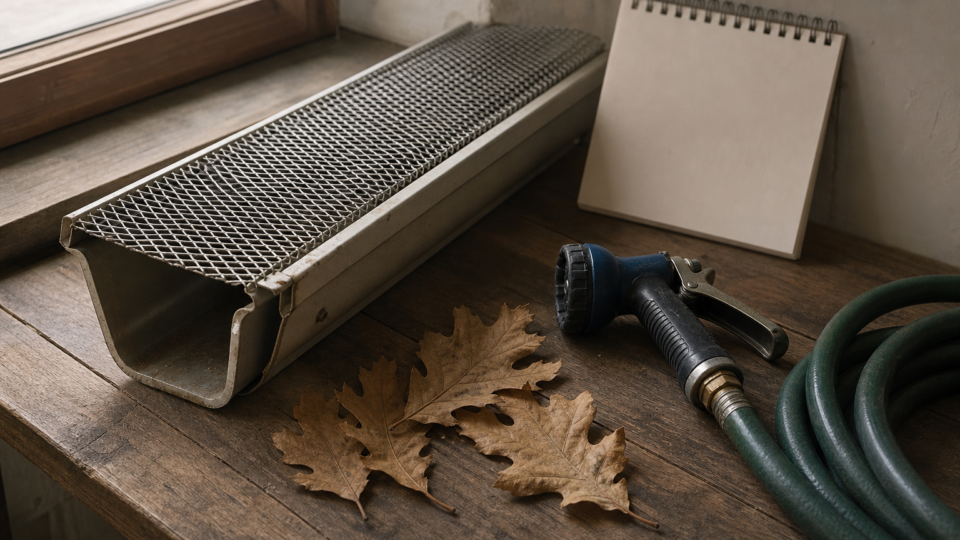
Short answer: The short answer to how often to clean gutters with guards is once a year for most homes. Plan on twice a year if trees overhang your roof or you use foam gutter guard inserts. Guards cut the workload sharply, but they never cut it to zero. Fine debris still gets through, and the guard surface itself clogs. Ready for quotes? Compare local pros →
In this guide
With guards, "cleaning" means something different. You are not scooping out a full channel every few months. You clear the top of the guards, flush the gutter underneath, and inspect the hardware. Done on schedule, that is a short job. Skipped for years, it is how guarded gutters overflow.
This guide explains why guards still need attention, how to set a schedule for your guard type and trees, and how to do the job step by step. It also covers the warning signs that mean you should not wait for your next scheduled visit.
Why gutters with guards still need cleaning
Guards block leaves, twigs, and cones, but they do not stop fine debris, and a clogged guard sends water over the edge. That is why even the best guards need a yearly visit.
What slips through and what piles on top
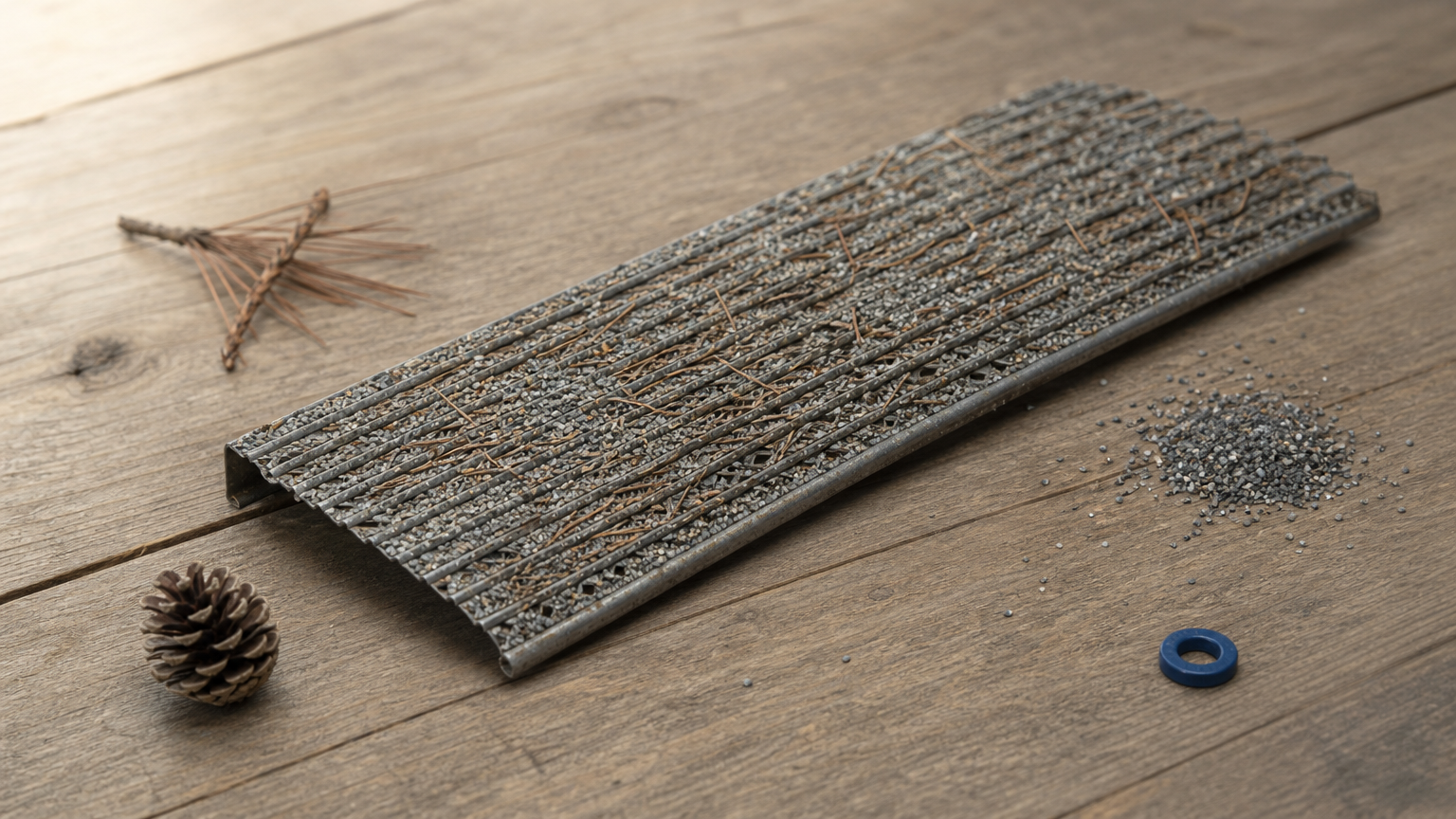
Debris reaches your gutters in two ways. Small particles pass through the openings, and a film builds up on the surface. Over time you will find:
- Shingle granules and roof grit washing into the channel
- Pollen and fine seeds that settle into a muddy layer
- Short pine needles that slip through or mat across the top
- Leaf film that dries onto the guard and blocks the openings
Seeds that land in the channel can sprout where you cannot see them. Meanwhile, the guard surface slowly seals itself. Water that cannot enter the guard runs past it and drops to the ground.
What happens when you skip it
Many owners install guards and never climb a ladder again. That is the real risk, because the system fails quietly. A clogged guard makes water sheet over the front edge during heavy rain. It lands beside your foundation, stains the fascia, and in cold climates feeds ice at the roof edge.
A yearly visit also lets you check that guards are still fastened down and that no section has sagged or lifted. A loose guard lets debris in and can catch wind. You cannot see any of this from the ground.
Guards reduce how often you clean, but they do not remove the need to check.
What should this cost you?
Answer four questions and get a fair price range for your home.
How to set your cleaning schedule
Start with one cleaning each year in late fall, after the leaves drop. Then add visits based on your guard type and the trees around your roof.
Schedule by guard type
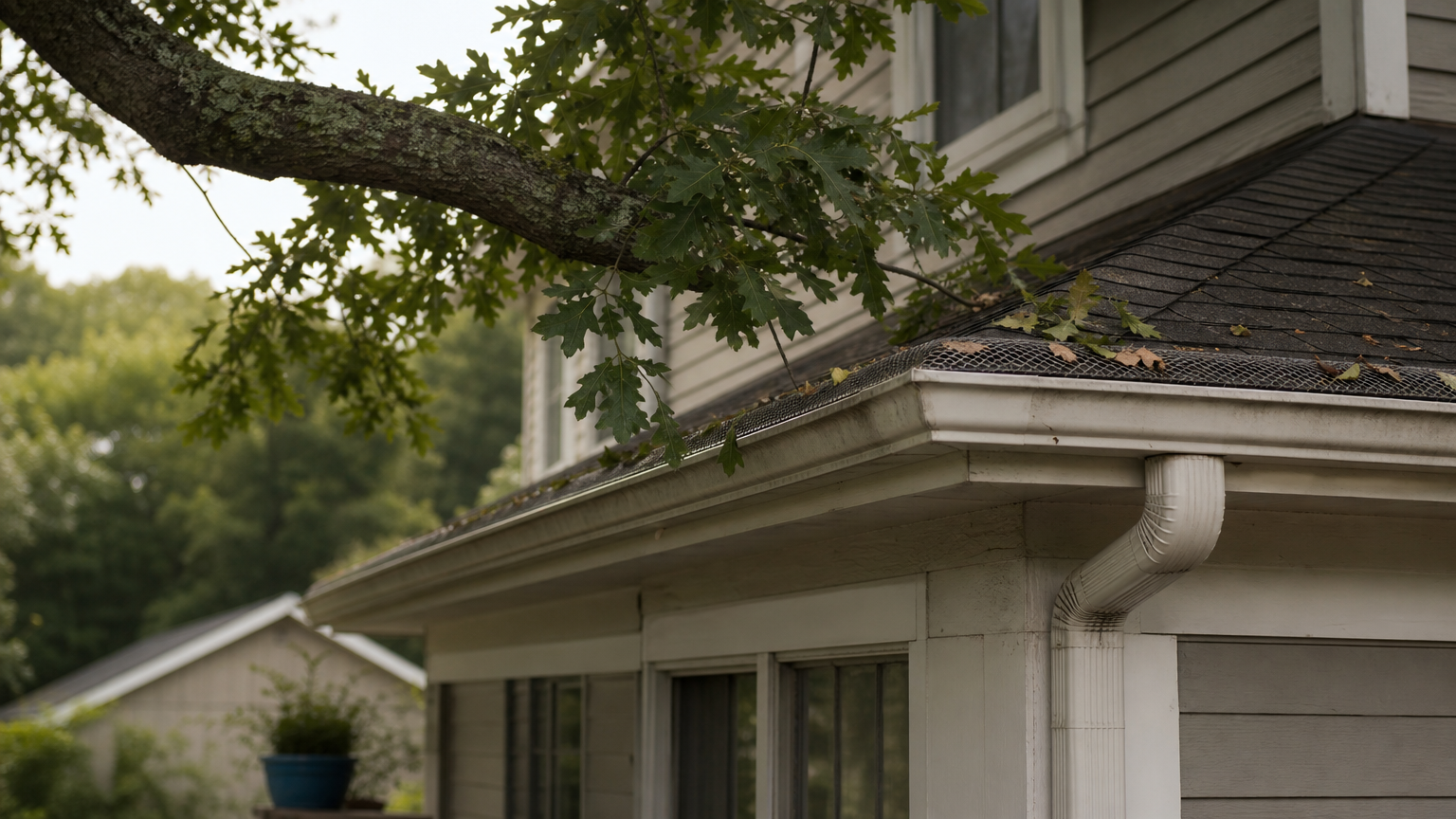
Guard design decides how fast the surface clogs. Foam and brush inserts collect debris around the edges and can mat with pine needles and shingle grit. Mesh and slatted guards clog less but still need one or two visits a year. Guards with a reverse-curve design need their front lip kept smooth, because debris on the lip breaks the water’s path into the gutter.
| Guard type | Light tree cover | Heavy tree cover |
|---|---|---|
| Micro-mesh | Once a year | Twice a year |
| Aluminum screen | Once a year | Twice a year |
| Reverse-curve | Once a year, wipe the lip as needed | Twice a year, wipe the lip more often |
| Foam or brush inserts | Twice a year | Three times a year |
Check whether your guards lift out easily. If they do, cleaning is simple. If they are permanently attached, your cleaning options narrow.
How trees, climate, and storms change it
Trees matter more than the calendar. If mature shade trees hang over your roof, you may need more than one visit even with good guards. Pine needles fall year-round, so a home near pines should not wait for autumn alone. With few or no trees, once a year still applies, because wind-blown grit and leaves from neighbors’ yards add up.
Climate shifts the timing. In cold regions, finish before freezing weather so water drains instead of icing at the edge. Where spring storms drop debris, add an early spring check. Add a quick look after any severe wind or rain event.
Here is a worked example. Say you have micro-mesh gutter guards and two oaks near the roof. Clear the surface and flush the channel in late November, once the leaves are down. Do a lighter check in April, after pollen and seed pods. That is two visits a year, and it covers your real risk periods.
Match your schedule to your trees first and your guard type second.
How to clean gutters with guards, step by step
Work from the top down. Clear the guard surface, lift the guards if you can, remove silt, flush with water, and check the hardware.
The cleaning routine
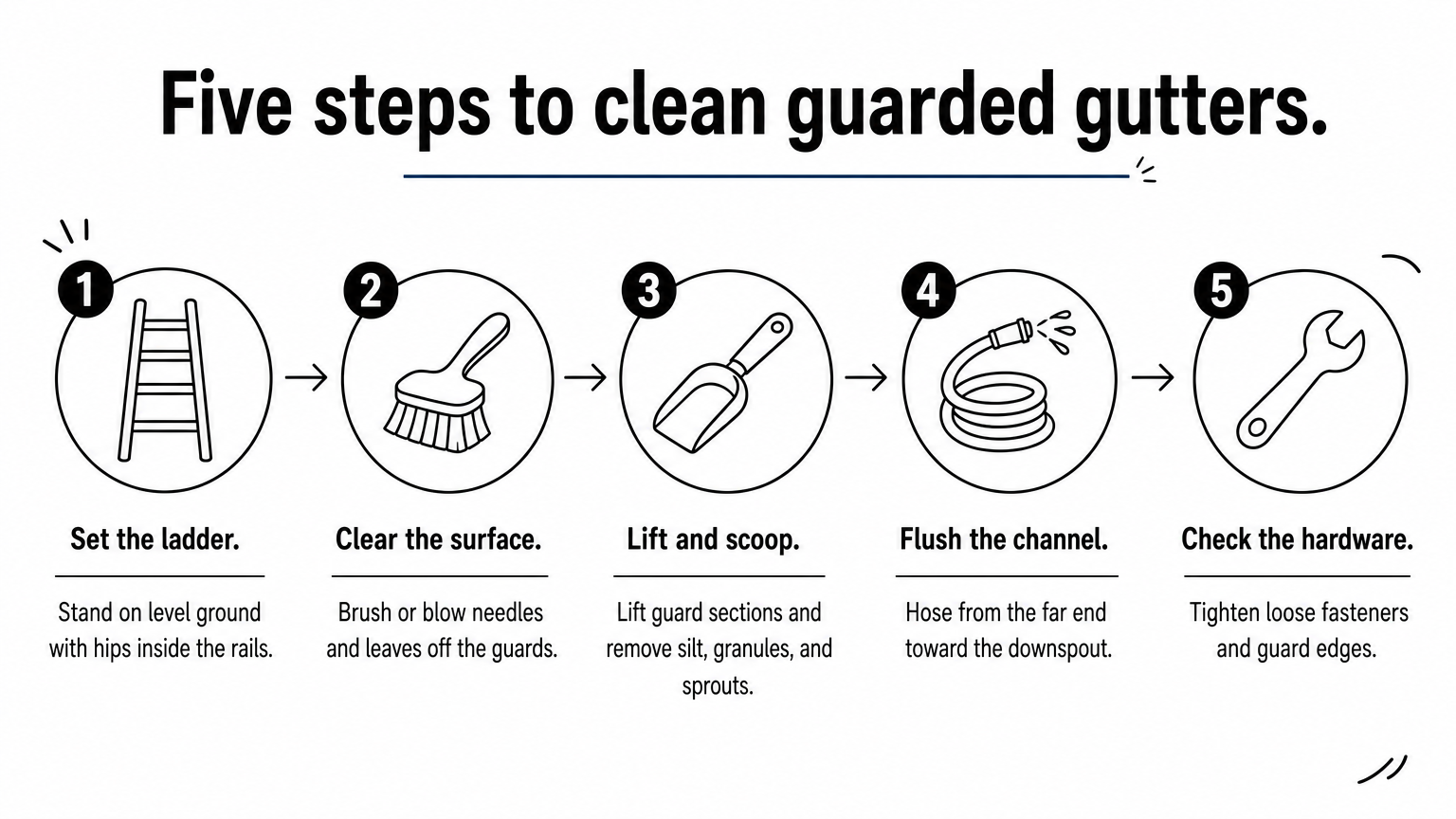
Gather gloves, safety goggles, a sturdy ladder, a soft brush, a small scoop, a bucket, and a garden hose. Then follow these steps:
- Set the ladder on level ground and keep your hips inside the rails. Do not lean out to reach farther.
- Brush or blow loose leaves and needles off the top of the guards. Wipe the front lip on reverse-curve guards.
- Lift the guard sections if the manufacturer designed them to come up. Scoop out silt, granules, and sprouts.
- Flush the channel with a garden hose, starting at the end farthest from the downspout. Watch the downspout outlet. If the water backs up or gurgles, you have a clog below.
- Look over the fasteners and guard edges. Re-seat or tighten anything loose.
A hose is enough. High-pressure water can bend mesh or force grit under the guards.
When to hire a pro instead
Hire out the work when the guards are permanently attached, the roof is steep, or you are working above one story. A pro can reach the channel under fixed guards and spot loose fasteners or poor slope. Gutter cleaning pricing depends on story height, roof pitch, and how clogged the system is.
Being comfortable is a fair test. If the ladder work makes you uneasy, pay for the visit.
A clean guard surface and a flushed channel matter more than a spotless gutter.
Signs your guards need attention between cleanings
Water going over the edge during rain is the clearest sign. Anything that suggests water is not entering the guard means you should clean now, not on schedule.
Ground-level warning signs
You can spot most problems without a ladder. Look for these:
- Water sheeting or dripping over the front of the guard during rain
- Dark vertical streaks on the fascia or siding below the gutter
- Puddles or eroded soil along the foundation after a storm
- Green growth along the guard edge
- A sagging gutter run or a guard that has lifted at the corner
- A downspout that trickles during heavy rain
One of these signs justifies a visit. If you see two or three together, the problem has probably been building for months.
A five-minute check after storms
After high winds or a heavy downpour, walk the perimeter and look up. Check for branches or leaf clumps resting on the guards, and for any section that has shifted. Run a hose near each downspout and confirm the water exits cleanly.
This takes about five minutes and catches small problems early. It also tells you whether your yearly schedule is enough for your trees. If a storm piles up debris every time, add another visit.
Your gutters will tell you when they need help, if you look for the signs.
The bottom line on cleaning gutters with guards
Plan on at least one cleaning and inspection every year, with a second visit if you have heavy tree cover, pine needles, or foam inserts. Clear the guard surface, flush the channel, check the fasteners, and respond to warning signs rather than waiting for the calendar.
If you would rather skip the ladder, you can request a free quote for gutter cleaning and compare local pros without pressure.
What should this cost you?
Answer four questions and get a fair price range for your home.