
Short answer: You’re standing at the window watching water pour over the edge of your gutters like a curtain, and it’s not even the worst storm of the year. Gutters overflowing is one of the most common complaints homeowners search for, and most people assume it’s a clogged gutters problem. Sometimes it is. But plenty of homeowners have clean, debris-free gutters that still spill over every time it rains hard. Ready for quotes? Compare local pros →
In this guide
The real answer depends on what’s happening at your house. Gutter overflow can come from clogs, sure, but it can also come from undersized gutters, poor slope, downspouts that can’t keep up with volume, or fascia boards pulling away from the roofline. Heavy rain just exposes whatever weakness is already there.
This guide walks through the actual causes behind overflowing gutters, including why it happens during heavy rain and why it sometimes happens even when there’s no clog in sight. We’ll cover how to diagnose your specific situation, what fixes actually work, and when a repair beats a full replacement, so you can stop the water damage before it starts.
Why gutters overflow, even when they aren’t clogged
Clogged gutters are the obvious culprit, but not the only one
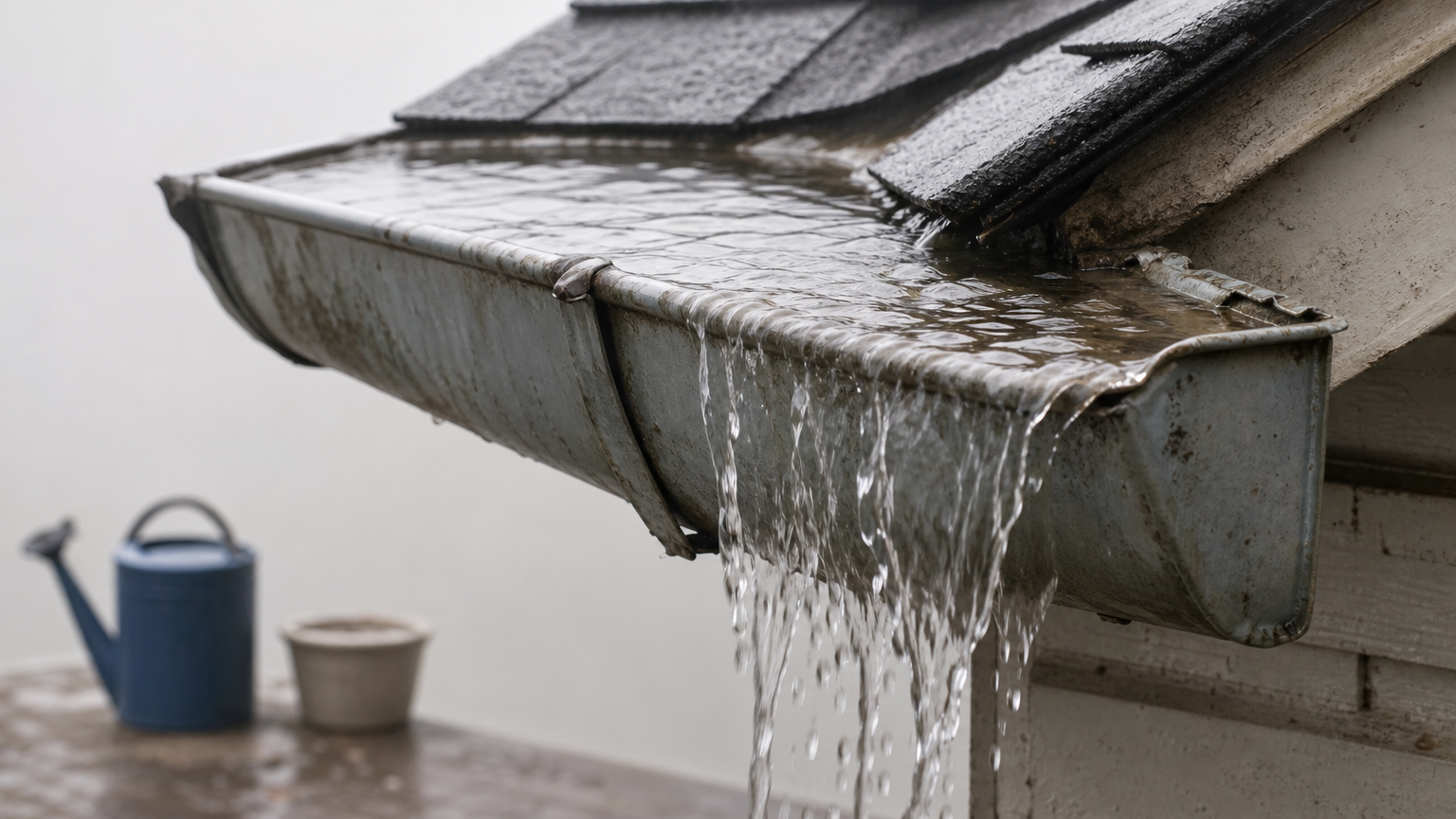
Start with the obvious: leaf buildup and roof grit clog gutters faster than most people expect, especially under oak, pine, or maple trees. Once debris packs into a downspout opening, water has nowhere to go but over the front lip. This is the cause behind most overflowing clogged gutters, and it’s also the easiest to rule out. Pull on gloves, climb a ladder, and check the downspout inlets first. If they’re packed with sludge, you’ve found your answer and your fix is a cleaning, not a repair.
Undersized gutters and downspouts that can’t keep up
But here’s what surprises a lot of homeowners: gutters overflowing but not clogged is incredibly common, and it usually comes down to capacity. A standard 5-inch K-style gutter with one 2×3 downspout is only rated to handle water from about 1,200 to 1,600 square feet of roof, depending on local rainfall intensity. If your roof is larger, steep, or catches water from multiple planes, that same 5-inch system gets overwhelmed the moment rain intensity spikes, even with zero debris inside it.
| Gutter/downspout size | Typical roof area served | Notes |
|---|---|---|
| 5-inch gutter, 2×3 downspout | Up to ~1,200 sq ft | Standard builder-grade setup |
| 5-inch gutter, 3×4 downspout | Up to ~1,600 sq ft | Better for moderate rainfall regions |
| 6-inch gutter, 3×4 downspout | Up to ~2,400 sq ft | Recommended for steep roofs or heavy rain climates |
Overflow during a downpour is often a math problem, not a mess problem.
Poor slope and sagging sections
Gutters need a slight pitch, roughly a quarter inch of drop for every 10 feet, so water actually reaches the downspout instead of pooling. Over time, hangers loosen, fascia boards soften, and sections sag out of pitch. Once a section goes flat or tips backward, water overflowing gutters in that exact spot happens even during a light rain, while the rest of the run stays dry. You can usually spot this with a level or just by watching where puddles form during the next storm.
Heavy rain exposes weak spots everywhere else
Finally, look at your roof valleys. Two roof planes meeting at a valley concentrate far more water into one gutter section than a flat run receives. That’s why gutters overflowing in heavy rain often happens at one specific corner of the house, right below a valley, while the rest of the gutter run handles the same storm just fine. A gutter separating from the fascia and roofline compounds this, letting water shoot behind the gutter entirely instead of into it.
What should this cost you?
Answer four questions and get a fair price range for your home.
How to fix overflowing gutters step by step
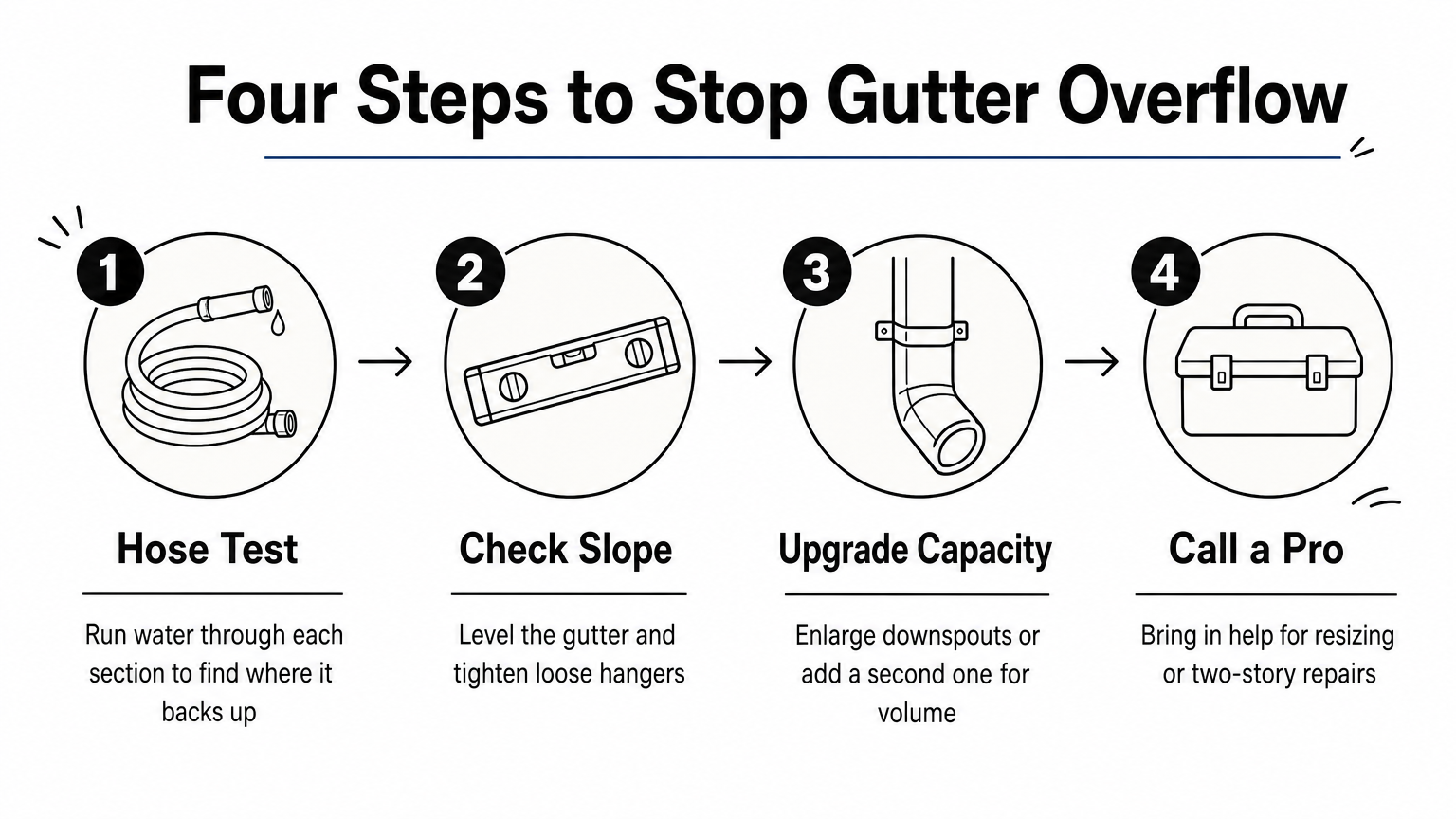
Fixing overflow starts with diagnosis, not guesswork. Grab a flashlight, a ladder, and a garden hose, then work through the problem in order so you don’t replace parts that were never broken.
Start with a clean-out and a hose test
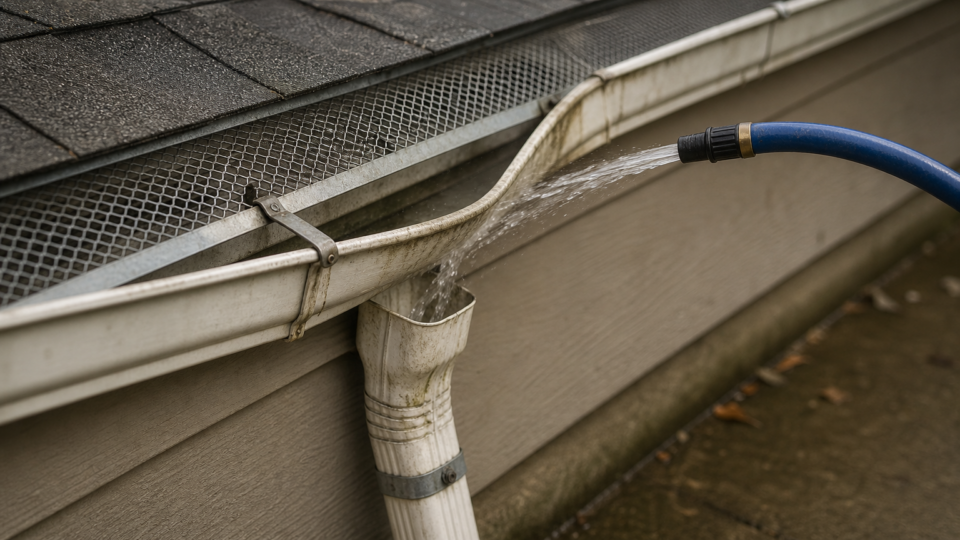
First, clear every section of gutter and both downspout openings by hand, then run a hose test at the far end of each run. Watch where the water slows down or backs up. A clogged downspout shows itself immediately when water pools at the elbow instead of draining. If the hose test shows clean, fast flow and your gutters still overflowed in the last storm, the problem isn’t debris.
If a clean gutter still overflows, the fix is capacity or slope, not another cleaning.
Check slope, hangers, and seams
Next, set a level against the gutter bottom at both ends of a run. Anything flatter than a quarter inch of drop per 10 feet needs re-hanging. Tighten or replace loose hangers every 24 to 36 inches, and reseal any seams that show water tracks or rust streaks with a butyl-based gutter sealant.
Upgrade capacity where volume is the real problem
Then, if your hose test showed strong flow but the roof simply dumps more water than a 5-inch system can carry, plan for a capacity upgrade. That usually means:
- Swapping to 6-inch gutters on wide or steep roof sections
- Adding a second downspout to split volume on long runs
- Enlarging downspouts from 2×3 to 3×4
- Adding a diverter below valleys to spread concentrated flow
Decide between DIY repair and calling a pro
Finally, weigh your own skill against the job. Re-hanging a short sagging section is a reasonable weekend project. Resizing gutters, cutting new downspout runs, or working two stories up on a ladder is where most homeowners call in a pro. Our gutter repair cost guide breaks down typical pricing so you know what a fair quote looks like before anyone shows up.
How to stop gutters overflowing before the next storm
Build a seasonal cleaning schedule
Heavy rain gutter overflow rarely shows up out of nowhere. It builds over a season of ignored maintenance. Schedule a gutter cleaning in late spring after seed pods and blossoms drop, then again in late fall once the last leaves come down, which is roughly how often gutters really need cleaning on most homes. Homes under heavy tree cover often need a third check in midsummer. Skipping even one cycle lets debris compact into a dam that a quick rinse won’t clear.
Add gutter guards to cut debris load
Once your gutters run clean, gutter guards stop most future buildup before it starts. Fine micro mesh screens block the smallest grit and needles, while reverse-curve guards shed heavier leaf loads on steep roofs. Neither type fixes an undersized system, but both dramatically cut how often you’re back on a ladder.
Guards reduce cleaning frequency, they don’t replace a system that’s too small for your roof.
Compare the common options before you buy:
| Guard type | Best for | Maintenance level |
|---|---|---|
| Micro-mesh | Pine needles, small grit | Low, occasional rinse |
| Reverse-curve | Heavy leaf drop, steep roofs | Low to moderate |
| Foam/brush | Budget installs, mild climates | Moderate, needs periodic swap |
See what gutter guards cost installed for real pricing by type and roof size.
Extend downspouts and grade the soil
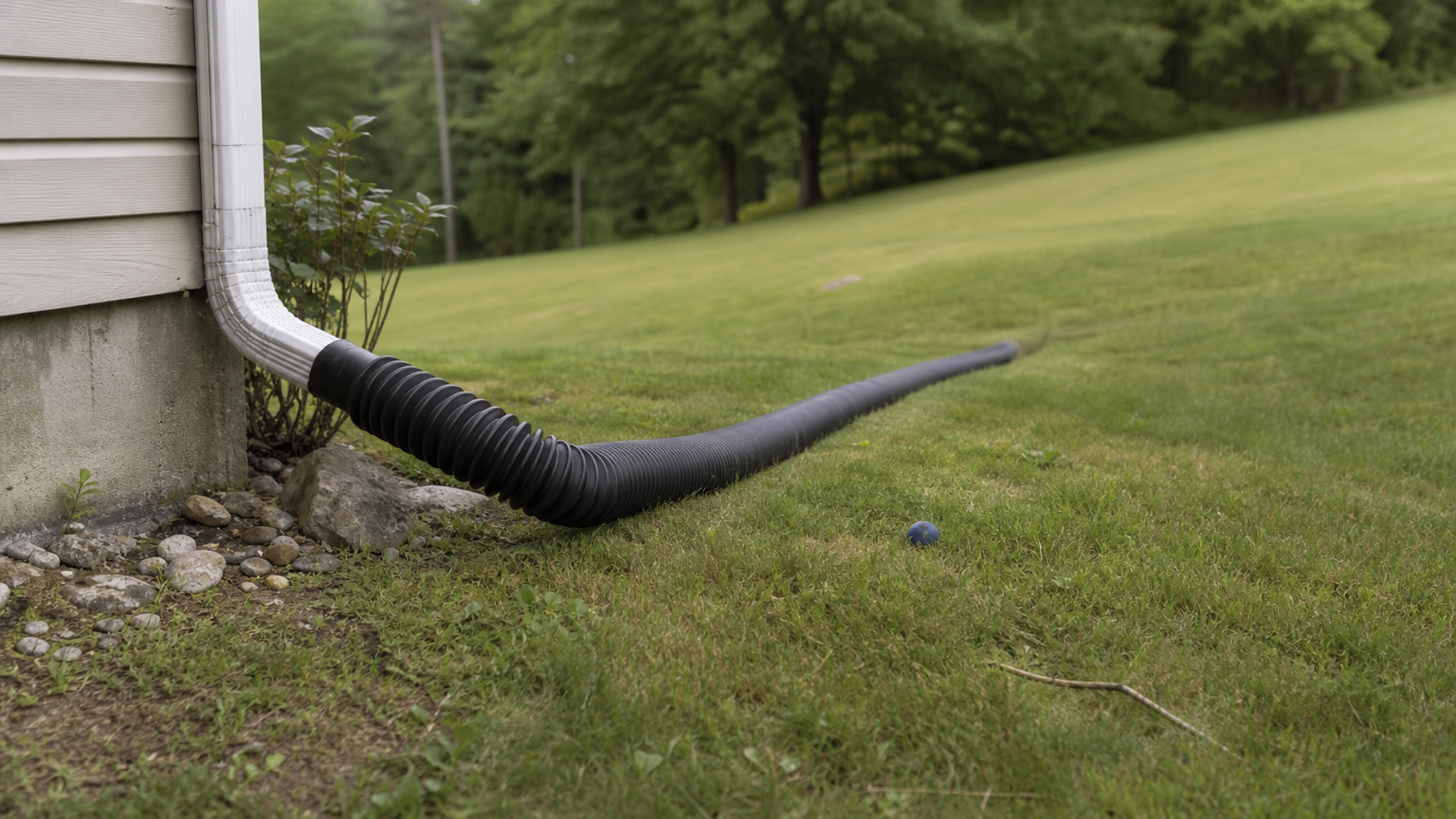
Finally, walk the downspout outlets after the next dry day. Overflowing gutters often trace back to water that has nowhere to go once it reaches the ground. Extend downspouts at least four feet from the foundation, and check that the soil beneath slopes away from the house. Without that grading, water backs up the downspout during a downpour and mimics a clog that isn’t actually there.
Keeping water flowing where it belongs
Most overflow problems trace back to one of four things: debris, undersized capacity, bad slope, or nowhere for water to drain once it hits the ground. Overflowing gutters almost always leave a trail once you know where to look, whether that’s a packed downspout, a flat section, or a valley dumping more water than a 5-inch run can carry. Solve the actual cause instead of guessing, and you stop the cycle of repeat damage to your fascia, siding, and foundation.
Sometimes the fix really is a Saturday with a hose and a level. Other times, especially with undersized systems or fascia pulling away from the roofline, you need someone who can resize and rehang the whole run correctly. If your gutters keep overflowing no matter how often you clean them, have a local pro estimate the overflow repair for free and find out what a proper fix actually costs before the next storm hits.
What should this cost you?
Answer four questions and get a fair price range for your home.