
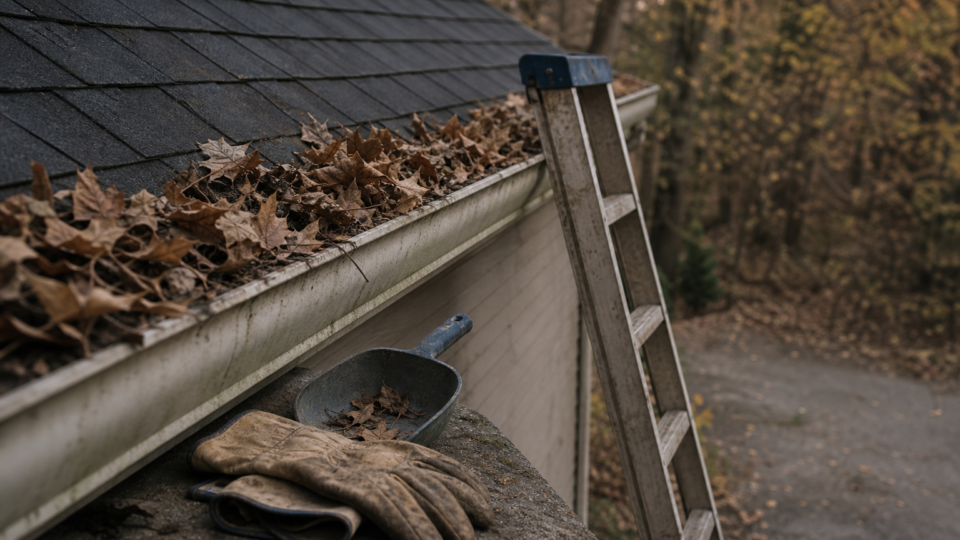
Short answer: Most homeowners guess at gutter cleaning until something overflows or a fascia board starts rotting. That guessing game gets expensive fast. How often clean gutters actually need attention depends less on a calendar date and more on what’s hanging over your roof and where you live. Ready for quotes? Compare local pros →
In this guide
The honest answer: twice a year for most homes, spring and fall, but that number shifts hard based on tree coverage, roof pitch, and local weather patterns. A house shaded by oaks and pines needs quarterly checks, while a single-story home with no overhanging branches might stretch to once a year. Gutter cleaning frequency isn’t one-size-fits-all, and treating it that way is how sagging, leaks, and pest problems sneak up on you.
This guide breaks down exactly how to figure out your own schedule instead of relying on generic advice. You’ll get the specific factors that speed up debris buildup, warning signs that mean it’s time now regardless of the season, and a realistic timeline based on your home’s setup. By the end, you’ll know whether you’re overdue, right on track, or safe to wait a bit longer.
Why gutter cleaning frequency matters for your home
Skipping cleanings doesn’t just mean more leaves in your gutters, it sets off a chain reaction that costs real money. Clogged gutters trap water against your roofline, and that standing water works its way under shingles, into fascia boards, and eventually into your attic insulation. A fascia board that’s been soaking for a season can rot enough to need full replacement of the rotted board behind the gutter, turning a $150 cleaning job into a $600+ repair. Overflow also erodes the soil around your foundation, which is how homeowners end up with basement leaks they can’t trace back to the actual cause.
Neglected gutters don’t fail quietly, they fail expensively, usually at your fascia, foundation, or roof edge first.
Timing matters just as much as the damage itself. Ice dams form when gutters packed with debris freeze solid in winter, forcing meltwater back up under your shingles instead of down through the downspout. That’s a northern-climate problem specifically tied to how often you clean gutters heading into the cold months. Pests are the other overlooked cost: standing water and rotting leaves are exactly what mosquitoes, carpenter ants, and even rodents look for when they’re scouting a place to nest near your roofline.
Regular cleaning is cheap insurance against all of it. A homeowner who sticks to a schedule spends a fraction of what someone pays after ignoring the problem for two or three seasons. If you’re already seeing sagging sections or separation at the fascia, it’s worth getting a free repair quote from a local contractor before assuming a simple cleaning will fix it, because damage that’s gone too far needs more than a hose and a ladder.
What should this cost you?
Answer four questions and get a fair price range for your home.
How to determine your ideal gutter cleaning schedule
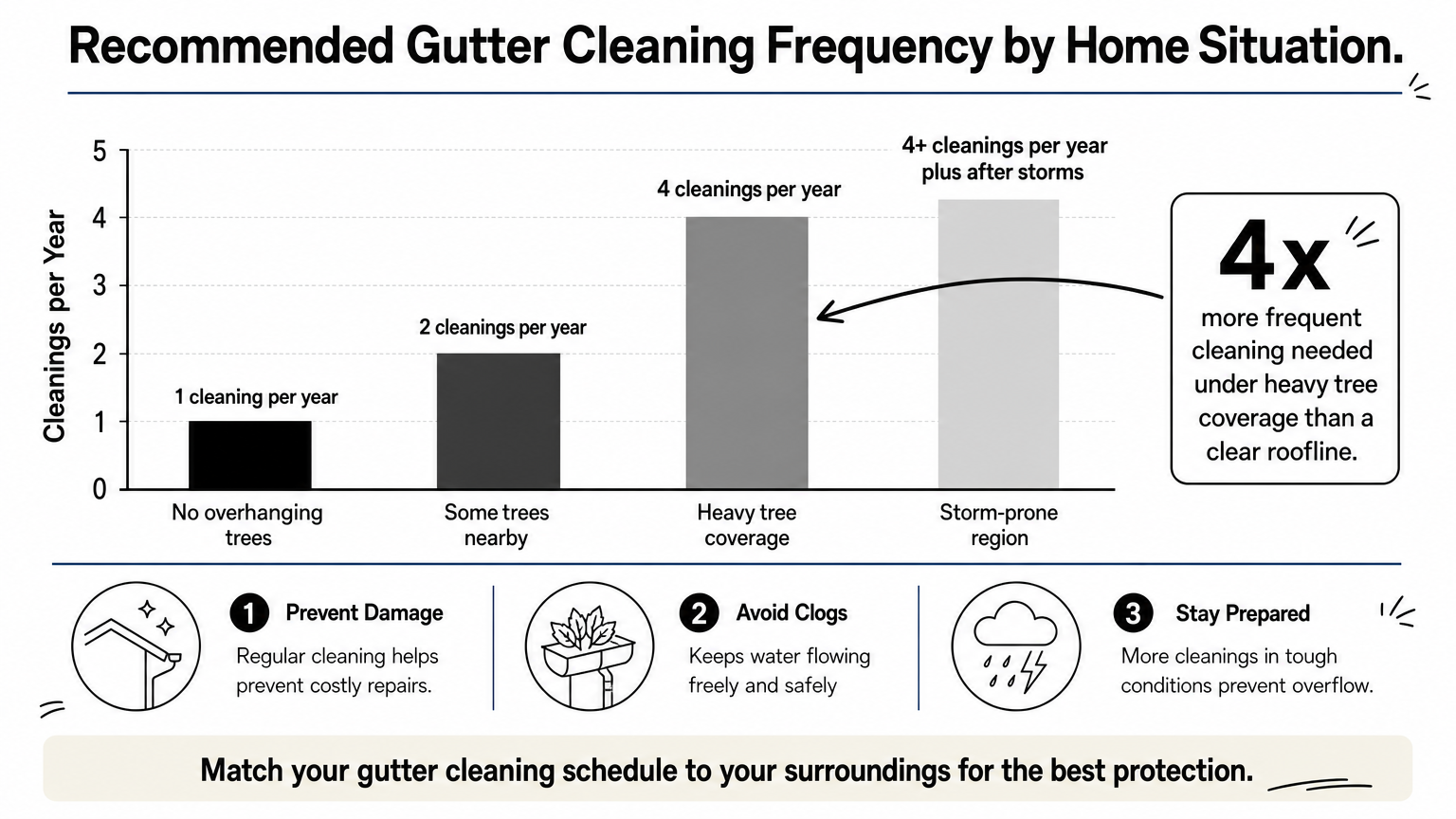
Figuring out your own schedule starts with an honest look at what surrounds your house. Tree coverage is the biggest variable: a home under mature oaks or pines needs far more attention than one with a clear roofline, since seeds, needles, and leaves fall for most of the year, not just autumn. Roof pitch matters too, steep roofs shed debris into gutters faster and pack it tighter than a low-slope roof does.
Geography plays a role most homeowners overlook. Local climate determines whether you’re fighting spring pollen clumps, summer thunderstorm debris, or winter ice buildup, and each of those calls for a different check-in point during the year.
Use this table as a starting baseline, then adjust up if you notice buildup faster than expected:
| Home Situation | Recommended Frequency |
|---|---|
| No overhanging trees | Once a year |
| Some trees nearby | Twice a year (spring/fall) |
| Heavy tree coverage (pines, oaks) | Every 3 months |
| Storm-prone or high-wind region | After major storms, plus seasonal cleanings |
Treat this as a starting point, not a fixed rule, and adjust once you see how fast your own gutters actually fill.
Signs your gutters need clearing right now
Forget the calendar when your gutters start showing physical symptoms. Visible sagging or gutters coming loose from the fascia board means water is already sitting where it shouldn’t, and that’s your cue to check regardless of what season it is. Water marks or streaking down your siding after a rainstorm are another giveaway, they mean the gutter is overflowing instead of channeling water to the downspout.
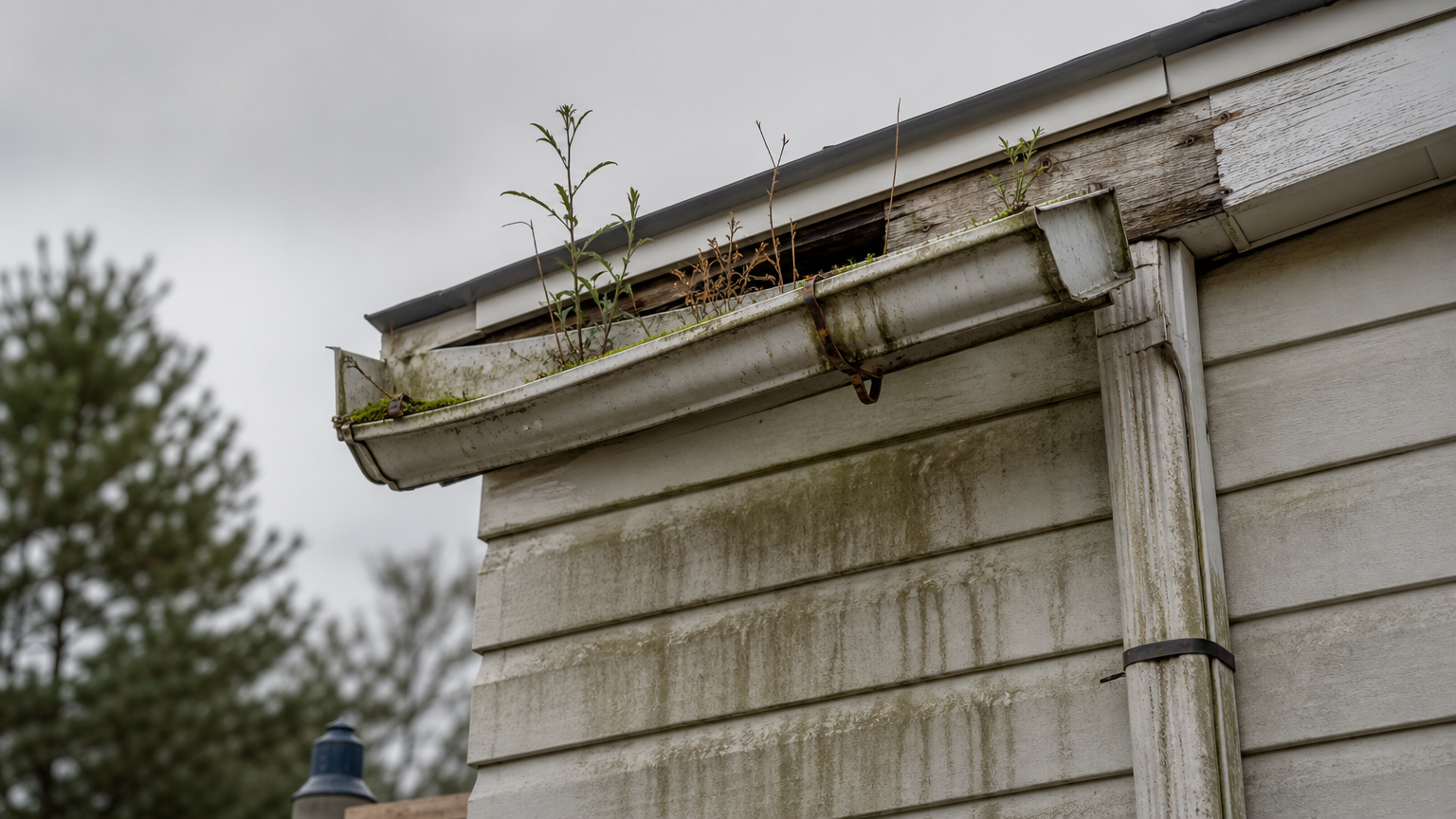
Listen and look, too. Plants sprouting from the gutter line, birds nesting near the corners, or a musty smell near your foundation all point to trapped organic debris. If you’re wondering how often should you clean gutters when you notice these signs, the answer is now, not next season.
If your gutters are talking to you through sagging, staining, or smell, they’ve already been overdue for a while.
Watch for these signs specifically:
- Water spilling over the sides during rain
- Sagging or pulling gutters at the fascia
- Weeds or small plants growing in the trough
- Pest activity near the roofline
- Musty odor near the foundation after rain
Best times of year to clean your gutters
Late fall, after the last leaves drop but before the first hard freeze, is the single most important cleaning window. Late autumn cleanings clear out the season’s biggest debris load and prevent that debris from freezing solid into an ice dam once temperatures drop. Miss this window and you’re stuck chipping ice out of a clogged gutter in January instead of scooping dry leaves in November.
Spring cleanup matters almost as much, especially after a windy or snow-heavy winter. Spring gutter cleaning clears out seed pods, pine needles, and whatever debris blew in over winter storms, resetting your gutters before spring rains arrive at full volume.
Clean once before winter locks debris in place, and once after winter proves what got left behind.
A simple two-check plan works for most homes:
- Late fall (after leaf drop): clear debris before freezing weather
- Early spring (after thaw): remove winter buildup before heavy rains
Homes with heavy tree coverage should add a midsummer check, since seeds and storm debris don’t wait for a season change to pile up.
DIY vs. professional cleaning: cost and time tradeoffs
Grabbing a ladder yourself saves money but costs time and carries real risk. DIY cleaning runs you the price of gloves, a scoop, and maybe a stabilizer for your ladder, roughly $20 to $50 in supplies, though tools that let you clear gutters from the ground can skip the climb entirely, plus an hour or two depending on your home’s size and how steep your roof is. Falls off ladders send thousands of homeowners to the ER every year, so factor that risk into your decision, not just the dollar savings.
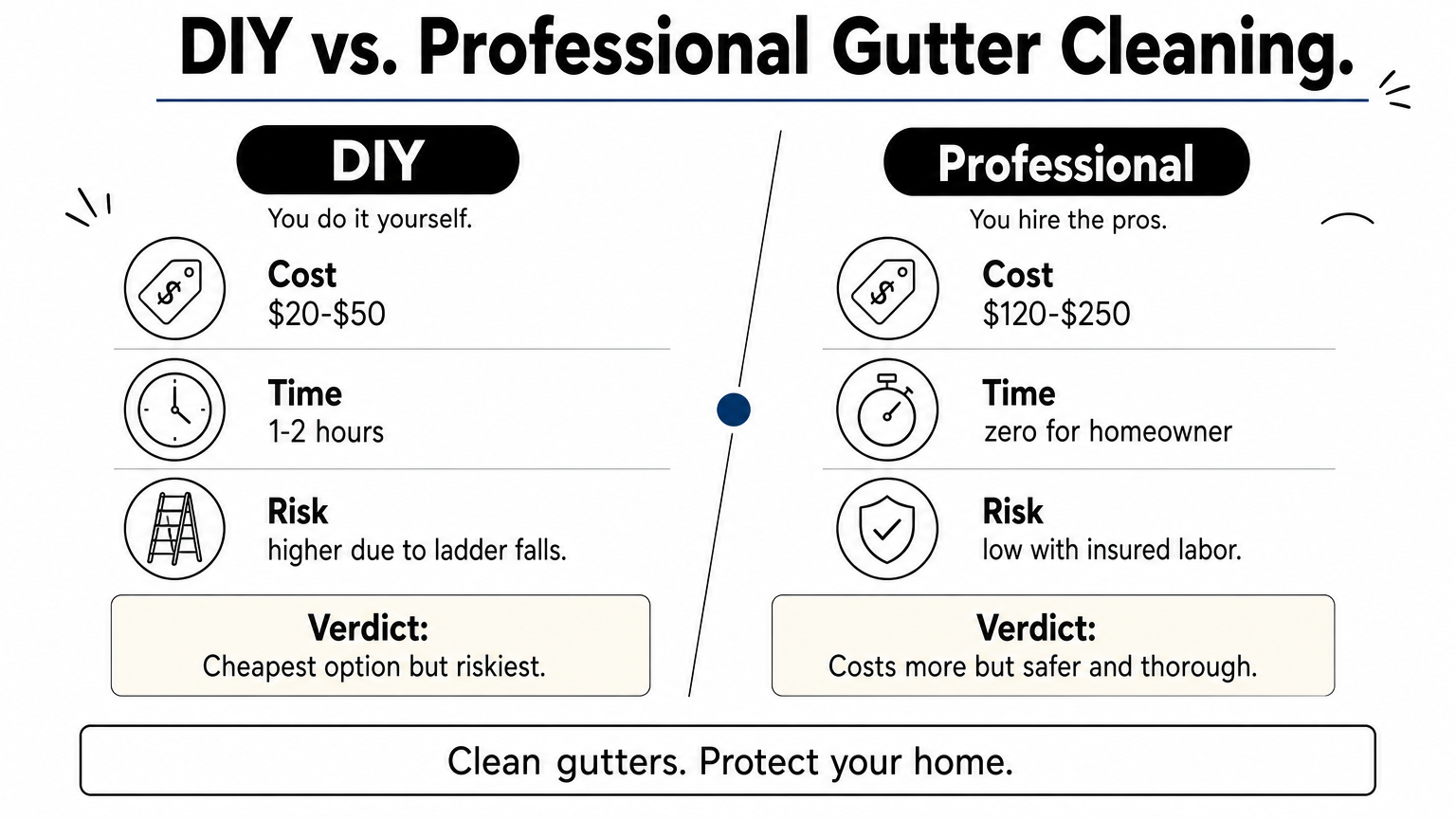
Hiring out shifts the tradeoff the other direction. Professional cleaning typically costs $120 to $250 per visit depending on your region and gutter length, but you get insured labor, a trained eye for early damage, and zero time spent on your own roof.
Paying for a professional cleaning isn’t about laziness, it’s about buying insurance against a fall and an untrained eye missing early damage.
| Option | Typical Cost | Time Required | Risk Level |
|---|---|---|---|
| DIY | $20-$50 | 1-2 hours | Higher (ladder falls) |
| Professional | $120-$250 | 0 (your time) | Low |
Check what pros charge per visit and where DIY still makes sense to price out your specific setup before deciding.
Staying ahead of gutter maintenance
Getting your cleaning schedule right comes down to matching frequency to your actual property, not a generic rule you saw somewhere else. Twice a year covers most homes, but heavy tree coverage, storm exposure, or a steep roof pitch can push that to quarterly without much extra effort once it’s part of your routine. Homes with clear rooflines and no overhanging branches can often stretch to once a year and still stay ahead of problems.
Ignoring the signs costs more than the cleaning ever would. Sagging gutters, staining, or a musty smell near the foundation mean you’re already behind, and catching that early is what keeps a $150 cleaning from turning into a $600 repair bill.
If a look at your gutters right now shows more grime than you want to deal with yourself, skip the ladder and compare free cleaning quotes from local pros instead.
What should this cost you?
Answer four questions and get a fair price range for your home.