
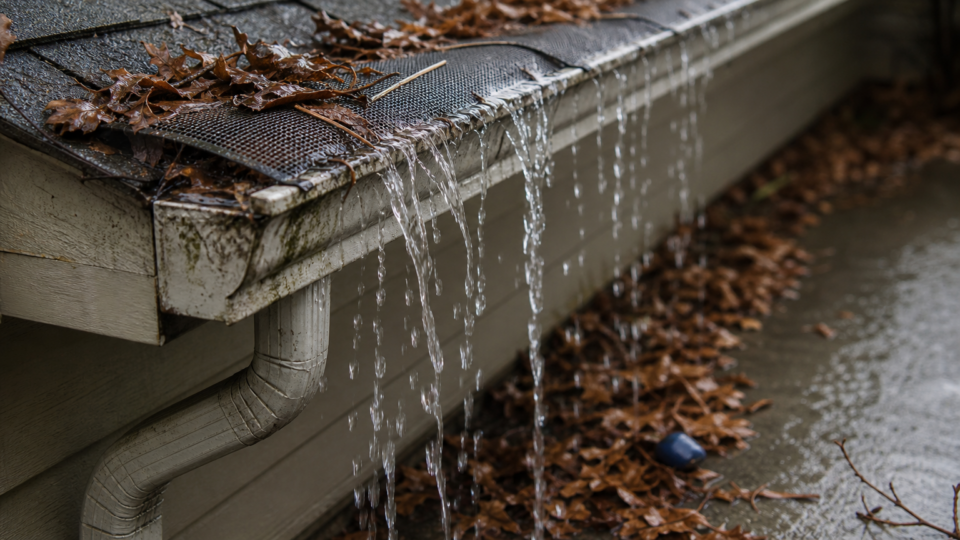
Short answer: Watching water sheet over the edge of your gutters during a heavy storm is frustrating, especially when you just cleaned them a few weeks ago. Rain gutter overflow usually isn’t random. It’s a sign that something specific is wrong with your system, whether that’s clogged debris, incorrect slope, or gutters that are simply too small for your roof. Ignoring it long enough leads to fascia rot, foundation issues, and landscaping damage that costs far more than the fix. Ready for quotes? Compare local pros →
In this guide
The good news is that overflow almost always traces back to one of a handful of causes, and each one has a straightforward solution. In this guide, we break down the real reasons water spills over your gutters instead of flowing through the downspouts, from undersized gutters to improper pitch to clogged outlets you can’t see from the ground.
We’ll walk through how to diagnose what’s happening on your own home, what a former installer would check first, and which fixes are DIY-friendly versus when it’s worth calling in a professional. By the end, you’ll know exactly why your gutters are overflowing and what it actually takes to stop it for good.
Why rain gutters overflow during heavy rain
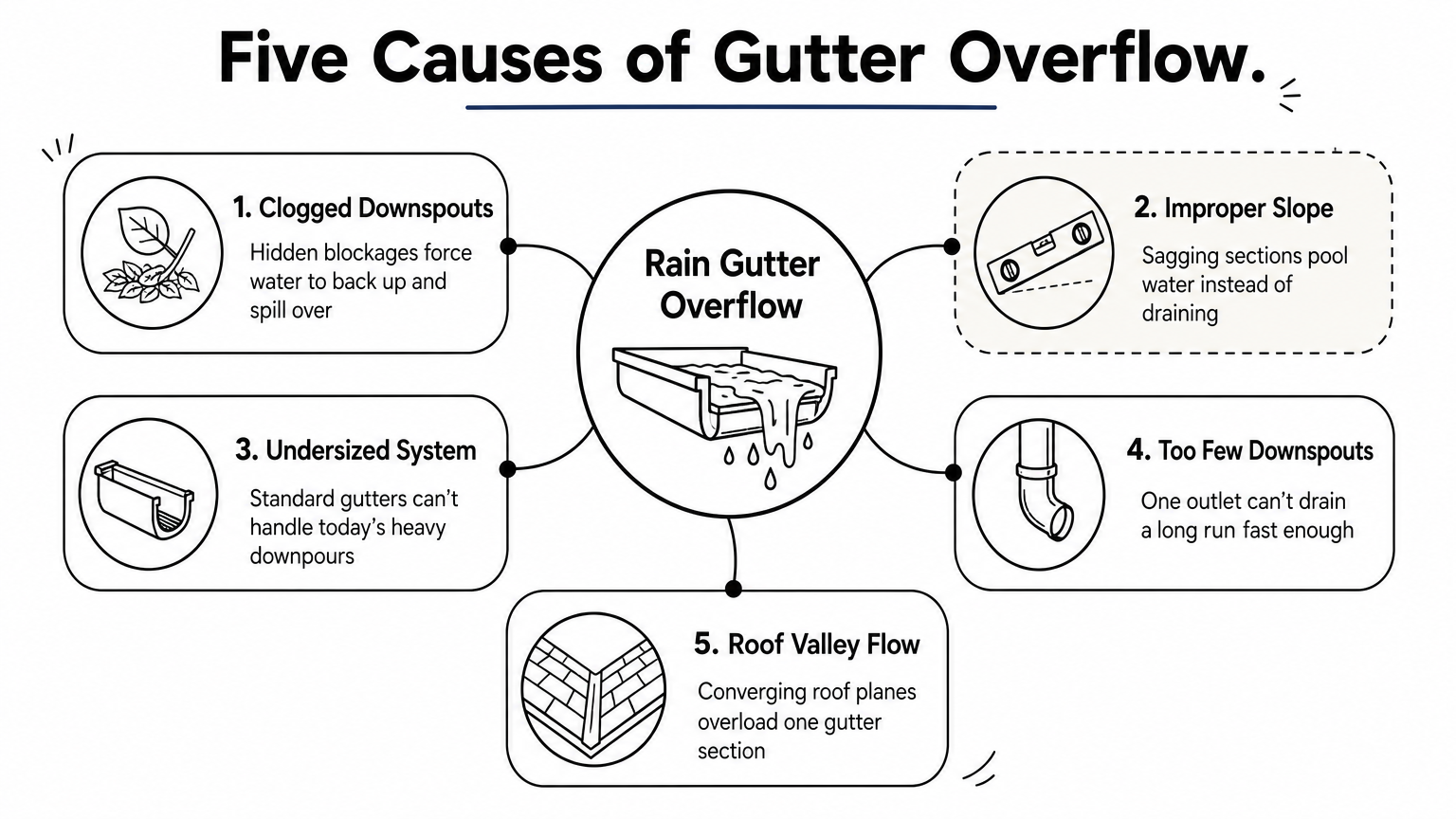
Most overflow problems come down to one of five culprits: debris blocking water flow, a gutter pitched wrong, a system that’s undersized for your roof, too few downspouts, or a roof design that dumps more water into one section than it can handle. As a former installer, I can tell you that clogs get blamed for almost everything, but they’re only part of the story. Plenty of clean, well-maintained gutters still overflow because the hardware underneath was never sized or sloped correctly in the first place.
Clogged gutters and downspouts
Leaves, pine needles, shingle grit, and seed pods pile up fast, and even a partial blockage can cause gutters overflowing during a downpour that a lighter rain wouldn’t reveal. The tricky part is that a gutter can look empty from the ground while the downspout outlet, the narrow opening where water drops into the vertical pipe, is packed solid. That hidden clog forces water to back up and spill over the front edge long before the trough itself is full. If you’ve cleaned the visible gutter run but overflow keeps happening in the same spot, check the outlet and the top few feet of the downspout itself before assuming something else is wrong.
Improper slope or pitch
Gutters need a consistent slope toward the downspout, generally about a quarter inch of drop for every 10 feet of run. When a section sags or was hung level instead of pitched, water pools in the low spot instead of draining, and once that pool exceeds the gutter’s depth, it overflows right there. You can spot this by watching where standing water collects after a light rain; that’s your low point, and it usually means a hanger has pulled loose or was installed wrong to begin with.
Overflow during heavy rain almost always points to one thing: water arriving faster than your system can move it out.
Undersized gutters and downspouts
A lot of older homes, and even some newer ones, were built with standard 5-inch K-style gutters and a single 2×3 inch downspout per run, which was fine for average rainfall decades ago but struggles with the intense downpours common now. If your gutters overflow specifically during heavy or fast-moving storms but handle steady rain fine, undersizing is the likely cause. This is one of the most common findings when homeowners call about rain gutter overflow on roofs with a lot of surface area feeding into too few outlets.
Not enough downspouts or poor placement
Even a correctly sized gutter can overflow if it only has one downspout trying to drain a 40-foot run. Water has to travel the full length of the gutter to reach that single exit point, and during a heavy storm it simply can’t move fast enough. The fix often isn’t a bigger gutter at all, it’s adding a second downspout closer to the middle of the run so water has two shorter paths to drain instead of one long one.
Roof design concentrating water flow
Valleys, where two roof planes meet, funnel water from a large surface area into a single, short stretch of gutter. That section takes a disproportionate beating during heavy rain, and it’s often the exact spot where overflow shows up first even though the rest of the gutter run looks fine. Steep roof pitches make this worse by speeding up water as it hits the gutter, sometimes causing it to shoot past the trough entirely in what installers call splashover.
| Cause | Typical sign | Where overflow shows up |
|---|---|---|
| Clogged outlet or downspout | Overflow despite recent cleaning | Near the downspout connection |
| Improper slope | Standing water after light rain | Mid-run low points |
| Undersized system | Fine in light rain, fails in heavy rain | Along the whole run |
| Too few downspouts | Worse the farther from the outlet | Center of long runs |
| Roof valley or steep pitch | Overflow only during downpours | Directly below the valley |
Matching your symptoms to this table is usually enough to point you toward the right fix, which is exactly what the next section covers.
What should this cost you?
Answer four questions and get a fair price range for your home.
How to stop gutter overflow before it starts
Prevention beats troubleshooting every single time, and most overflow problems are cheaper to head off than to repair after fascia damage sets in. Start with the basics before you assume you need new hardware: a clean, well-pitched, properly sized gutter handles a surprising amount of rain. The steps below follow the order I’d check them as an installer, cheapest and easiest first.
Clean gutters twice a year, minimum
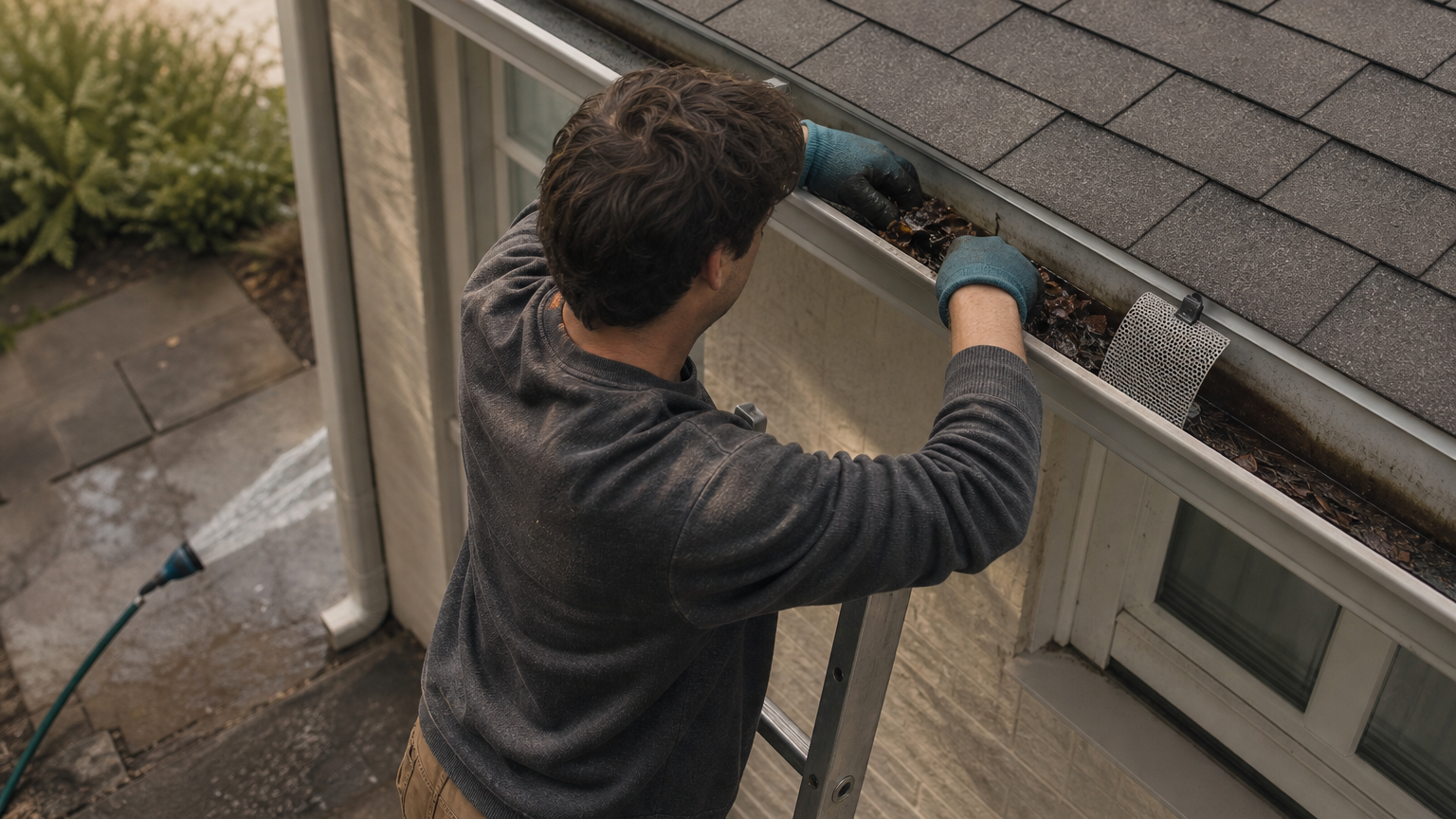
Regular cleaning stops the most common cause of overflow cold, but timing matters more than most homeowners realize. Clean in late spring after seed pods and blossoms drop, and again in late fall once trees are bare, not just once a year in autumn, and if you’d rather hire it out, it helps to know what pros charge for a cleaning visit and when to DIY. If you’re under heavy tree cover, add a mid-summer check. While you’re up there, flush each downspout with a hose to confirm water exits freely at the bottom instead of trickling out.
Install gutter guards to cut debris buildup
Guards won’t fix a sizing or slope problem, but they dramatically reduce how often clogs cause overflow in the first place. Micro-mesh guards block the fine grit and seed pods that clog downspout outlets, while reverse-curve designs handle heavier leaf volume in wooded lots. If your overflow traces back to debris rather than undersized hardware, guards are usually the single best dollar-for-dollar fix available. Our 2026 gutter guard price guide by type and home size breaks down pricing so you can match the guard to your actual debris problem instead of guessing.
The fastest way to stop overflow for good is removing the debris problem entirely, not just cleaning up after it.
Reset the slope and tighten loose hangers
Sagging sections cause pooling long before a storm ever hits, so walk your gutter line after a light rain and mark any spot where water sits instead of draining. Loose hangers are usually the cause, and re-securing them with screw-in hangers instead of old spike-and-ferrule fasteners restores proper pitch without replacing the whole run, though a gutter that has visibly separated from the fascia board needs more than a tightened screw. This is a low-cost fix that often solves overflow that looks like a sizing issue but isn’t.
Add splash guards and extra outlets where water concentrates
Under roof valleys, a small metal splash guard clipped inside the gutter keeps fast-moving water from shooting past the trough during downpours. For long runs with a single downspout, adding a second outlet nearer the middle cuts the distance water has to travel and stops the center-of-run overflow described earlier. Both fixes are inexpensive compared to replacing an entire gutter system, and they target the exact spots where rain gutter overflow tends to show up first.
Sizing gutters and downspouts for heavy rainfall
Getting the size right up front saves you from chasing overflow symptoms for years, and if you’re already weighing new hardware, it pays to know what a full gutter replacement runs in 2026. Sizing isn’t guesswork, it’s math based on your roof’s square footage, your local rainfall intensity, and how many downspouts are spread across the run. Rain gutter overflow on a properly maintained system almost always traces back to a sizing calculation that was skipped or done wrong during the original install.
Calculate your roof’s drainage area first
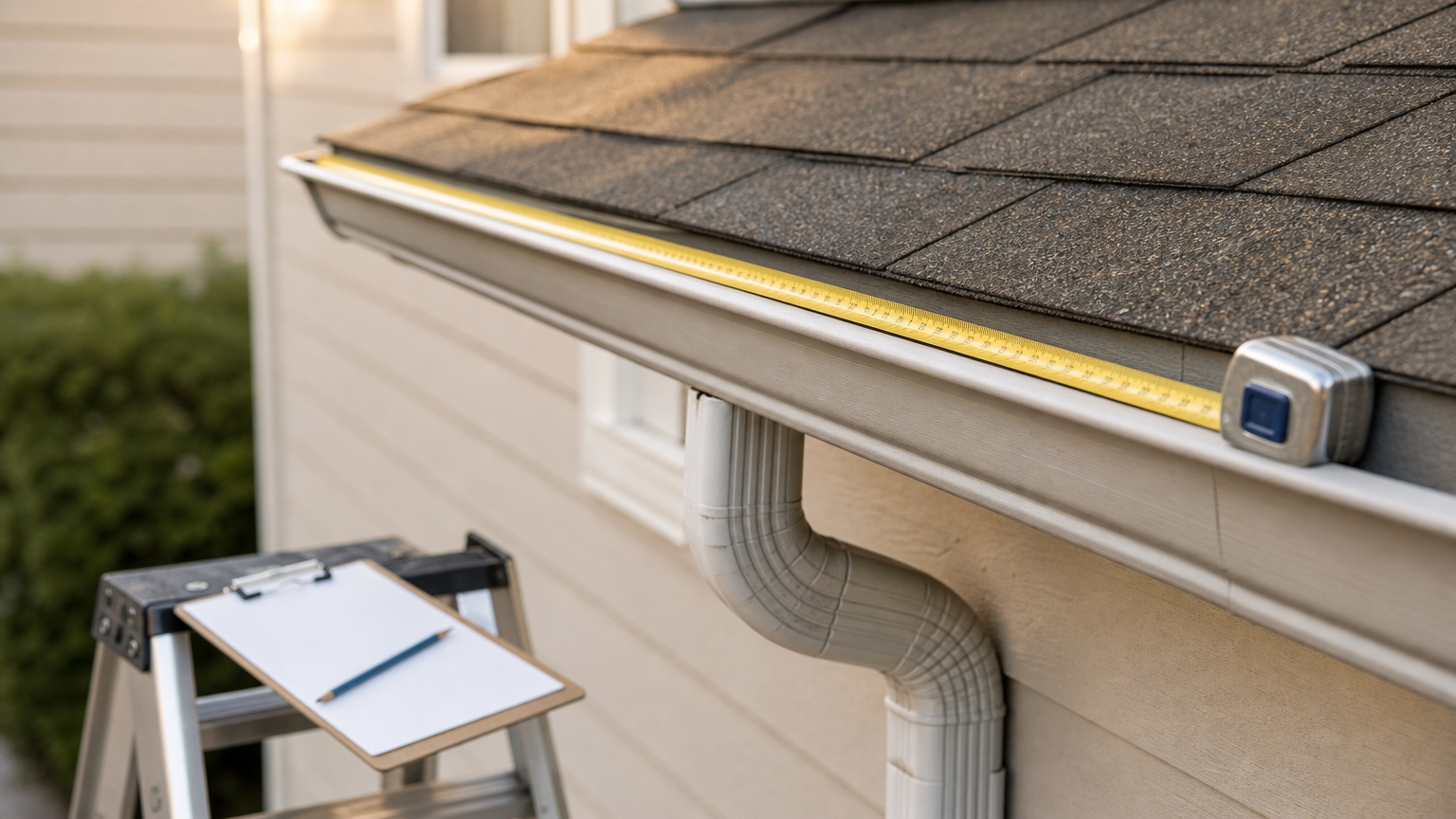
Start with the square footage of roof that drains into each gutter section, not the whole house at once. Multiply the length of the roof edge by the distance to the ridge, and remember that steep roofs shed water faster than they let on, so treat a steep pitch as adding roughly 10 to 15 percent more effective drainage area. A 1,500 square foot section feeding into one gutter run needs noticeably more capacity than a 600 square foot section, and sizing them the same is a common mistake on additions or garage tie-ins.
Match gutter and downspout size to your rainfall
Once you know the drainage area, match it against your region’s peak rainfall rate, which you can pull from NOAA’s rainfall intensity data for your zip code. Homeowners in the Southeast and Gulf Coast, where downpours regularly exceed two inches per hour, need larger capacity than someone in a drier climate with the same roof size.
| Roof drainage area | Minimum gutter size | Downspout size |
|---|---|---|
| Up to 750 sq ft | 5-inch K-style | 2×3 inch |
| 750 to 1,500 sq ft | 6-inch K-style | 3×4 inch |
| Over 1,500 sq ft | 6-inch K-style | Two 3×4 inch spouts |
A gutter that’s the right size for your climate stops overflow that no amount of cleaning ever will.
Figure out how many downspouts you need
As a rule of thumb, plan for one downspout per 35 to 40 feet of gutter run, and cut that distance in half if the region sees frequent heavy downpours rather than steady rain. Long runs with a single outlet are one of the most common overflow causes I found on inspections, especially on ranch-style homes with unbroken 50-foot gutter lines. If you’re unsure where your setup falls, our cost estimator tool factors in linear feet, stories, and regional rainfall to flag whether your current downspout count is actually adequate before you spend money on the wrong fix.
Getting these three numbers right, drainage area, gutter size, and downspout count, solves the overflow problems that cleaning and slope adjustments can’t touch. If your system checks out on paper but still overflows, the issue usually isn’t sizing at all, it’s something installation-related that’s worth a closer look before you replace anything.
DIY fixes versus calling a gutter professional
Deciding whether to grab a ladder yourself or call in help usually comes down to two things: how comfortable you are working at height, and whether the fix is cosmetic or structural. Cleaning, re-securing a hanger, or adding a splash guard are well within reach for most homeowners with basic tools. Replacing a run, correcting slope across an entire side of the house, or diagnosing why a properly sized system still floods usually calls for someone who does this daily.
What you can handle yourself
Gutter maintenance that stops rain gutter overflow caused by debris or minor sag rarely requires special skills, just a sturdy ladder, gloves, and a free Saturday afternoon.
- Scooping debris out of the trough and flushing downspouts with a hose
- Tightening or replacing individual loose hangers with screw-in fasteners
- Installing snap-in splash guards under a roof valley
- Adding gutter guards to a system you’re not planning to resize
- Checking and resealing end caps, seams, and downspout joints with gutter sealant
If the fix takes less than an hour and doesn’t involve a ladder over 20 feet, it’s usually safe to DIY.
When it’s worth calling a professional
Once the problem involves resizing gutters, adding downspouts through existing siding, or correcting slope across a long run, the math changes fast, and it’s worth getting the repair priced by a local pro for free. Professionals carry liability insurance for falls, have the tools to cut and crimp new sections cleanly, and can spot underlying fascia rot that’s easy to miss from the ground. Repairing water-damaged wood behind a gutter run, for instance, isn’t a weekend project, and covering it up without addressing the rot just guarantees the same overflow damage returns within a year or two.
Steep or multi-story homes are the other clear trigger for calling in help. A former installer wouldn’t think twice about a single-story ranch, but a three-story colonial with a steep valley pitch is a different risk calculation entirely, and the fall hazard alone justifies the labor cost.
| Situation | DIY-friendly | Call a pro |
|---|---|---|
| Routine cleaning, 1-2 stories | Yes | Optional |
| Loose hanger, minor sag | Yes | Optional |
| Full re-slope of a long run | No | Yes |
| Adding downspouts through siding | No | Yes |
| Fascia rot behind the gutter | No | Yes |
| Steep roof or 3+ stories | No | Yes |
Once you’ve matched your situation against that table, getting quotes is the next logical step rather than guessing at what a repair should cost. Our cost estimator tool gives you a realistic price range first, and if you decide the job is beyond DIY, you can request quotes from local contractors through our Angi referral link without committing to anything on the spot.
Keeping your gutters ready for the next storm
Rain gutter overflow almost always comes back to the same handful of causes: clogged outlets, bad pitch, undersized hardware, or too few downspouts spread across a long run. Once you match your symptoms to the right cause, the fix is usually straightforward, whether that’s a thorough cleaning, a re-secured hanger, or resizing a section that was never built for today’s downpours. Storms don’t wait for a convenient weekend, so the homeowners who stay ahead of overflow are the ones who check their gutters twice a year and act on small problems before they become fascia rot or foundation damage.
Skip the guesswork if your gutters keep overflowing despite regular cleaning. A properly sized, well-maintained system paired with the right guards handles heavy rain without drama. If debris is your recurring problem, see what guard installation costs and get free quotes from local pros so you can stop cleaning your way through every storm season.
What should this cost you?
Answer four questions and get a fair price range for your home.