
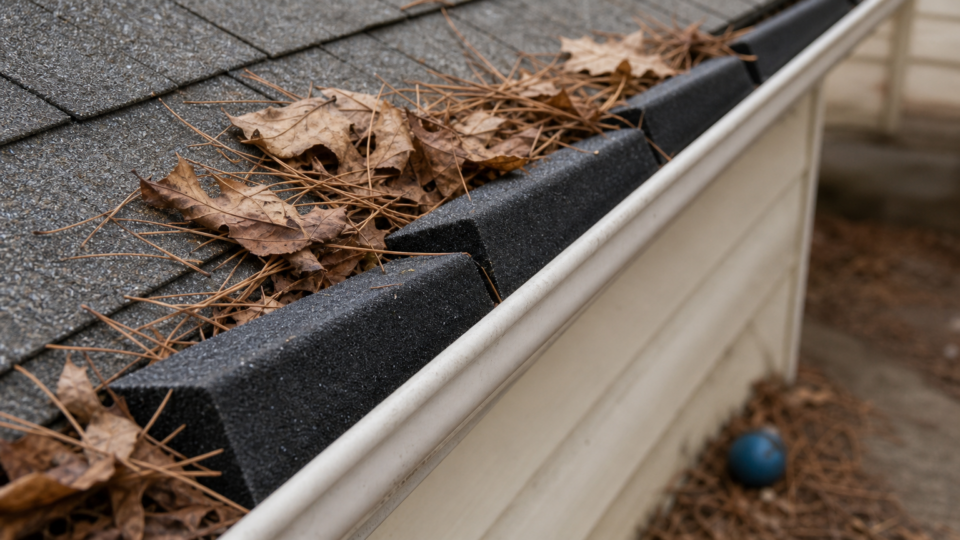
Short answer: You’ve seen the foam strips at the hardware store, sitting right there next to the pricier micro-mesh systems, and you’re wondering if they’re a shortcut worth taking. Foam gutter guards are exactly what they look like: triangular pieces of porous foam that wedge into your gutter channel, letting water soak through while blocking leaves and debris on top. They’re cheap, they’re sold in most home improvement stores, and you can install them yourself in an afternoon without tools. Ready for quotes? Compare local pros →
In this guide
But cheap and easy don’t always mean good, and that’s the honest answer this article gives you. Foam rain gutter inserts work fine in low-debris areas for a season or two, then they start causing problems most homeowners don’t see coming, like trapped moisture, plant growth, and ice damming in cold climates.
As a former gutter installer, I’ve pulled out plenty of soggy, disintegrating foam guards and replaced them with something better. Below, you’ll get a straight breakdown of how foam insert gutter guards perform against mesh and reverse-curve alternatives, what they cost, where they make sense, and where they’ll cause you headaches down the road.
Why foam gutter guards appeal to homeowners, and where they fall short
Homeowners gravitate toward foam gutter inserts because they solve an immediate, visible problem without a big commitment. You see leaves piling up in your gutters, you grab a few strips of foam at the hardware store, and within an hour your gutters look clean and covered. There’s no contractor to schedule, no ladder-based measuring for a custom-fit system, and no invoice that makes you wince. For a homeowner dealing with light debris and a tight budget, that instant fix feels like a win.
What makes foam guards attractive
Budget is the biggest draw. Gutter foam guards typically run $1 to $3 per linear foot, compared to $7 to $12 for quality micro-mesh systems. Installation takes minutes: you cut the foam to length with scissors or a utility knife and press it into the gutter channel. No screws, no brackets, no professional labor. For a small ranch home with a simple roofline and mostly deciduous leaves, foam can genuinely keep gutters clear enough for a season without much fuss.
Where they fall short
Problems show up once the foam ages. Porous material that lets water through also holds onto moisture, and that damp foam becomes a growing medium for algae, moss, and even small weeds. Freezing temperatures make it worse: saturated foam expands as it freezes, then contracts as it thaws, degrading the material faster and sometimes contributing to ice damming along the roofline.
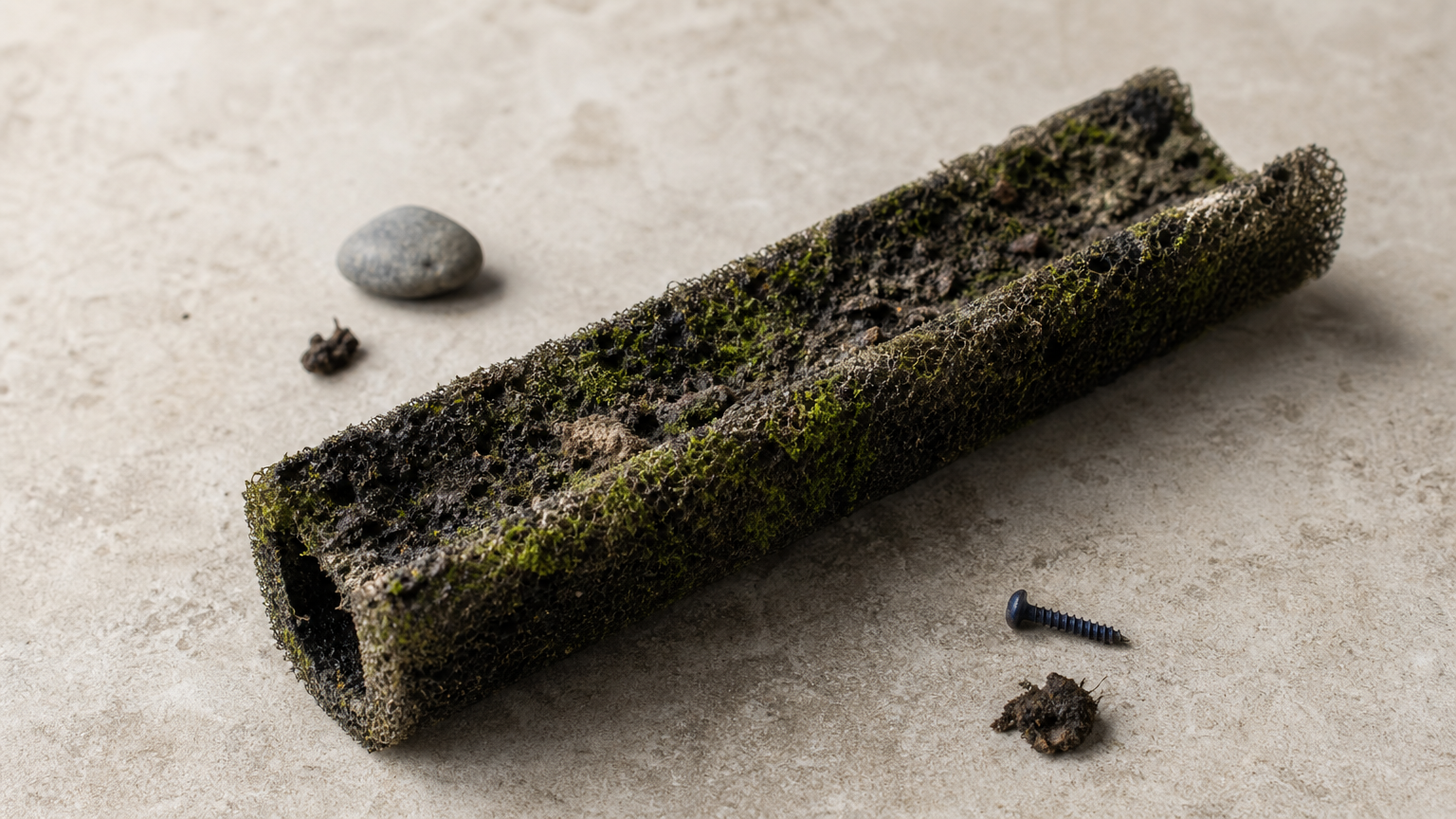
Foam gutter guards trade a low upfront cost for a shorter lifespan and hidden maintenance headaches.
Sediment and pine needles compound the issue. Fine debris settles into the foam’s pores over one to two years, clogging the material from within so water can no longer pass through at all. At that point, you’re not cleaning gutters, you’re replacing crumbling foam strips, often more frequently than you’d have replaced a mesh system in the first place.
What should this cost you?
Answer four questions and get a fair price range for your home.
How to install foam gutter guards yourself
Installing foam gutter guards is one of the simplest gutter upgrades a homeowner can tackle solo, and that’s the whole appeal. You don’t need brackets, screws, or a caulk gun. Most kits come as pre-cut lengths or long rolls that you trim to fit your gutter run, then wedge into place by hand.
What you’ll need
Grab these before you climb the ladder:
- Foam gutter guard rolls or strips (measure your linear footage first)
- Utility knife or heavy-duty scissors
- Tape measure
- Sturdy ladder and a helper to hold it steady
- Work gloves
The install steps
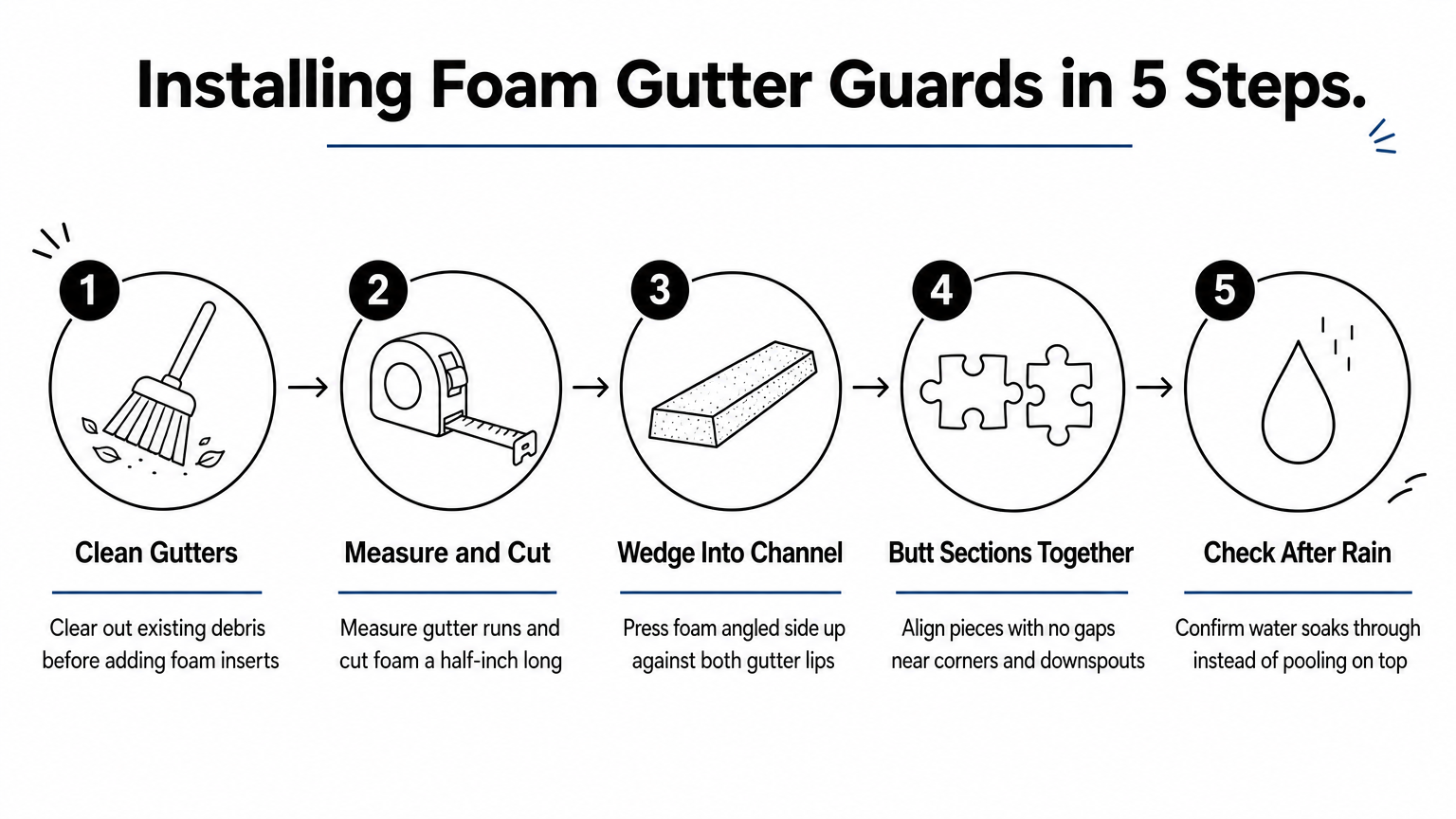
Follow this order and you’ll have a full run covered in under an hour for a typical single-story home:
- Clean the gutters completely before installing anything, either yourself or at what pros charge for a cleaning visit. Foam over debris just traps it.
- Measure each gutter section and cut the foam a half-inch longer than needed for a snug fit.
- Press the foam into the channel, angled side up, so it wedges against both lips of the gutter.
- Butt each piece against the next, no gaps, especially near downspouts and corners.
- Check the fit after a rain to make sure water isn’t pooling on top instead of soaking through.
The install is genuinely DIY-friendly, but that ease of installation is exactly why so many homeowners skip the maintenance checks that keep foam from failing early.
Expect to revisit the job yearly. Foam rain gutter guards shift, compress, and degrade faster than screwed-in systems, so plan on inspecting them each fall.
Foam vs. mesh gutter guards: which one wins?
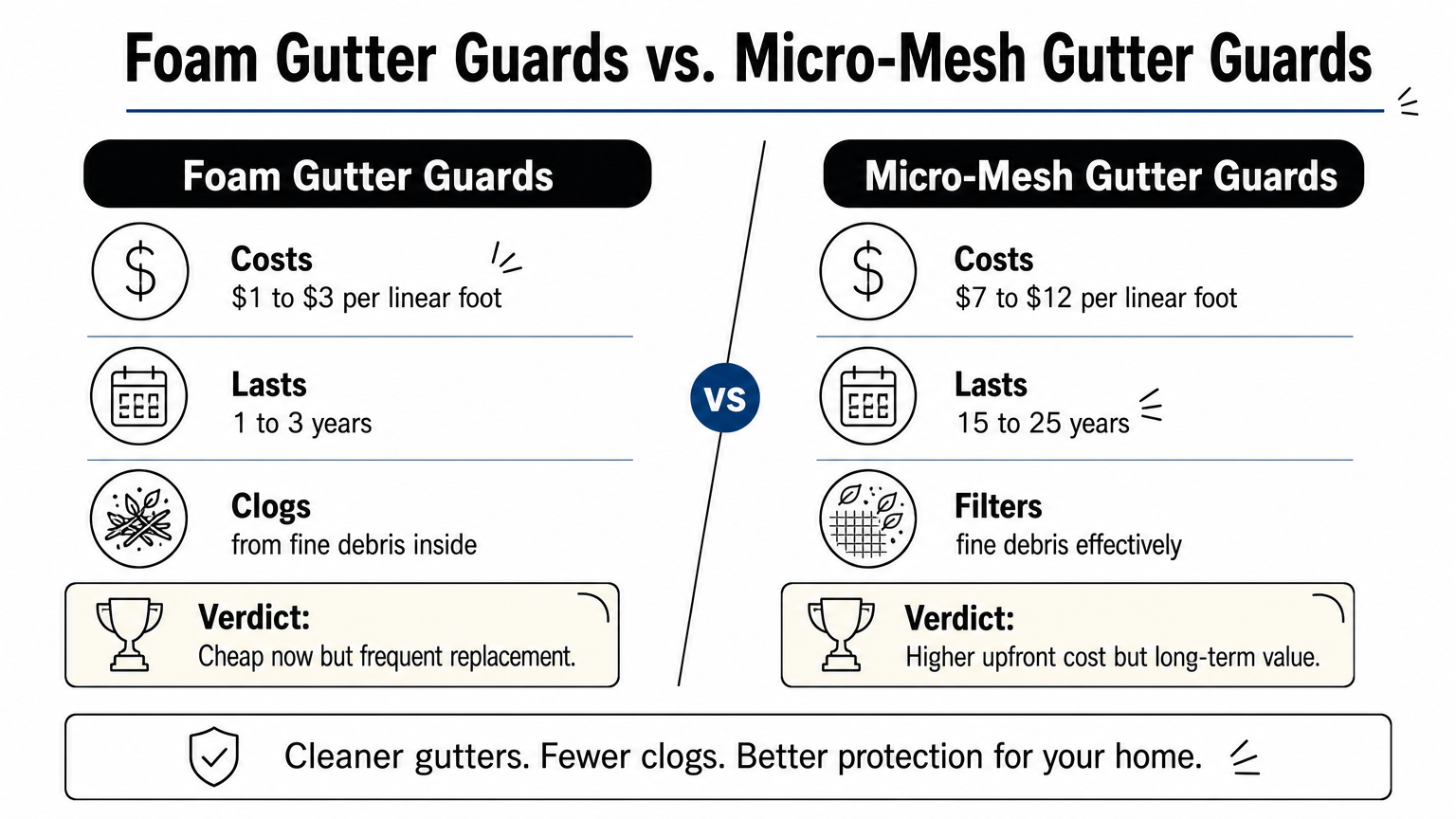
Mesh wins on almost every metric except upfront price. Foam gutter guards cost less to buy and take less time to install, but micro-mesh systems last longer, filter finer debris, and hold up better through freeze-thaw cycles. If you’re comparing best foam gutter guards against a quality mesh product, the honest answer is that mesh is the better long-term investment for most homes, as our top gutter guard picks tested for 2026 show.
Side-by-side comparison
| Feature | Foam Gutter Guards | Micro-Mesh Gutter Guards |
|---|---|---|
| Cost per linear foot | $1 to $3 | $7 to $12 |
| Typical lifespan | 1 to 3 years | 15 to 25 years |
| DIY installation | Yes, no tools needed | Possible, but more labor-intensive |
| Fine debris filtration | Poor, clogs internally | Excellent |
| Freeze-thaw durability | Degrades quickly | Holds up well |
| Maintenance | Annual replacement likely | Occasional rinsing |
Foam saves you money today; mesh saves you money over the next decade.
Gutters in areas with heavy pine needles or fine grit almost always do better with mesh, since foam’s pores clog from the inside where you can’t see it happening. Homeowners with mostly broad-leaf trees and a tight budget can get away with foam for a season or two, but if you want a system you install once and forget, mesh is worth the extra cost. You can read our full breakdown of what micro mesh guards are and what they cost for a deeper cost and performance comparison.
Where to buy foam gutter guards and what they cost
Most homeowners find foam gutter guards at big box hardware stores like Home Depot or Lowe’s, sold in rolls of 20 to 24 feet under brand names like FlexxPoint or Gutter Stuff. You’ll also spot foam rain gutter inserts on Amazon, usually bundled in multi-packs that cover a full single-story home for under $50. Because they’re a low-margin, high-volume product, you won’t find much variation in quality between retailers, so price and roll length matter more than brand loyalty here.
Typical price ranges by project size
Budget accordingly based on your home’s gutter footprint:
- Small home (100 linear feet): $100 to $300
- Average home (150 to 200 linear feet): $150 to $600
- Large home (250+ linear feet): $250 to $750
Foam is the cheapest guard on the shelf, but that price tag doesn’t include the labor of replacing it every couple of years.
Comparing costs across guard types matters more than shopping around within foam alone. Gutter foam guards sit at the bottom of the price spectrum, while reverse-curve and micro-mesh systems climb higher but last a decade or more longer, as our guide to gutter guard prices by type and home size lays out. Run your own numbers with our gutter guard cost estimator before you buy anything, since it factors in your linear footage, stories, and regional labor rates if you decide professional installation makes more sense than a DIY foam job.
Are foam gutter guards right for your home?
Foam gutter guards make sense for one specific situation: a small home, mostly broad-leaf trees, and a homeowner who doesn’t mind replacing strips every year or two. Foam gutter inserts are cheap, fast to install, and forgiving for a first-time DIYer testing the waters before committing to something permanent.
Outside that narrow case, they’re a short-term patch, not a real fix. Once pine needles, grit, or freezing winters enter the picture, foam clogs, degrades, and can even trap moisture against your fascia, which is how boards behind gutters end up rotted. Homeowners in those conditions almost always end up switching to micro-mesh or reverse-curve guards within a couple of seasons anyway.
Skip the guesswork and get real numbers for your home before you decide. If you’d rather have a professional handle the install and skip the yearly foam replacement cycle, see what gutter guard installation costs in your area and get quotes from local pros, then compare that against what foam would actually cost you over time.
What should this cost you?
Answer four questions and get a fair price range for your home.