
Short answer: Most micro mesh gutter guards reviews you find online are written by the companies selling them. That makes it hard to know which claims hold up and whether the price is justified. If you are about to spend $1,500 to $4,000 on a whole-house install, you deserve a straighter answer. Ready for quotes? Compare local pros →
In this guide
Here it is. Stainless steel micro-mesh is the best performing gutter guard type for most homes, because it blocks pine needles, shingle grit, and seeds that screens and perforated covers let through. It is not perfect, though. Cheap plastic-framed versions can sag, and heavy pollen or shingle grit can still film over the surface, so no guard means zero maintenance.
Below, we compare 7 top brands on mesh quality, frame material, installation, price per linear foot, and warranty. This guide comes from a former gutter installer and is reviewed by a home inspector. We also note where a cheaper option makes more sense, so you can decide if micro-mesh is worth it before you request a single quote.
How we evaluate micro mesh gutter guards
Every micro mesh gutter guard review here uses the same checklist, so the brands are directly comparable. Marketing pages say every product is the best. Installers know the details decide it: mesh quality, frame stiffness, and how the guard attaches to your roof edge.
What we score
Six criteria drive each brand’s write-up. We weigh mesh and frame material most heavily, because those two parts decide whether a guard still works in year ten.
- Mesh quality: stainless steel with a fine weave, not a perforated plate or plastic screen.
- Frame: aluminum or steel versus plastic, and how likely it is to sag between hangers.
- Installation: pro-only or DIY, and whether it slides under shingles or screws into the fascia.
- Water handling: how well it takes heavy rain and steep roof runoff without overshooting.
- Price: typical installed cost per linear foot.
- Warranty: length, transferability, and whether labor is covered.
A micro-mesh guard is only as good as its frame, its mesh, and the installer who hangs it.
Where the numbers come from
Prices are typical installed ranges, not quotes. They move with home size, number of stories, linear feet, and region, so treat them as a budgeting baseline. Our cost estimator can narrow the range for your house.
Warranty details come from manufacturer documentation, and our home inspector reviewer checks the technical claims for accuracy. Terms change, so read the current warranty before you sign anything, especially the clauses on roof damage and clogging.
What these reviews are not
These are not lab tests. They reflect a former installer’s hands-on knowledge of how these products are built, hung, and how they fail, combined with published specs. Where a brand’s claim is hard to verify, we say so rather than repeat it.
Finally, a note on transparency. The site connects readers to local contractors through Angi when they are ready for quotes. That is separate from the reviews, and you can use every comparison here without ever requesting one.
What should this cost you?
Answer four questions and get a fair price range for your home.
1. MasterShield
MasterShield is a dealer-installed, premium micro-mesh guard that earns its spot here for its rigid build. Here is how it holds up.
How it’s built and installed
MasterShield pairs fine stainless steel mesh with a stiff aluminum frame, which resists the sagging that plagues plastic-framed rivals.
Installation goes through authorized dealers only. The crew slides the guard under the first row of shingles or fastens it to the fascia, so there is no DIY route.
Debris and water performance
Pine needles, seeds, and shingle grit mostly stay on top, and rain follows the curve into the gutter. In heavy downpours on steep roofs, some overshoot is possible, so ask your dealer to check pitch and flow.
Pollen and fine grit can still film over the mesh. Expect a yearly brush-off, not zero upkeep.
Stainless micro-mesh on a stiff frame is the formula that still works past year ten.
Who it’s best for
Homeowners who want a pro-installed, long-term fix get the most from it:
- Lots shaded by pine, oak, or maple
- Owners planning to stay 10 years or more
- Buyers who prefer one accountable installer
Typical installed price
Dealers set their own pricing, so expect $9 to $16 per linear foot installed. Get at least two quotes.
| Home size | Linear feet | Typical range |
|---|---|---|
| Small | 100 | $900 to $1,600 |
| Average | 150 | $1,350 to $2,400 |
| Large | 250 | $2,250 to $4,000 |
Drawbacks
Three issues matter most:
- Premium pricing that varies widely between dealers
- Dealer-only sales, so availability depends on your region
- Under-shingle installs, so confirm your roof warranty stays intact
2. LeafFilter
LeafFilter is the best-known national micro-mesh brand, and it shows up in nearly every set of micro mesh gutter guard reviews and TV ads. Name recognition is not the same as value, so here are the details.
How it’s built and installed
LeafFilter sets fine stainless steel mesh in a polymer-based frame that sits on top of the gutter. Ask how the frame is supported on long runs.
Its own crews do the install, usually after an in-home estimate. The guard tucks under the first row of shingles or attaches to the fascia, so there is no DIY option.
Debris and water performance
Leaves, needles, and seeds mostly slide off, and the angled design pulls water into the gutter. Heavy storms on steep roofs can still overshoot the edge.
Fine grit and pollen build up over time. A yearly rinse or brush-off keeps the mesh flowing.
Even the best-known micro-mesh guard still needs a yearly rinse.
Who it’s best for
Homeowners who want one company handling everything get the most from it:
- Heavily wooded lots with mixed debris
- Buyers who value a transferable warranty
- People who would rather not compare local installers
Typical installed price
LeafFilter usually sits at the top of the micro-mesh range, roughly $12 to $30 per linear foot installed. A 150-foot home lands near $1,800 to $4,500. In-home quotes often come in higher than ballpark figures, so get competing quotes first.
Drawbacks
- Highest pricing among the brands here
- A sales process that can push same-day discounts, so never sign at the first visit
- Proprietary system, so repairs and adjustments run through the company
- Under-shingle installs, so confirm your roof warranty stays intact
3. Gutterglove
Gutterglove is the DIY-friendly micro-mesh option. It stands out in micro mesh gutter guards reviews because you can buy it without sitting through a sales pitch. Here is how it holds up.
How it’s built and installed
Each panel bonds stainless steel micro-mesh to a rigid aluminum frame that rests on top of the gutter. That stiff frame resists sagging better than plastic.
You can hire a dealer or order a kit and install it yourself. The panels tuck under the first shingle course or screw to the fascia, so check your roof warranty first.
Debris and water performance
Needles, seeds, and shingle grit mostly stay out, and water clings to the curved surface and drops into the gutter. On steep roofs in hard rain, some overshoot is possible.
Pollen can still film over the mesh. Plan on a yearly brush-off from a ladder or with a soft brush.
Who it’s best for
Handy owners of single-story homes get the most from it, along with anyone who wants stainless micro-mesh without a full dealer markup. Pro installation is still available if heights make you nervous.
Typical installed price
Price depends on who hangs it, so compare both routes before you buy.
| Route | Per linear foot | 150-foot home |
|---|---|---|
| DIY kit | $5 to $10 | $750 to $1,500 |
| Dealer install | $10 to $20 | $1,500 to $3,000 |
The same micro-mesh guard costs far less when you hang it yourself, but only if you are comfortable on a ladder.
Drawbacks
- Ladder risk on two-story homes if you go DIY
- Poor installs can void the warranty, so follow the instructions exactly
- Overshoot on steep roofs unless the fit is tight
- Pro pricing that varies by dealer
4. Raptor
Raptor is a mid-priced micro-mesh option for owners who want stainless mesh without top-tier pricing. Here is how it stacks up.
How it’s built and installed
Raptor uses stainless steel micro-mesh on a rigid aluminum frame that sits on top of the gutter. Ask to see a sample, because frame thickness can vary between product lines.
Homeowners can install it themselves or hire a pro. Panels slide under the first shingle row or fasten to the fascia, so check your roof warranty first.
Debris and water performance
Leaves, needles, and seeds mostly stay on top, and water follows the curved surface into the gutter. In hard rain on steep roofs, overshoot can happen.
Fine grit and pollen still collect on the mesh. Plan on a yearly brush-off to keep water flowing.
A stiff frame matters more than a famous name when you are choosing micro-mesh.
Who it’s best for
Budget-minded owners who want stainless mesh at a lower price get the most from Raptor:
- Handy owners of single-story homes
- Buyers comparing a DIY kit against a dealer quote
- Homes with mixed leaf and seed debris
Typical installed price
Cost swings with who does the work, so price both routes before you commit. Availability and pricing vary by seller and region.
| Route | Per linear foot | 150-foot home |
|---|---|---|
| DIY kit | $4 to $9 | $600 to $1,350 |
| Pro install | $8 to $16 | $1,200 to $2,400 |
Drawbacks
- Frame quality varies by product line, so inspect it before buying
- Ladder risk on two-story homes if you go DIY
- Poor installs can void the warranty, so follow the instructions exactly
5. Waterlock
Waterlock is a mid-range micro-mesh guard that gets less airtime than the TV brands. Treat it as a candidate worth pricing, and verify the specs with your seller before you buy.
How it’s built and installed
Stainless steel micro-mesh on an aluminum frame is the build to look for. Ask for frame thickness in writing, because thin frames flex between hangers.
Get the mesh and frame specs in writing before you sign.
Installation usually runs through a dealer, and some regions may offer kits. Panels tuck under the first shingle course or fasten to the fascia, so check your roof warranty first.
Debris and water performance
Leaves, needles, and seeds mostly stay on top while water follows the surface into the gutter. In hard rain on steep roofs, overshoot can happen.
Fine pollen and grit still film over the mesh. Budget for a yearly brush-off, not zero upkeep.
Who it’s best for
Shoppers who want to compare micro mesh gutter guards beyond the big national names will find it worth a quote. It suits mixed-debris lots and owners who want stainless mesh without top-tier pricing.
Typical installed price
Pricing varies by seller and region, so collect two quotes. Expect roughly the middle of the micro-mesh range.
| Route | Per linear foot | 150-foot home |
|---|---|---|
| Pro install | $8 to $15 | $1,200 to $2,250 |
| DIY kit (if offered) | $4 to $9 | $600 to $1,350 |
Drawbacks
- Less public detail on specs and warranty than larger brands
- Availability depends on your area
- Frame thickness may differ by product line
- Under-shingle installs, so confirm your roof warranty stays intact
6. Valor
Valor is a lesser-known micro-mesh option sold mostly through regional dealers. Few micro-mesh gutter guard reviews cover it in depth, so verify every spec before you commit.
How it’s built and installed
Look for stainless steel micro-mesh set in an aluminum frame, and get both confirmed in writing. Thin frames flex between hangers and sag over time.
A lesser-known brand is fine if the mesh, frame, and warranty are documented.
Installation usually runs through a local dealer, and some sellers may offer kits. Panels slide under the first shingle row or fasten to the fascia, so check your roof warranty first.
Debris and water performance
Leaves, needles, and seeds should mostly stay on top while water follows the surface into the gutter. In hard rain on steep roofs, overshoot can happen.
Pollen and fine grit still film over the mesh. Budget for a yearly brush-off, not zero upkeep.
Who it’s best for
Owners who like working with a local installer and want stainless mesh at a mid-range price will find it worth a quote. It suits homes with mixed leaf and seed debris.
Typical installed price
Pricing depends on the seller and your region, so collect two quotes before you decide.
| Route | Per linear foot | 150-foot home |
|---|---|---|
| Pro install | $8 to $15 | $1,200 to $2,250 |
| DIY kit (if offered) | $4 to $9 | $600 to $1,350 |
Drawbacks
- Limited public detail on specs and warranty terms
- Availability that depends on your area
- Frame thickness that may differ by product line
- Under-shingle installs, so confirm your roof warranty stays intact
7. ArmourGuard
ArmourGuard is a lesser-known micro-mesh option that rounds out the list as a value candidate. Few micro-mesh gutter guard reviews cover it in depth, so verify the specs before you buy.
How it’s built and installed
Look for stainless steel micro-mesh on an aluminum frame, and get both confirmed in writing. A thin frame flexes between hangers and sags over time.
Some sellers offer kits, while others install through local dealers. Panels slide under the first shingle row or fasten to the fascia, so check your roof warranty first.
Debris and water performance
Leaves, needles, and seeds should mostly stay on top while water follows the surface into the gutter. In hard rain on steep roofs, overshoot can happen.
Pollen and fine grit still film over the mesh. Budget for a yearly brush-off, not zero upkeep.
Documented specs beat confident promises when you are choosing a lesser-known micro-mesh guard.
Who it’s best for
Bargain-minded owners who want stainless mesh without top-tier pricing should get a quote. It fits:
- Homes with mixed leaf and seed debris
- Buyers comparing a local dealer against a DIY kit
- Shoppers who are happy to verify specs themselves
Typical installed price
Pricing varies by seller and region, so collect two quotes before you decide.
| Route | Per linear foot | 150-foot home |
|---|---|---|
| Pro install | $8 to $15 | $1,200 to $2,250 |
| DIY kit (if offered) | $4 to $9 | $600 to $1,350 |
Drawbacks
- Limited public detail on specs and warranty terms
- Availability that depends on your area
- Frame thickness that may differ by product line
- Under-shingle installs, so confirm your roof warranty stays intact
Micro mesh brands compared side by side
If you want to compare micro mesh gutter guards quickly, this table puts all seven brands next to each other. Use it to build a short list, then reread the full write-ups above for the details.
The comparison table
| Brand | Frame | Install | Installed $/ft | Best for |
|---|---|---|---|---|
| MasterShield | Aluminum | Dealer only | $9 to $16 | Long-term pro fix |
| LeafFilter | Polymer-based | Company crew | $12 to $30 | One-company service |
| Gutterglove | Aluminum | DIY or dealer | $5 to $20 | Handy owners |
| Raptor | Aluminum | DIY or pro | $4 to $16 | Budget stainless |
| Waterlock | Aluminum (verify) | Mostly dealer | $4 to $15 | Mixed-debris lots |
| Valor | Aluminum (verify) | Local dealer | $4 to $15 | Local installer fans |
| ArmourGuard | Aluminum (verify) | Dealer or kit | $4 to $15 | Value shoppers |
The low end of each range is a DIY kit, where one is offered. Dealer installs sit near the high end.
What the table tells you
Every brand here uses stainless mesh, so mesh is not the deciding factor. Frame stiffness, who installs it, and the quote you get are what separate them.
Once the mesh is stainless, the frame and the installer decide how the guard performs in year ten.
Prices overlap more than the marketing suggests. A dealer-installed Raptor or Waterlock can land close to MasterShield, and LeafFilter is the only brand that regularly runs well above the pack.
Finally, the better-documented brands are MasterShield and Gutterglove, while Waterlock, Valor, and ArmourGuard need more homework. If you pick one of those three, get the specs in writing before you sign.
Micro mesh vs perforated and solid gutter guards
Micro-mesh is not your only option, and on some roofs it is overkill. Here is how it compares with the two cheaper categories you will see in quotes, so you can judge whether the extra cost buys anything for your trees.
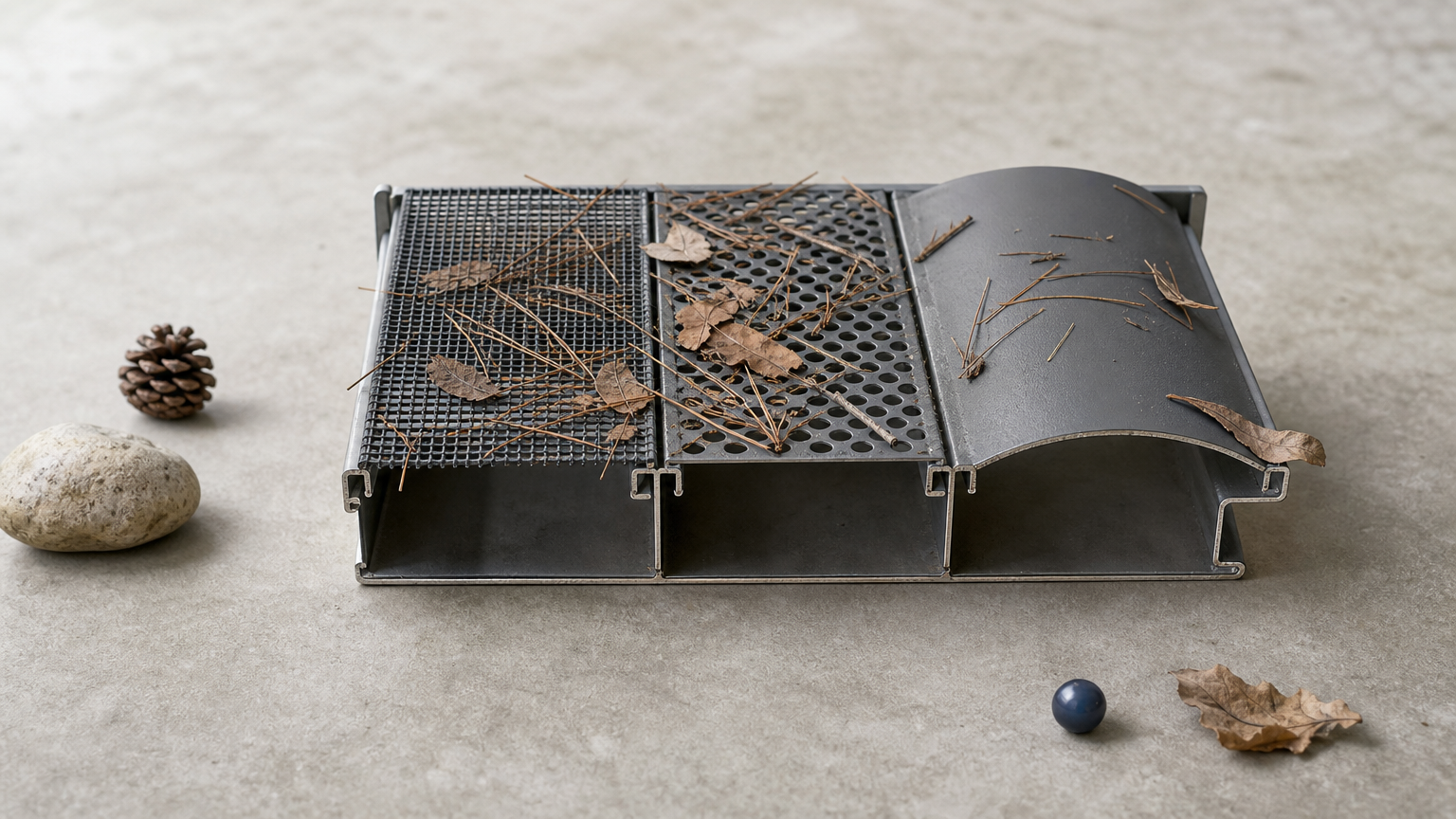
How the three designs differ
Three designs cover most quotes. Opening size is what separates them, because the smaller the opening, the smaller the debris it stops.
| Type | Stops | Weak spot | Typical installed $/ft |
|---|---|---|---|
| Micro-mesh | Needles, seeds, grit | Pollen film | $4 to $30 |
| Perforated | Large leaves | Needles and grit pass through | $3 to $8 |
| Solid (reverse-curve) | Leaves | Overshoot in heavy rain | $5 to $15 |
Where each one wins
Perforated covers are the cheapest, and they work on lots with big, flat leaves like maple. Pine needles, seeds, and shingle grit slip through the holes, though, so that debris settles in the gutter and still needs clearing.
Solid reverse-curve covers shed leaves well and have no holes to clog. In heavy rain, water can overshoot the curved nose, and needles can lodge at the edge.
Finally, micro-mesh stops the finest debris, which is why it tops most micro mesh gutter guards reviews for needle-heavy or mixed trees.
Pick the opening size that matches your smallest debris, not your biggest.
If your yard drops only large leaves, a quality perforated or solid cover can save you hundreds over micro-mesh. If you deal with needles, seeds, or shingle grit, the mesh earns its price.
Are micro mesh gutter guards worth it?
Yes, for homes with pine needles, seeds, or shingle grit, and usually no for lots that only drop big leaves. The math decides it, not the brand name. It also helps to read micro-mesh gutter guard reviews with your own trees in mind.

When the math works
Start with what you pay now. A professional cleaning often runs $120 to $250 per visit, and wooded lots need two a year. That is $240 to $500 annually, so a $1,350 to $2,400 install can pay for itself in roughly 3 to 10 years.
Micro-mesh is worth it when it replaces two paid cleanings a year for a decade.
It pays off fastest in these situations:
- Pine, oak, or mixed trees overhang the roof
- A two-story home where ladder work costs more or feels unsafe
- You plan to stay in the house 8 years or longer
When it is not worth it
Skip it if your yard drops a few large maple leaves each fall. A quality perforated or solid cover handles that for hundreds less, and you will barely notice the difference. The same goes if you expect to sell within three years, because buyers rarely pay back the full cost.
Remember, too, that no guard ends maintenance. Plan on a yearly brush-off and a quick check after big storms. If you cannot live with that, nothing on the market will satisfy you. If you can, use our cost estimator to see whether your numbers clear the break-even point.
How long micro mesh gutter guards last and what they need
Stainless micro-mesh on a stiff frame can last 20 years or more, and that durability is the main reason it tops most micro mesh gutter guards reviews. In practice, the frame fails before the mesh does, so that is where your attention belongs.
What decides lifespan
Three parts set the real number, and this table shows what to look for in each.
| Part | Good sign | Warning sign |
|---|---|---|
| Mesh | Stainless steel | Coated aluminum or plastic screen |
| Frame | Thick aluminum or steel | Thin or plastic, flexes by hand |
| Install | Tight fit, secured at every hanger | Gaps, loose fasteners |
Warranty length is a clue too, but read the terms before you trust it. A lifetime promise means little if it excludes labor or roof damage.
A ten-minute yearly brush-off is the price of a guard that keeps working for decades.
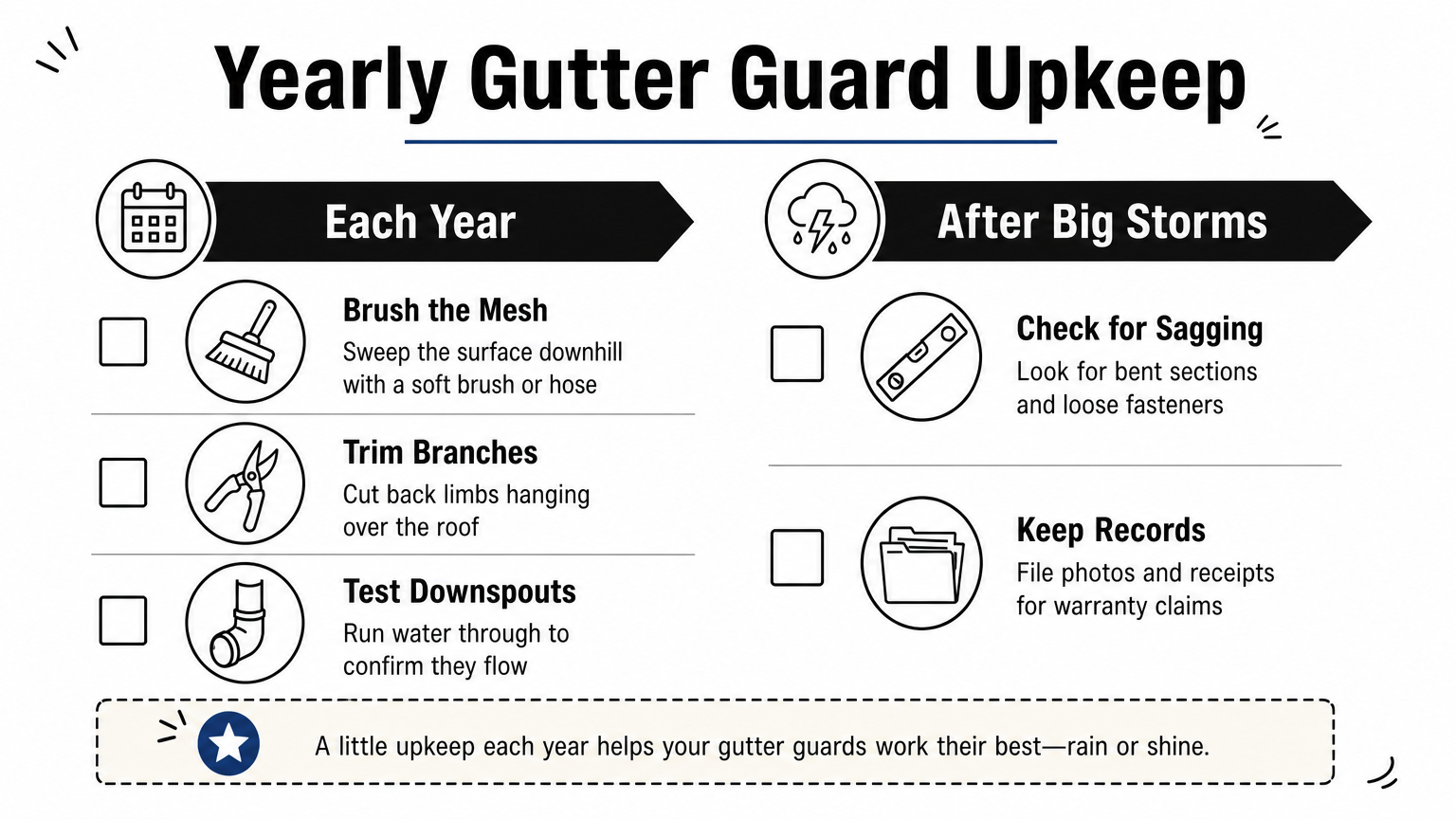
Yearly upkeep
Plan on one yearly brush-off, plus a quick look after big storms. This is the routine:
- Rinse or brush the surface with a soft brush or garden hose, working downhill.
- Trim branches that hang over the roof.
- Run water through the downspouts to confirm they flow.
- Check for sagging sections and loose fasteners, and fix them early.
Keep photos and receipts from each visit. Some warranties expect basic maintenance, and a paper trail settles disputes fast.
How to choose the right micro mesh guard
Choosing comes down to four facts about your house, not a brand’s reputation. Work through them in order, and the shortlist from the table above shrinks fast.
Match the guard to your house
Start with your debris, roof, and skills. Honest answers here matter more than any star rating in micro mesh gutter guard reviews, including ours.
- Debris: needles, seeds, and grit call for stainless mesh. If you only get big leaves, price a perforated cover.
- Roof pitch: steep roofs favor a tight fit and a dealer who checks for overshoot.
- Stories: two-story homes usually mean a pro install, so skip the DIY kit.
- Budget: DIY kits start near $4 per foot, while dealer installs run $8 to $30.
Choose the frame and the installer first, then the brand name.
Questions to ask before you sign
Ask every seller the same questions and write down the answers. A vague reply on any of them is a reason to keep shopping.
- What is the mesh made of, and how thick is the frame?
- Does the install affect my shingle warranty?
- Is the guard warranty transferable, and does it cover labor?
- What is the total price per linear foot without a same-day discount?
Finally, line up two or three quotes side by side and compare them against the price ranges in this guide. A quote far above the range needs a clear explanation, and one far below it deserves a closer look at the frame.
Picking the guard that fits your gutters
Honest micro mesh gutter guards reviews all land in the same place. Stainless mesh matters, but the frame and the installer decide whether a guard still works in year ten. Every brand here still needs a yearly brush-off, so no guard ends maintenance.
Your trees settle the rest. Needles, seeds, and shingle grit justify the price of micro-mesh. If your yard only drops big leaves, a perforated or solid cover can save you hundreds. Whichever you choose, get the specs in writing, confirm your roof warranty, and compare two or three quotes against the ranges above.
When you are ready, get a free quote for gutter guard installation and see an estimated cost range before a local contractor ever calls. It is a low-pressure way to check your numbers against real local pricing.
What should this cost you?
Answer four questions and get a fair price range for your home.