
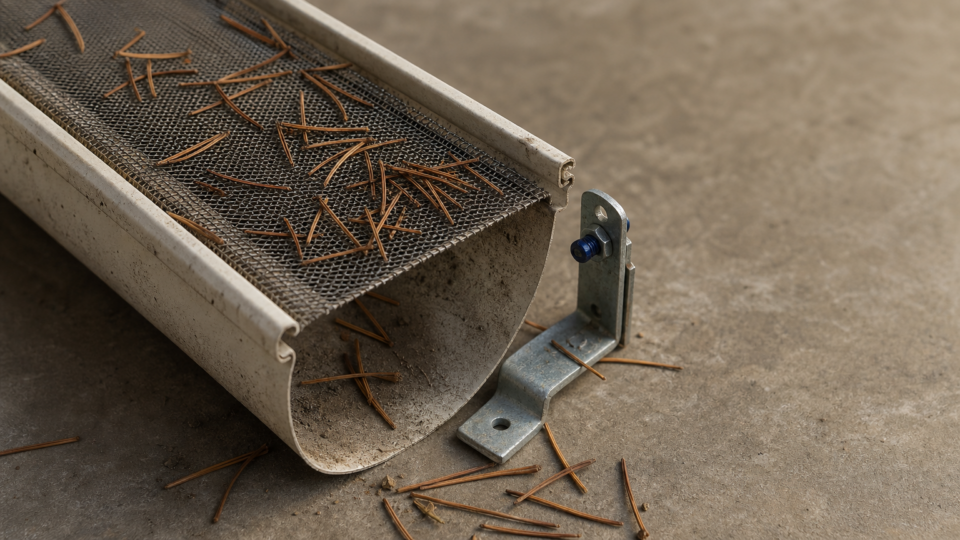
Short answer: Pine needles are the worst thing that can happen to a gutter system. They slide through wide mesh, wedge into screens, and mat together with sap until water has nowhere to go. If you’ve got mature pines dropping needles twice a year, you already know that regular gutter guards marketed for leaves usually fail within a season. That’s why finding the best gutter guards for pine needles matters more than picking whatever’s cheapest at the hardware store. Ready for quotes? Compare local pros →
In this guide
The short answer: micro-mesh gutter guards consistently outperform screen, foam inserts that sit inside the gutter, and reverse-curve systems when pine needles are your main problem, because their tight weave (typically 50-275 microns) blocks needles while still letting water through. But not every micro-mesh product is built the same, and material, frame design, and installation quality all affect how well one actually holds up.
I spent years installing gutters before writing about them, and this list reflects that hands-on experience rather than manufacturer marketing, the same way our tested picks for the highest-rated guards do. Below, you’ll find seven products worth your money, honest cost breakdowns based on what guards cost by type and home size, and what separates a guard that lasts a decade from one that clogs by October.
1. Stainless steel micro-mesh gutter guards
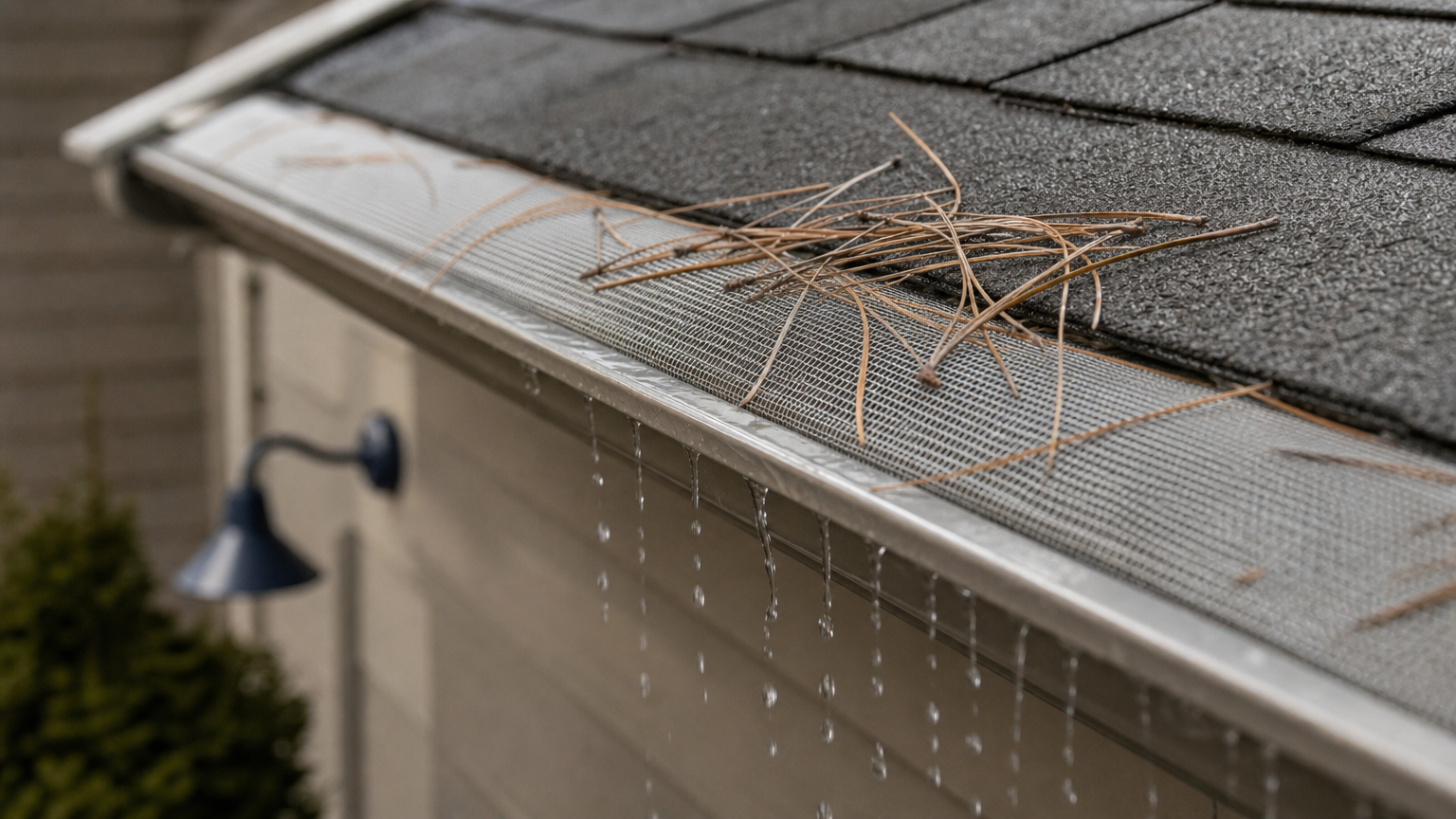
Stainless steel micro mesh guards sit at the top of this list because it’s the only material I trust to survive a decade of pine needle abuse without rusting through or sagging under debris weight. This is the option that comes up most often when people ask about the best rain gutter guards for pine needles, and for good reason: the mesh itself is welded from surgical-grade stainless steel wire, usually rated 316 or 304 grade, which resists the tannic acid that pine needles and sap release as they break down.
How it stops pine needles
The mesh openings run between 50 and 100 microns on most quality stainless products, small enough to stop even fresh, narrow needles from slipping through sideways. Micro mesh gutter guards for pine needles work because they rely on surface tension, not just size exclusion. Water clings to the mesh and drips through, while needles, seed pods, and shingle grit stay on top and blow off in the wind or wash away in the next hard rain.
Stainless steel micro-mesh is the only gutter guard I’ve seen hold up ten-plus years under heavy pine debris without warping or rusting.
Best for
This guard makes sense if you’ve got mature pines dropping needles twice a year and you don’t want to think about your gutters again for a decade. It’s also the right call for steep or hard-to-reach rooflines where you really don’t want to be up on a ladder every fall. Homeowners planning to stay put for years get the best return on the higher upfront cost, since the material outlasts cheaper alternatives by a wide margin.
Installation & maintenance
Installation usually means screwing the mesh panels onto the existing gutter or under the first row of shingles, a job that takes a professional crew about a day for an average single-story home. Maintenance is minimal: an occasional rinse with a hose or a soft brush pass once a year keeps the surface tension working. You won’t need to pull needles out by hand the way you do with open screens.
Price range
Expect to pay more upfront than any other option on this list, but the lifespan usually justifies it.
| Item | Typical Cost |
|---|---|
| Material only (per linear foot) | $10-$14 |
| Professional installation (per linear foot) | $15-$25 |
| Total installed, average home (150-200 linear feet) | $2,250-$5,000 |
If you want a firmer number for your specific home, check what guards actually cost once installation is included before requesting quotes.
What should this cost you?
Answer four questions and get a fair price range for your home.
2. Reinforced micro-mesh guards with aluminum frames
Reinforced micro mesh guards and how their weave works pair the same tight weave as stainless steel with a heavier aluminum frame and backing, which makes them a smart middle-ground pick if pure stainless is out of your budget. These are often marketed as micro mesh gutter guards for pine needles because manufacturers reinforce the mesh with an aluminum support layer underneath, cutting down on sagging when wet needles pile up after a storm.
How it stops pine needles
Underneath, a rigid aluminum grid supports the mesh so it doesn’t bow inward under the weight of soaked debris, which is exactly how cheaper unsupported screens fail. Openings typically run 100-175 microns, still tight enough to catch pine needles but slightly more forgiving than surgical-grade stainless during manufacturing, which keeps material costs down.
Reinforced aluminum-backed mesh handles heavy pine debris almost as well as stainless, at a noticeably lower price.
Best for
These guards suit homeowners with moderate to heavy pine coverage who want strong performance without paying stainless-level prices. They also work well on longer runs where frame rigidity matters more than raw corrosion resistance, since most coastal or high-humidity climates won’t stress aluminum the way they would bare steel screens.
Installation & maintenance
Installers typically screw or clip the frame directly to the gutter’s front lip, a straightforward job that takes roughly the same time as stainless installation. Maintenance stays low: an annual hose rinse and a quick visual check after major storms keeps them clear.
Price range
Expect a modest discount compared to pure stainless steel systems.
| Item | Typical Cost |
|---|---|
| Material only (per linear foot) | $7-$11 |
| Professional installation (per linear foot) | $12-$20 |
| Total installed, average home | $1,900-$4,200 |
3. Perforated aluminum gutter guards
Perforated aluminum guards use a solid metal sheet punched with small round or slotted holes instead of a woven mesh, and they’re a step down in fine filtration but a step up in raw durability. You’ll see these marketed heavily as the best gutter guards for pine needles on budget-focused sites, though I’d argue they’re really a mid-tier compromise rather than a top-tier fix.
How it stops pine needles
Holes usually measure between 1/8 and 3/16 inch, which stops most whole needles but lets shorter fragments and needle clusters wiggle through over time. Because the holes are round rather than a tight woven grid, pine straw and clumped debris can bridge across several openings and start building a mat if you skip cleaning for more than a year, so it’s worth pricing a professional clear-out with a free local estimate.
Perforated aluminum blocks most pine needles, but the holes are forgiving enough that fragments still sneak through eventually.
Best for
This option fits homeowners with light to moderate pine coverage, or anyone who wants better protection than an open gutter without paying micro-mesh prices. It’s also a reasonable pick for rental properties where you want real improvement without a premium investment.
Installation & maintenance
Installation involves screwing the aluminum sheet onto the gutter’s front and back lips, a job most crews finish in half a day. Plan on checking the surface once or twice a year, since debris buildup happens gradually rather than all at once, and a quick brush-off keeps water moving.
Price range
Costs land comfortably below both micro-mesh categories above.
| Item | Typical Cost |
|---|---|
| Material only (per linear foot) | $4-$7 |
| Professional installation (per linear foot) | $8-$14 |
| Total installed, average home | $1,200-$2,900 |
4. PVC snap-in micro-mesh gutter guards
PVC snap-in micro-mesh guards swap the metal frame for a molded plastic housing that clips directly onto the gutter lip, no screws required. They’re a popular choice for best diy gutter guards for pine needles searches because homeowners can install them in an afternoon without calling a contractor or renting a lift.
How it stops pine needles
The mesh insert itself is usually the same polyester or fine-weave fabric found in budget screen products, snapped into a PVC channel that holds it flat across the gutter opening. Openings run wider than metal micro-mesh, often 150-250 microns, so they catch most whole pine needles but let smaller fragments and pollen grit through more easily than stainless.
PVC snap-in mesh is the easiest gutter guard to install yourself, but the plastic frame becomes the weak point long before the mesh does.
Best for
This option suits renters, homeowners on a tight budget, or anyone tackling a single-story home where a ladder and an afternoon are all you’ve got to work with. It’s not the right pick if you’ve got two-story rooflines or harsh winters, since PVC gets brittle and cracks in freeze-thaw cycles faster than aluminum or steel.
Installation & maintenance
Most kits snap onto the front lip and tuck under the shingle edge, and manufacturers design them specifically for DIY installation with no special tools. Plan to inspect the clips every season, since UV exposure breaks down PVC over time and a few will pop loose after five or six years, letting needles slip underneath.
Price range
These guards cost the least of any micro-mesh option on this list.
| Item | Typical Cost |
|---|---|
| Material only (per linear foot) | $3-$6 |
| DIY installation | $0 (your labor) |
| Total materials, average home | $450-$1,200 |
5. Gutter brush guards
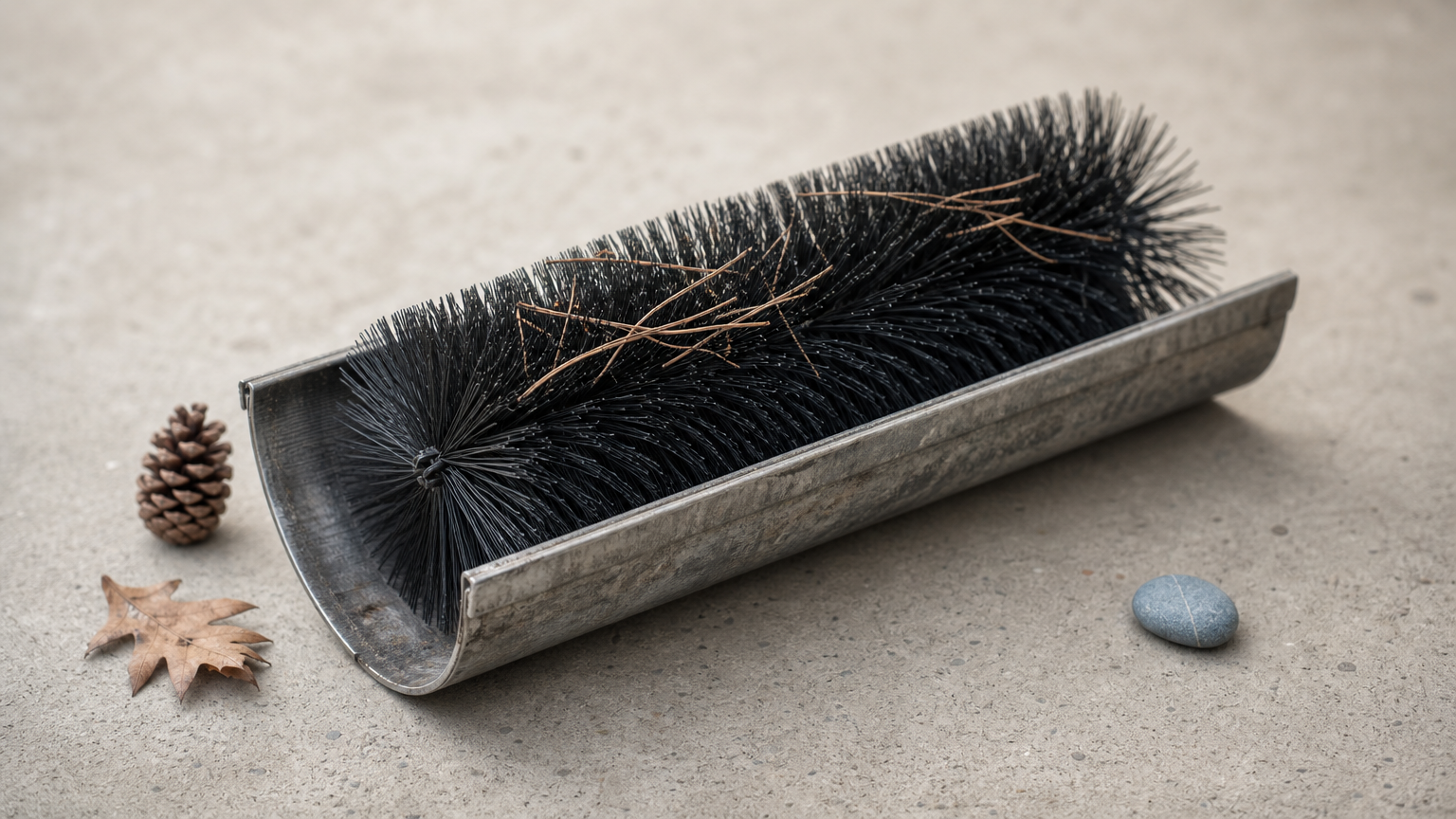
Gutter brush guards look like giant pipe cleaners that sit inside the gutter channel instead of covering the top. They’re cheap, simple, and often the first thing homeowners try when searching for gutter guards for pine needles on a budget, but I rank them near the bottom of this list because they trade convenience for weaker long-term performance.
How it stops pine needles
The bristles stand upright and catch needles and debris on top of the brush while water drains underneath through the gutter’s open channel. Whole needles get trapped fairly well, but shorter fragments and pine straw work their way down between the bristles and settle at the bottom, where they mix with sludge over a season or two. Nylon or polypropylene bristles hold up fine against sun and moisture, but they don’t stop fine debris the way a woven mesh does.
Brush guards catch the big needles but let enough fine debris through that you’re still cleaning gutters every year or two.
Best for
This option suits homeowners who want a cheap, no-tools fix for light pine coverage, or anyone renting a property who doesn’t want to invest in a permanent system. It’s a reasonable stopgap while you save for a better guard, not a long-term solution for heavy pine drop.
Installation & maintenance
Installation is as simple as dropping the brush into the gutter channel, no screws, brackets, or professional crew needed. Maintenance means pulling the brush out once a year to shake loose debris and rinse the channel underneath, since sediment collects there over time.
Price range
Brush guards cost less than nearly every other option here.
| Item | Typical Cost |
|---|---|
| Material only (per linear foot) | $2-$4 |
| DIY installation | $0 (your labor) |
| Total materials, average home | $300-$800 |
6. Continuous hanger micro-mesh systems for new gutters
Continuous hanger micro-mesh systems combine a hidden hanger bracket with a factory-integrated mesh top, sold as one unit rather than an add-on guard. Roofing and gutter installers usually recommend this option when you’re already replacing your gutters, since it’s the closest thing to a purpose-built solution for pine needle protection rather than a retrofit.
How it stops pine needles
Because the mesh is welded or riveted onto the gutter during manufacturing, there’s no gap between the guard and the channel where needles can wedge or slide underneath, a common failure point on bolt-on products. Openings typically match reinforced micro-mesh at 100-150 microns, tight enough to stop pine needles while the hidden hanger every 24 inches keeps the whole assembly rigid under snow load or debris weight.
A one-piece hanger and mesh system closes the gap where retrofit guards usually fail first.
Best for
This option makes sense if you’re already budgeting for a whole new gutter system priced by a local installer and don’t want to pay twice, once for gutters and again for guards. It’s also a strong pick for homes in snow country, since the continuous hanger handles ice weight better than clip-on frames screwed to an existing lip.
Installation & maintenance
Installation requires removing your old gutters entirely, so this isn’t a weekend DIY project. A professional crew handles the whole run in a day or two, and after that, maintenance matches other micro-mesh products: an annual hose rinse and nothing more.
Price range
Pricing bundles the gutter and guard together, so compare it against replacement costs, not standalone guard costs.
| Item | Typical Cost |
|---|---|
| Materials only (per linear foot) | $12-$18 |
| Installed with new gutters (per linear foot) | $20-$32 |
| Total installed, average home | $3,000-$6,400 |
7. Surface-tension reverse-curve gutter guards
Reverse-curve guards use a solid metal hood with a curled lip that forces water to hug the surface and drop into a narrow slot, while debris shoots off the front edge. Manufacturers pitch these hard for best gutter guards for pine needles consumer reports style comparisons because they look impressive in demos, but I’ve pulled enough clogged units off real roofs to know they underperform on pine specifically.
How it stops pine needles
The theory works fine with leaves, which are broad and light enough to slide off the curved hood. Pine needles are thin, and they don’t ride the water film the way leaves do. Instead, they slip into the intake slot lengthwise, especially in wind-driven rain, and jam the narrow opening from the inside where you can’t see it without pulling the whole hood off.
Reverse-curve guards handle leaves well, but pine needles slide sideways into the slot and clog it from a spot you can’t inspect.
Best for
This system fits homes surrounded mostly by broadleaf trees with only light, occasional pine drop nearby. If pines are your dominant tree, skip this option and go with micro-mesh instead.
Installation & maintenance
Installation requires a professional crew, since the hood has to align precisely with the roof’s water flow angle to work at all. Maintenance means periodically opening or removing sections to clear the internal slot, a job that’s harder than any mesh cleaning since the clog sits hidden inside the curve.
Price range
Costs run comparable to reinforced micro-mesh, without matching its pine performance.
| Item | Typical Cost |
|---|---|
| Material only (per linear foot) | $8-$12 |
| Professional installation (per linear foot) | $12-$20 |
| Total installed, average home | $2,000-$4,300 |
Picking the right guard for your home
Stainless steel micro-mesh wins if you want the closest thing to a set-it-and-forget-it solution and don’t mind paying more upfront. Reinforced aluminum mesh gets you nearly the same protection at a friendlier price, which makes it the pick most homeowners land on after comparing quotes. Everything else on this list, from brush guards to reverse-curve hoods, works better as a budget stopgap or a fit for lighter debris than as a real answer to heavy pine drop.
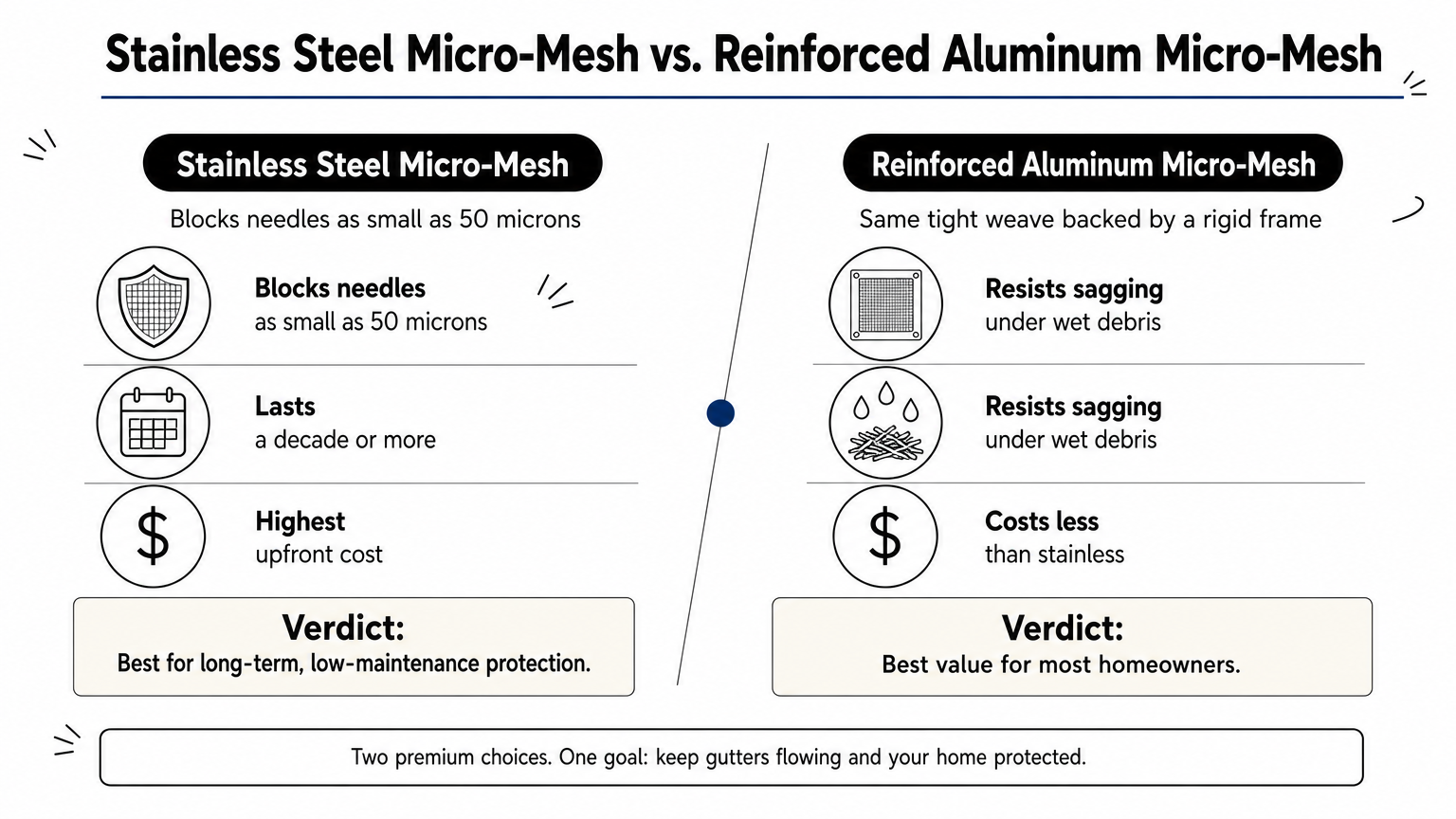
Whichever guard you’re leaning toward, the material and micron rating matter more than the brand name on the box. Pine needles punish weak mesh and loose frames fast, so don’t let a low sticker price talk you into a product that clogs by next fall. Once you’ve settled on a type, see what guards cost to install and get free quotes from local pros so someone can confirm it’ll actually hold up on your roofline.
What should this cost you?
Answer four questions and get a fair price range for your home.