
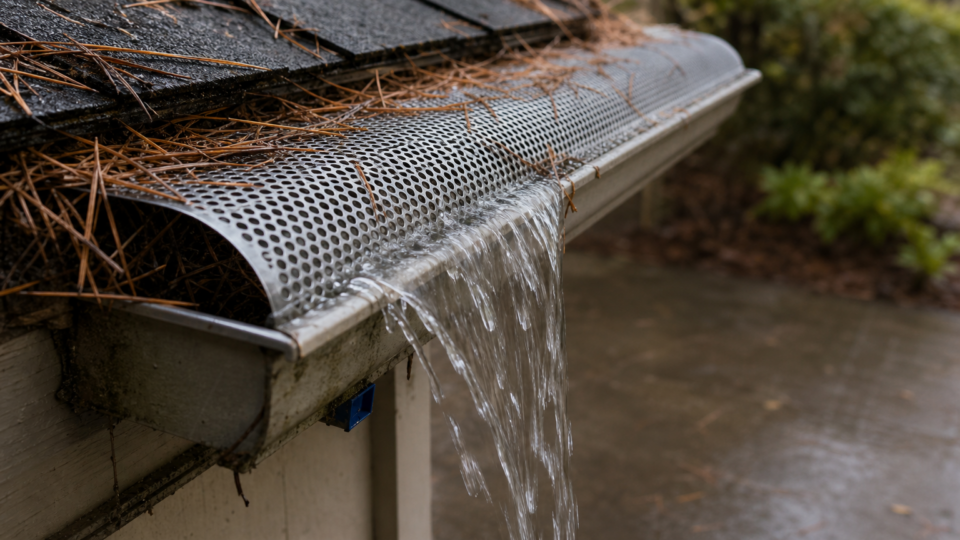
Short answer: You’ve seen the ads for gutter guards that promise to solve your debris problems forever, and reverse curve versions usually show up near the top of that list with bold claims about surface tension. The pitch sounds good: water clings to the curved metal and flows into the gutter while leaves and debris shoot off the edge and fall to the ground. But before you spend $15 to $30 per linear foot on this style, it helps to know what homeowners pay for guards with installation included and whether the design actually holds up on a real roof. Ready for quotes? Compare local pros →
In this guide
Reverse-curve gutter guards work on a simple physics principle, and in the right conditions, they do shed debris effectively. The catch is that performance depends heavily on your roof pitch, local debris type, and installation quality, factors that marketing pages rarely mention.
This guide breaks down exactly how the design functions, where it outperforms micro-mesh and screen guards, and where homeowners run into trouble with pine needles, heavy rain, or improper mounting. You’ll get an honest look at the pros, the cons, and real-world performance so you can decide if this style fits your home before you call a contractor.
Why reverse curve gutter guards often fail in heavy rain
During a light drizzle, a reverse curve gutter guard performs almost exactly as advertised. Water clings to the curved lip and drops into the trough while loose leaves slide off the front edge. But heavy rain overwhelms the design’s core mechanic. Once rainfall rates climb past roughly one inch per hour, the volume of water moving across the curve exceeds what surface tension can hold onto, and a portion of it simply shoots past the gutter entirely, spilling onto the ground below instead of draining where it should.
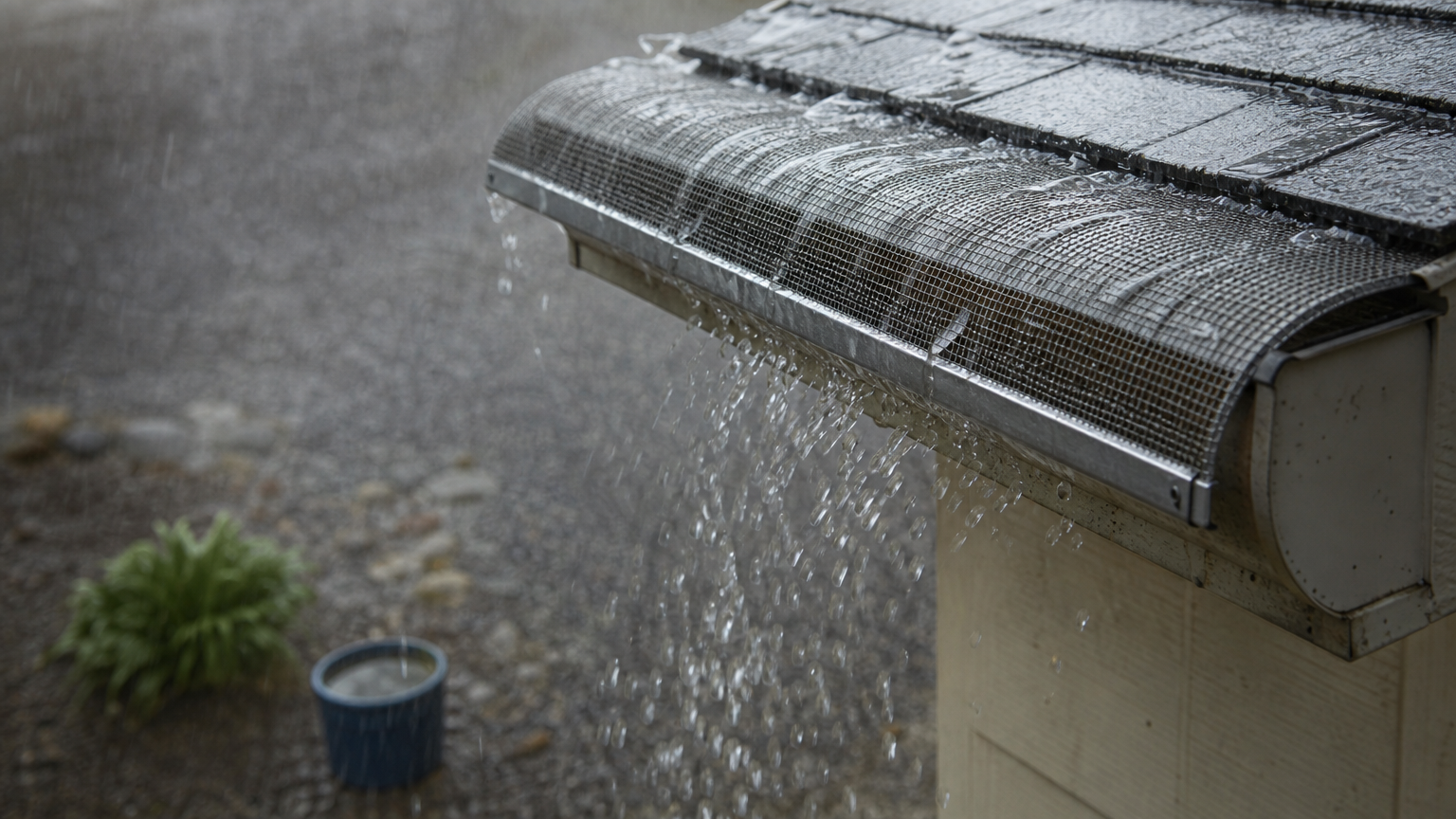
Reverse curve guards work great in a drizzle and fail exactly when you need them most, during a downpour.
The physics breaks down under volume
Think of it like a garden hose aimed at a curved slide. A trickle follows the curve down into the gutter. Blast the hose at full pressure and the water launches off the edge in a straight line, missing the target completely. That’s what happens on your roof during a storm. Roof pitch plays a major role here too. Steeper roofs accelerate water faster, giving it more momentum to overshoot the guard, which is why manufacturers often recommend reverse curve designs only for roofs under a 6:12 pitch.
Small debris still gets through
Owners in areas with pine needles, seed pods, or maple helicopters report a second failure mode entirely. These reverse-curve or surface-tension gutter guards were engineered to shed broad leaves, not needle-thin debris that can slip through the narrow gap at the top of the curve and settle inside the gutter channel. Over a season or two, that buildup narrows the water path further and makes overflow during heavy rain even worse.
Installation angle matters more than the product
Here’s what a lot of buyers don’t realize: the exact angle of the curve relative to the fascia determines how well the guard performs, and that angle is set entirely by the installer, not the manufacturer.
- A slightly high mount lets more water fall clear of the gutter
- A slightly low mount traps standing water and encourages ice buildup in cold climates
- Uneven mounting along a single run creates weak points where overflow concentrates
Get the angle wrong by even a few degrees and you can turn a well-reviewed product into a chronic overflow problem.
What should this cost you?
Answer four questions and get a fair price range for your home.
How to know if reverse curve guards suit your roof
Before you spend money on this style, walk your property and check three things: roof pitch, debris type, and rainfall intensity in your region. Reverse curve gutter guards perform best on gently sloped roofs in areas with wide, flat leaves and moderate rain, not torrential downpours. If your home checks those boxes, you’re in the sweet spot the design was actually built for.
If your roof pitch is under 6:12 and your trees drop broad leaves instead of needles, reverse curve guards can genuinely work well.
A quick self-assessment checklist
Run through this list before you call a contractor for quotes:

- Roof pitch under 6:12 (check your home inspection report or ask a roofer to confirm)
- Deciduous trees nearby rather than pines, which drop debris that slips through the curve
- Average rainfall under 1 inch per hour during typical storms in your region
- No history of ice dams, since standing water at a low-mounted curve freezes fast
- A contractor willing to test-fit the angle on a small section before committing to a full installation
Homeowners who answer yes to most of these tend to leave positive reverse curve gutter guards reviews, while those who ignore pitch and climate mismatches often regret the purchase within a year or two.
When to skip this style entirely
Skip reverse curve guards if you live somewhere with frequent cloudbursts, steep rooflines, or heavy pine cover. In those cases, the debris and volume issues outlined above will show up fast, and you’ll be better served by a different guard type altogether.
Reverse curve vs. micro-mesh gutter guards
Fine screen micro mesh guards solve the exact problem that trips up reverse curve designs: they physically block debris with a fine screen instead of relying on water clinging to a curved surface. That means micro-mesh handles heavy rain, pine needles, and steep roofs without the overshoot problem you read about above. The tradeoff is cost. Micro-mesh typically runs $20 to $45 per linear foot installed, compared to $15 to $30 for reverse curve, and the stainless steel versions worth paying for still need occasional brushing off when pollen or shingle grit cakes onto the surface.
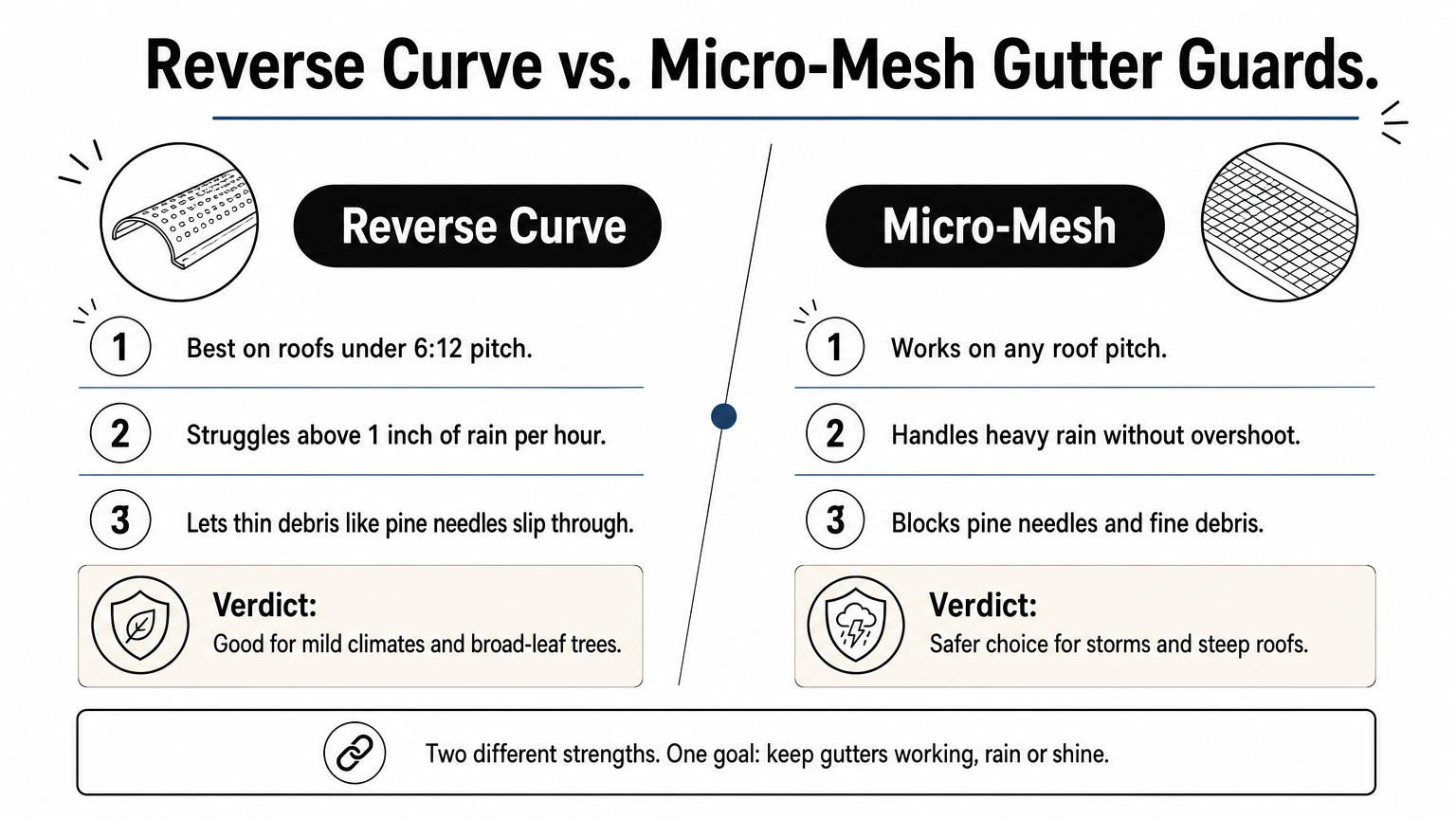
If your roof and climate don’t match the reverse curve sweet spot, micro-mesh is the safer bet even at a higher price.
Getting a clear reverse curve or surface tension gutter guards comparison against mesh options often comes down to your specific debris type rather than brand reputation.
| Factor | Reverse curve | Micro-mesh |
|---|---|---|
| Best roof pitch | Under 6:12 | Any pitch |
| Heavy rain performance | Poor above 1 in/hr | Strong |
| Pine needle resistance | Weak | Strong |
| Typical cost per linear foot | $15-$30 | $20-$45 |
| Maintenance | Occasional angle checks | Occasional brushing |
| Ice dam risk | Higher if low-mounted | Lower |
Worth noting: reverse curve guards win on visibility, since the solid metal hides the gutter trough completely, while micro-mesh shows a thin screen line along the roof edge. If that curb appeal matters to you and your roof fits the criteria from the checklist above, reverse curve still holds up. Our full breakdown of guard styles and what each one costs to install walks through both in more detail before you request quotes.
Common problems and complaints from real homeowners
Dig through gutter forums and Angi review threads, and the same complaints about reverse curve gutter guards show up again and again. Water streaking down the fascia during storms tops the list, followed by mysterious overflow that only shows up during specific weather patterns. Most complaints trace back to the installation and climate mismatches covered above, not a defective product.
Google’s own consumer protection guidance on home improvement scams reminds buyers to get installation specifics in writing, and that advice applies directly here since angle and pitch determine so much of the outcome.
The complaint pattern is consistent: it’s rarely the guard itself, it’s the mismatch between the guard and the roof it was installed on.
The most repeated complaints
Here’s what shows up most often when you search reverse curve gutter guards reviews, and how they stack up against the guards that scored highest in 2026 testing:
- Overshoot during heavy storms, especially on roofs steeper than the recommended pitch
- Rust or corrosion on cheaper aluminum versions after five to seven years
- Visible sagging where brackets weren’t spaced closely enough during install
- Debris buildup at seams where two sections of guard meet imperfectly
- Difficulty cleaning the narrow gap, which sometimes needs a specialty brush tool
Owners who paid for a quality installer with a test-fit process report far fewer of these issues than those who bought the cheapest option online and had a handyman mount it in an afternoon. That gap in outcomes says more about installation quality than the design itself.
Deciding what’s best for your gutters
So do reverse curve gutter guards work? Yes, but only within a narrow set of conditions. Roof pitch under 6:12, broad-leaf trees instead of pines, and moderate rainfall are the three boxes you need to check before you buy. Miss any of them and you’re likely to end up with the same overshoot and overflow complaints that fill up review threads.
Micro-mesh costs more but removes most of the guesswork, especially if your climate leans toward heavy storms or steep rooflines. Reverse curve still earns its place on the right home, particularly when a skilled installer sets the angle correctly and tests the fit before committing to a full run.
Match the guard to your roof, not the marketing. Once you know which style fits your situation, compare free gutter guard installation estimates from contractors near you who can confirm pitch and pricing before you commit.
What should this cost you?
Answer four questions and get a fair price range for your home.