
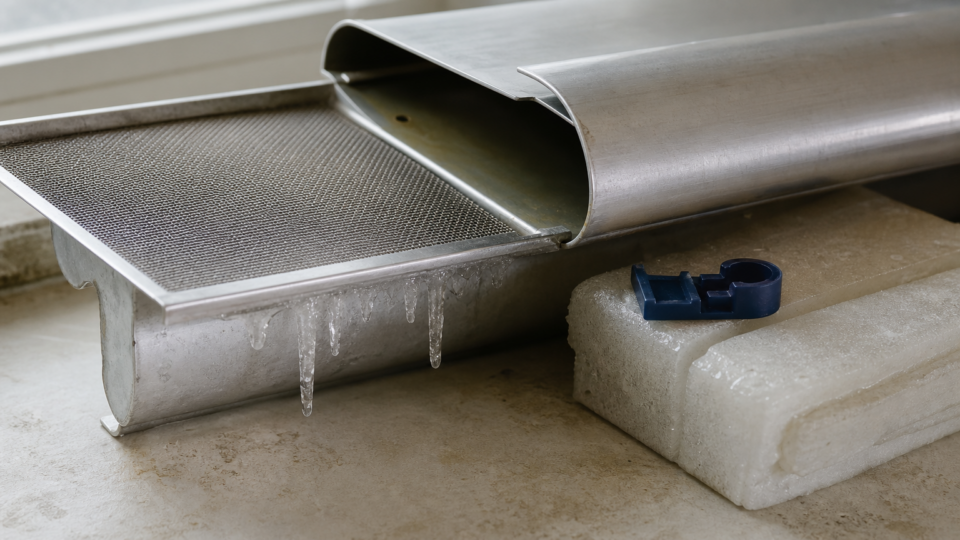
Short answer: Snow and ice are hard on gutter guards. Wet snow packs on top, meltwater refreezes in the channel, and some guards bend, crack, or turn into a ramp for ice. If you live where winters run long, picking the wrong guard can leave you with the same clogs, sagging, and ice dams you were trying to avoid. Ready for quotes? Compare local pros →
In this guide
Here is the short answer. The best gutter guards for snow and ice are sturdy, rigid designs that let meltwater drain and shed heavy loads. That generally means stainless steel micro-mesh and well-built aluminum reverse-curve guards. Foam inserts and flimsy plastic screens tend to trap water and freeze solid. No guard can fix poor attic insulation or ventilation, which is the real cause of most ice dams.
Below, you’ll find five winter-ready picks, with how each one handles snow load, freeze-thaw cycles, and runoff. I’m a former gutter installer, and a home inspector reviewed this guide. We’ll also cover typical costs so you know what a fair quote looks like before you call anyone.
1. Micro-mesh gutter guards
How it performs in snow and ice
Micro-mesh is a fine stainless steel screen bonded to a rigid frame. It earns its spot among the best gutter guards for snow and ice because the stiff frame resists bending under heavy snow, and the tight screen keeps shingle grit out of the channel.
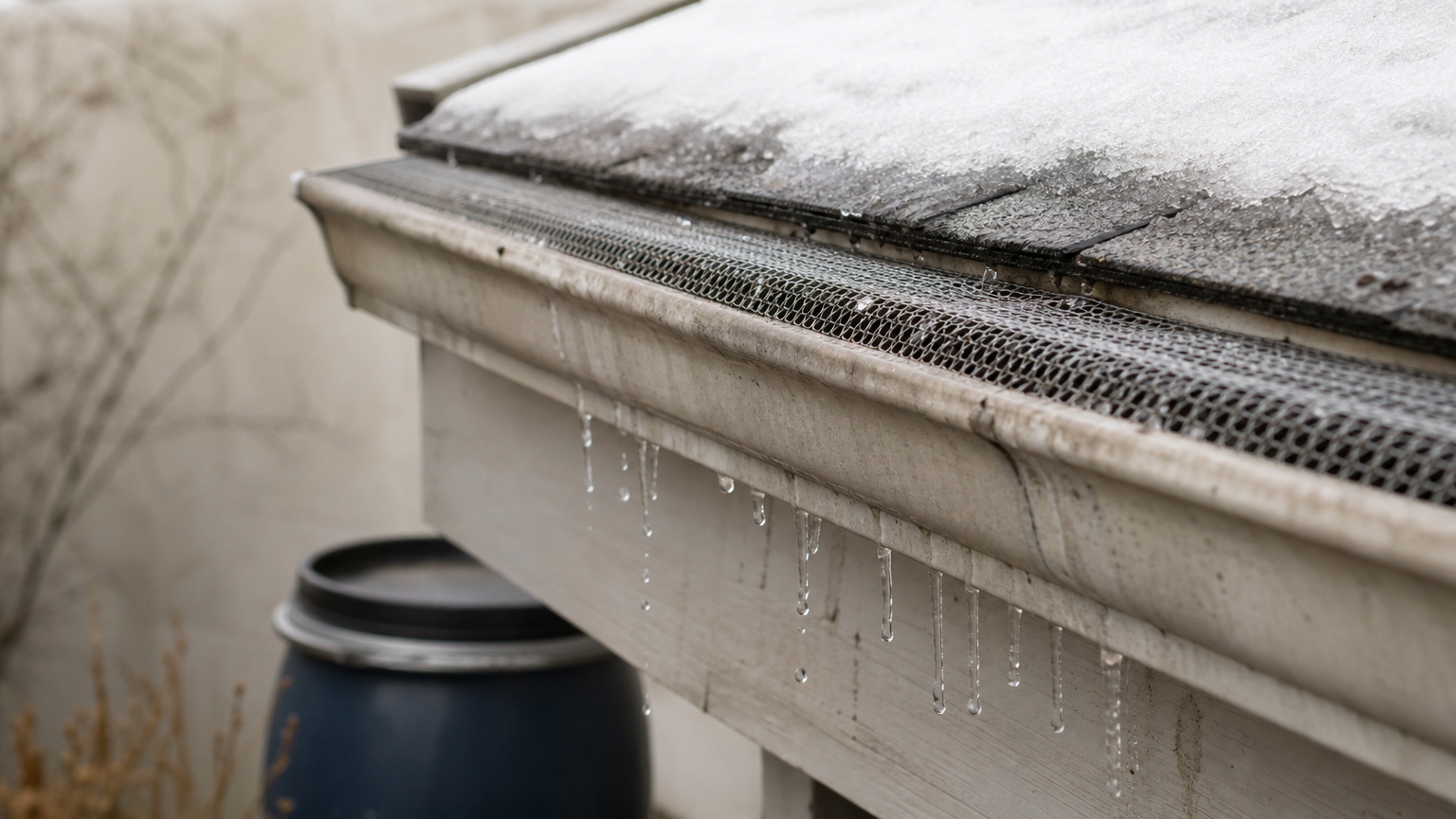
Snow does pile on top. As it melts, water clings to the screen and flows through by surface tension, so the trough keeps draining on mild days. Heavy, wet snow can slow that flow, so make sure the guard is screwed to the fascia or tucked under the shingle edge, not just resting in the gutter.
Ice dam prevention
Micro-mesh does not stop ice dams on its own. They form when attic heat melts roof snow and the water refreezes at the cold eaves. What a guard does is keep the gutter clear of debris, so meltwater has a path out and there’s less junk to freeze into a solid block.
Fix the attic first. Air sealing and insulation matter more than any guard you buy, along with proper ventilation.
Even the best gutter guards to prevent ice dams only help; insulation and ventilation fix the cause.
Best for and drawbacks
Pick micro-mesh if you have heavy tree cover and want the best gutter guards for winter that you can mostly leave alone.
- Pros: blocks pine needles and grit, rigid frame, 20+ year lifespan
- Cons: the surface can ice over in deep freezes, needs an occasional rinse, costs more than other options
Typical cost
Professional installation usually runs $8 to $20 per linear foot. DIY kits cost less but are harder to fasten securely on a sloped roof edge.
| Install type | Per linear foot | 150 ft home |
|---|---|---|
| DIY kit | $3 to $10 | $450 to $1,500 |
| Professional | $8 to $20 | $1,200 to $3,000 |
What should this cost you?
Answer four questions and get a fair price range for your home.
2. Perforated aluminum gutter guards
How it performs in snow and ice
Perforated aluminum is a solid sheet punched with small holes. It’s a budget-friendly pick among the best gutter guards for snow and ice because the sheet is rigid enough for light to moderate snow without sagging.
Meltwater drains through the holes, but they can plug with ice in a hard freeze. Choose thicker gauge aluminum, since thin stamped sheets dent and bend under a heavy load.
Ice dam prevention
It won’t stop ice dams, because the cause is attic heat melting the roof snow. Frozen holes can also slow drainage at the eaves, so clear slush off the surface when you safely can.
Perforated aluminum handles snow weight well, but its small holes can ice over in a deep freeze.
Best for and drawbacks
Go with it if you have mild to moderate winters and light debris like leaves.
- Pros: affordable, sturdy, easy to install
- Cons: seeds and grit pass through, holes freeze, thin sheets dent
Typical cost
Professional installation usually runs $3 to $9 per linear foot, and DIY sheets are cheaper still.
| Install type | Per linear foot | 150 ft home |
|---|---|---|
| DIY | $1 to $4 | $150 to $600 |
| Professional | $3 to $9 | $450 to $1,350 |
3. Reverse-curve gutter guards
How it performs in snow and ice
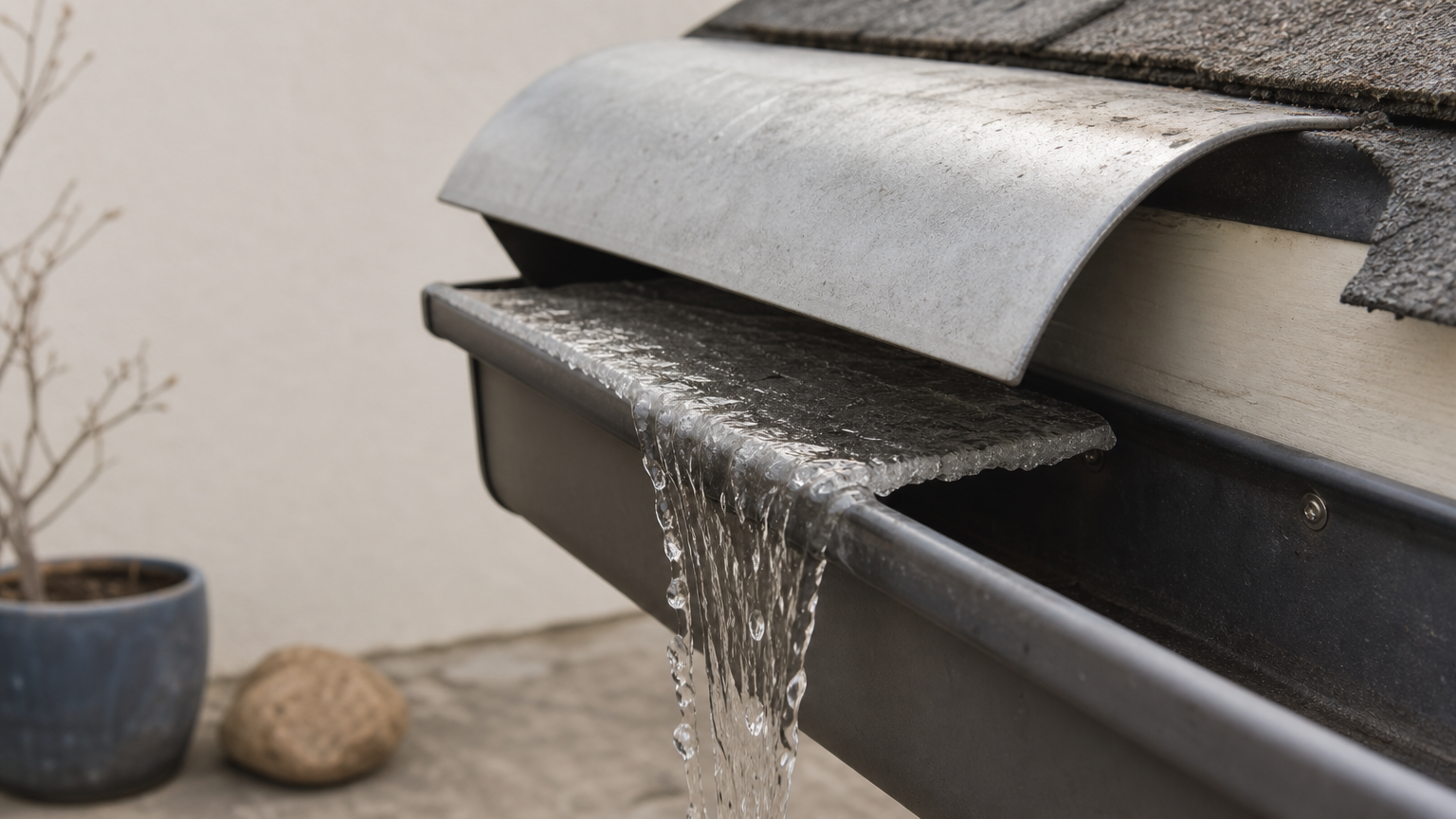
Reverse-curve guards are solid hoods that curve over the gutter edge. Water follows the curve by surface tension and drops into a narrow slot. They rank among the best gutter guards for snow and ice when built from heavy aluminum, because the solid hood sheds light snow and keeps debris out.
Problems start at the nose. Meltwater can freeze across the slot, and then runoff spills over the front edge.
Ice dam prevention
It won’t stop ice dams. A hood can also hide early ice buildup at the eaves, so look from the ground after a thaw. Insulation and attic ventilation still do the real work.
A reverse-curve hood sheds snow well, but ice across the slot can send meltwater over the edge.
Best for and drawbacks
Choose it for moderate winters and heavy leaf fall, especially if you want a low-profile look.
- Pros: sturdy hood, sheds big leaves, durable
- Cons: pine needles and seeds can wedge in the slot, front edge ices up, needs precise installation
Typical cost
Expect professional installation around $6 to $15 per linear foot. DIY versions cost less but depend on exact pitch alignment.
| Install type | Per linear foot | 150 ft home |
|---|---|---|
| DIY | $2 to $8 | $300 to $1,200 |
| Professional | $6 to $15 | $900 to $2,250 |
4. Foam gutter inserts
How it performs in snow and ice
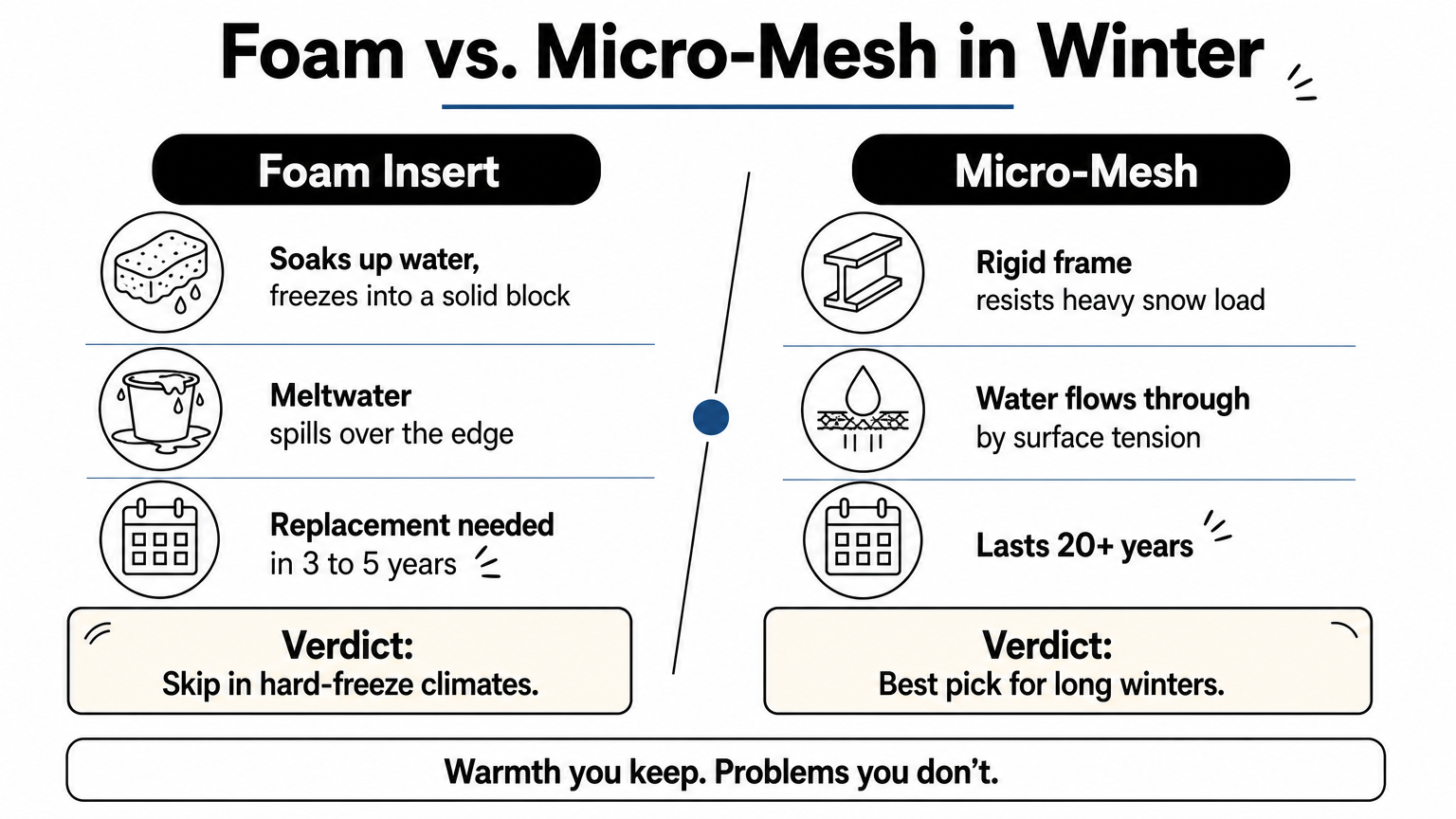
Foam inserts are porous wedges that fill the gutter. Water soaks in, and that is the problem in winter. A saturated insert can freeze into a solid block, and then meltwater has nowhere to go but over the edge. They don’t belong among the best gutter guards for snow and ice, and I’d skip them in any hard-freeze climate.
Ice dam prevention
They do nothing to stop ice dams. A frozen insert can hold ice against the eaves longer, and debris on top gives ice something to grip.
A foam insert that soaks up water in winter becomes a block of ice sitting in your gutter.
Best for and drawbacks
Consider foam only for mild winters, light leaf debris, and a tight budget.
- Pros: cheap, easy DIY, no fasteners
- Cons: freezes solid, seeds sprout on top, breaks down in a few years
Typical cost
Price is the draw, but you may pay twice when replacement comes in 3 to 5 years. Professional installation usually runs $3 to $8 per linear foot.
| Install type | Per linear foot | 150 ft home |
|---|---|---|
| DIY | $1 to $3 | $150 to $450 |
| Professional | $3 to $8 | $450 to $1,200 |
5. Brush gutter guards
How it performs in snow and ice
Brush guards are rows of stiff wire bristles that sit in the gutter like a giant pipe cleaner. They beat foam because meltwater runs through the bristles instead of soaking in. Still, they’re not among the best gutter guards for snow and ice in harsh climates. Snow packs between the bristles, and ice can lock the brush against the gutter walls.
Ice dam prevention
They won’t prevent ice dams. Leaves and grit caught in the bristles can freeze into a plug, which slows drainage at the eaves. The brush also sits low in the trough, so trouble is hard to spot from the ground.
A brush keeps water moving better than foam, but it can’t touch the attic heat that causes ice dams.
Best for and drawbacks
Choose brush guards for mild winters, light snowfall, and a quick DIY job on a tight budget.
- Pros: cheap, no fasteners, fits most gutter shapes
- Cons: pine needles and seeds lodge in the bristles, needs cleaning once or twice a year, ice grabs the wires
Typical cost
Expect $3 to $8 per linear foot installed. DIY is the usual route, and it keeps the upfront price low.
| Install type | Per linear foot | 150 ft home |
|---|---|---|
| DIY | $2 to $5 | $300 to $750 |
| Professional | $3 to $8 | $450 to $1,200 |
Choosing the right guard for your winters
For the best gutter guards for snow and ice, start with your climate. If your winters are long and heavy, stainless steel micro-mesh is my first pick, and a well-built aluminum reverse-curve guard is a solid second.
Mild winters leave more room. Perforated aluminum works for light debris, while foam and brush guards belong only where snow is rare and the budget is tight. Whichever you choose, remember that attic insulation and ventilation stop ice dams, not the guard itself.
Ready to see real numbers for your home? Get a free gutter guard installation quote and you’ll see an estimated cost range first, then get matched with local contractors who know how to fasten guards for your winters.
What should this cost you?
Answer four questions and get a fair price range for your home.