
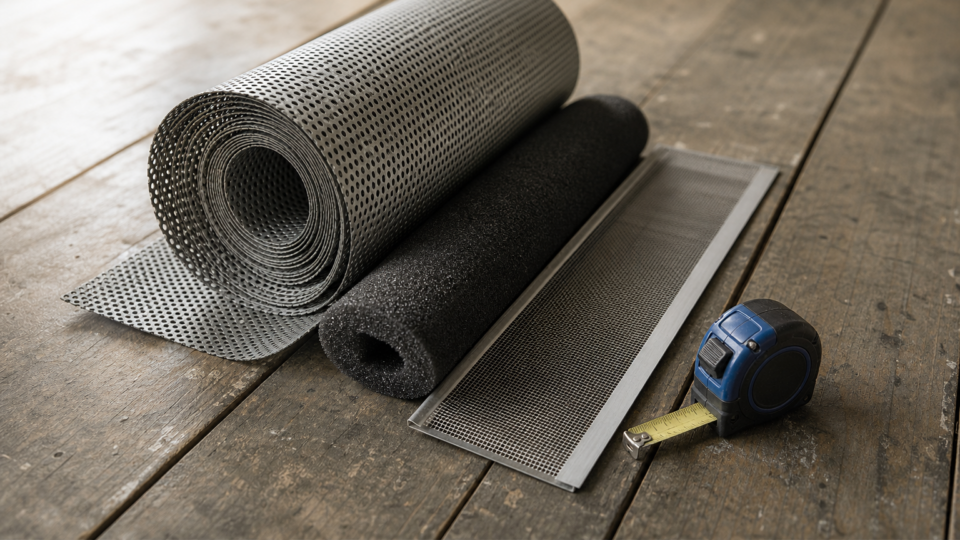
Short answer: Gutter guards cost about $1 to $10 per linear foot for materials and roughly $3 to $25 per foot when an independent pro installs them. National-brand systems are quoted at $35 to $60 or more. That is the short answer to how much gutter guards cost per foot. Cost per foot is the price of the guard, with or without labor, divided by the feet of gutter it covers, and it is the unit that contractors, hardware stores and online sellers all use. Ready for quotes? Compare local pros →
In this guide
The range looks absurd until you see that it mixes three markets: do-it-yourself kits, local installers working with off-the-shelf products, and national companies selling proprietary systems through in-home sales visits. This guide separates them. You will get price ranges by guard type, materials versus installed prices, the factors that push your number up, a way to turn a per-foot rate into a total, and a checklist for judging a quote.
Guardian Gutter Guide is an independent resource, not a contractor. Marcus Delaney, a former gutter installer with 12 years of experience, writes our guides, and Dana Whitfield, a residential home inspector with 9 years of experience, reviews them. Our ranges are national figures built from written quotes homeowners share, published installer rate sheets and retailer material pricing. Your actual quotes will vary with installer, roof access and local labor rates.
Why cost per foot is the number that matters
Cost per foot matters because gutter guards are sold by the length of gutter they cover. It is the only price that stays comparable between a 100-foot cottage and a 250-foot colonial. Once you know the per-foot rate, every quote, retail listing and forum post becomes something you can check.
Why guards are priced by the linear foot
Guards run along the roof edge, so what you buy is a length, not an area. A long single-story ranch can need more guard than a compact two-story house with more floor space, because the length of your eaves sets the quantity. That is why installers measure gutter runs first and quote the cost of gutter guards per linear foot before anything else.
Per-foot pricing also gives you a quick check on any total. Divide the quote by the feet of gutter covered:
- $2,700 for 150 feet is $18 per foot
- $1,200 for 150 feet is $8 per foot
- $6,000 for 150 feet is $40 per foot
Those three quotes could all be for the same house. They represent different products or different levels of markup, and the per-foot figure is what exposes the difference.
Why a per-square-foot price rarely makes sense
Searches for the average cost of gutter guards installed per square foot usually mean square feet of house, and no installer prices that way. Guards cover feet of gutter, and that footage follows the perimeter of your roofline, not your floor area. The same 2,000 square feet of living space can mean very different eave lengths:
| Home | Footprint | Approximate eave length |
|---|---|---|
| One-story ranch, 2,000 sq ft | 40 x 50 ft | about 180 ft |
| Two-story, 2,000 sq ft total | 25 x 40 ft | about 130 ft |
Dormers, bump-outs, porches and attached garages add feet to both. For rough planning, divide the total installed price by your floor area. A $2,520 job on a 2,000-square-foot house works out to about $1.26 per square foot of house. Use that figure only as a budget sanity check, because a different roof shape on the same house would give a different number for the same guard.
Divide any quote by your linear feet and you will know at once whether you are looking at a budget screen, a mid-range micro-mesh or a premium system.
What should this cost you?
Answer four questions and get a fair price range for your home.
Gutter guard cost per foot by type
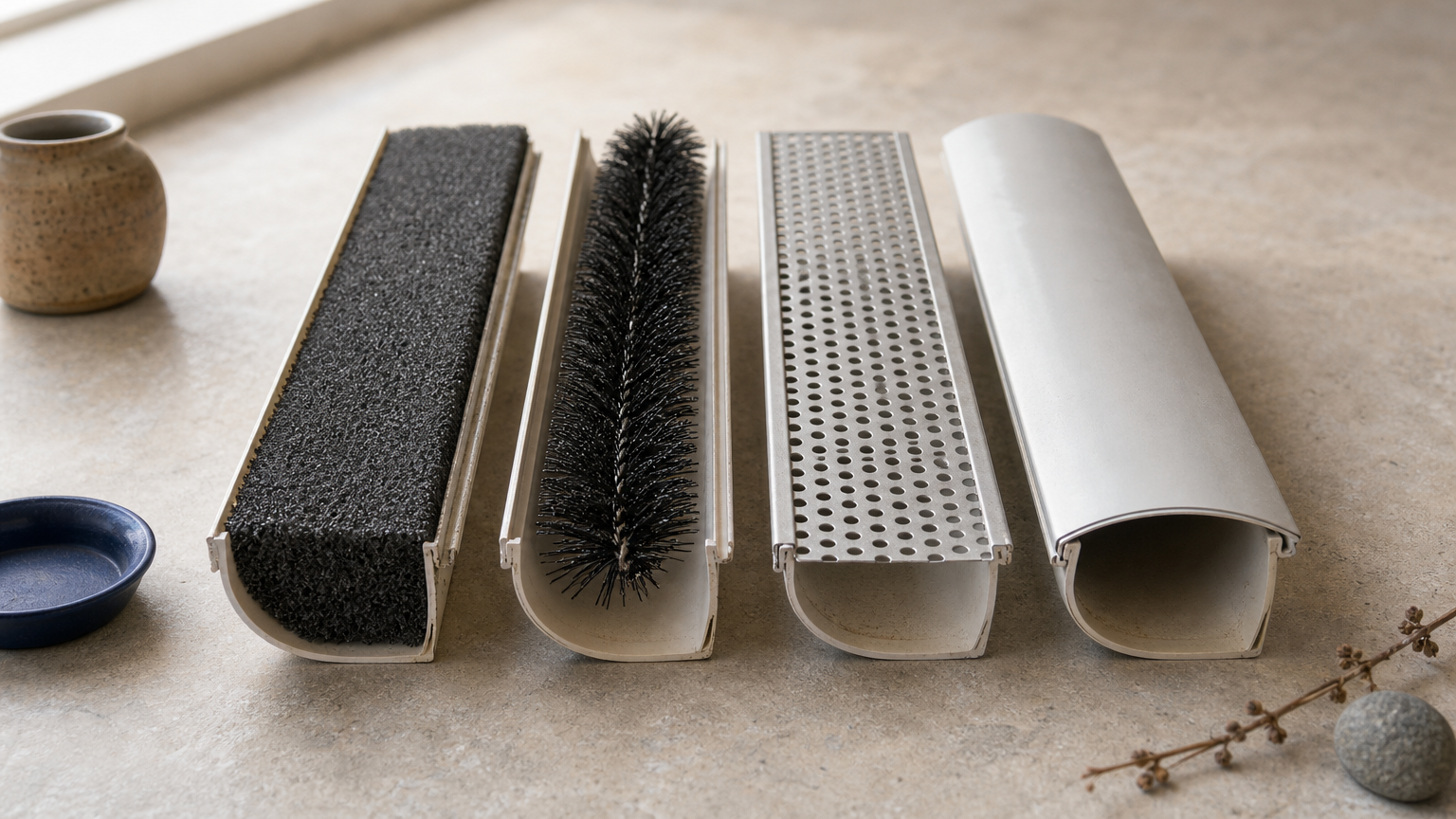
Foam and brush inserts are the cheapest guards, at roughly $1 to $4 per foot in materials. Micro-mesh and reverse-curve systems cost the most, at about $8 to $25 per foot installed by an independent pro. Everything else sits between.
Per-foot price ranges at a glance
The table puts materials-only prices next to installed prices so you can read across for your guard type.
| Guard type | Materials only | Installed by an independent pro | Typical lifespan |
|---|---|---|---|
| Foam insert | $1 to $3 | $3 to $8 | Up to 5 years |
| Brush | $1 to $4 | $3 to $8 | Up to 10 years |
| Plastic or vinyl screen | $1 to $3 | $3 to $8 | 3 to 5 years |
| Aluminum or steel screen | $1.50 to $5 | $4 to $10 | 10 to 20 years |
| Micro-mesh, metal | $4 to $10 | $8 to $20 | Up to 20 years |
| Reverse-curve | $3 to $10 | $10 to $25 | Up to 20 years |
| National-brand systems | Not sold as materials | $35 to $60 or more | Varies by company |
Read the low end of each range as a simple, single-story job with easy access. Read the high end as a tall house or a complicated roof. Lifespans assume reasonable upkeep, and plastic-framed micro-mesh lasts only about three years, so check the frame material before you buy.
Budget tier: foam, brush and plastic screens
Foam inserts slide into the gutter and let water through while debris sits on top. They are the easiest guard to install, but sun and constant moisture shorten their life, and they need more frequent cleaning than other types. Brush guards, which look like oversized bottle brushes, handle leaves and twigs well. They also trap pine needles, which makes them harder to clean than they look.
Plastic and vinyl screens come in rolls and cost about the same as foam. They suit mild climates with light debris, but the material is not weather-resistant, and snow and ice are hard on it. In heavy rain, foam and brush guards also tend to clog and struggle with flow. If your gutters overflow in storms, this tier is a poor match.
Mid and premium tiers: metal screens, micro-mesh and reverse-curve
Perforated aluminum and steel mesh screens are the best value for most homes with leaf-type debris. They sit on top of the gutter, last 10 to 20 years, and fine debris like shingle grit can still pass through the holes. Powder-coated steel handles snow and ice well. Avoid any design that installs under your shingles, because it can cause water intrusion and may void your roof warranty.
Micro-mesh uses a much finer screen that blocks shingle grit, pollen and pine needles, which is why it costs more. Reverse-curve guards cover the whole gutter and use surface tension to pull water in while debris slides off. They are usually professionally installed, and they can overshoot in very heavy rain or struggle with sticky debris. Both are worth the premium only when your trees justify it.
Match the guard to the debris you actually have, because a guard that passes your debris is wasted money at any price.
Materials-only versus installed price per foot
Installation adds roughly $2 to $6 per foot to the materials price. A screen that costs $3 per foot at a retailer typically lands at $5 to $9 per foot once a pro puts it up. The gap is labor, plus whatever a pro-grade product costs over a retail kit.
What a materials-only price covers
A materials-only price buys the guard and sometimes the fasteners. It does not cover your ladder, tin snips or drill, your time, or the cost of cleaning and repairing the gutters first. The per-foot price on a shelf tag or product page is almost always this number, and it is where most of the $1 to $10 DIY range comes from.
Before you compare prices, measure your gutter width. Gutters typically come in 5-inch, 6-inch and 7-inch widths, and some guards fit only certain sizes. A guard that does not match your gutter is money wasted before the first leaf falls.
What a professional adds per foot
Labor is the biggest swing between the two columns. Installers price by the foot or by the hour, and crews working around trees, tall walls or awkward corners charge more. A pro should also clean the gutter before the guard goes on and attach it correctly for your roof type. Here is what that does to a 180-foot job with an aluminum screen:
| 180 ft of aluminum screen | Per foot | Total |
|---|---|---|
| DIY, materials only | $3 | $540 |
| Professionally installed | $5 to $9 | $900 to $1,620 |
| Labor and markup | $2 to $6 | $360 to $1,080 |
Pros often use heavier, pro-grade products than retail kits. An installed micro-mesh price can therefore exceed retail materials plus labor, which is why that row of the earlier table runs $8 to $20.
When doing it yourself saves less than it seems
DIY is realistic for foam, brush, plastic screens and simple metal screens on a one-story house where you can work from a short ladder. You keep the $2 to $6 per foot of labor, and mistakes are cheap to fix. Fastening a screen with tin snips and a drill is a weekend job for most handy homeowners.
The savings shrink on a two-story house, a steep roof or a system that needs precise fitting. Ladder falls are a real injury risk, and a poor install can let water slip behind the gutter or void a warranty. Some brands also require professional installation to sell you the system at all. Hire out anything above one story or anything with a rigid frame.
Doing it yourself saves the labor portion, typically $2 to $6 per foot, and it is worth taking only where you can work safely from a short ladder.
What moves your per-foot price up or down
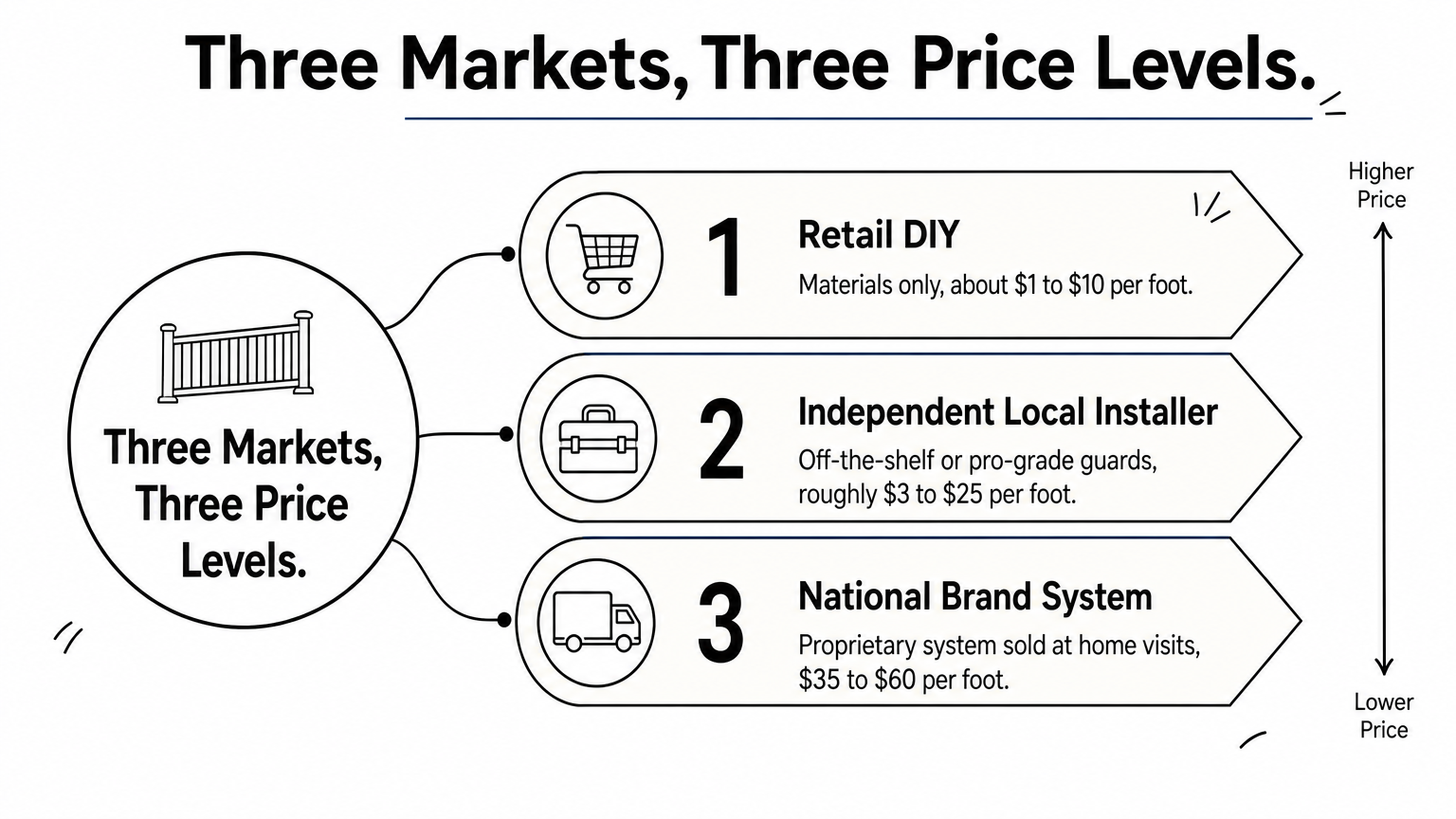
Four things move your price most: the guard type, the height and complexity of your roof, the amount of labor the job takes, and who sells it. Of these, the seller causes the widest gaps, which is why the same guard can quote at very different prices in the same town.
Three markets, three price levels
The first market is retail DIY, at $1 to $10 per foot for materials. The second is the independent local installer, who puts off-the-shelf or pro-grade guards on your house at roughly $3 to $25 per foot depending on type. The third is the national brand selling a proprietary system through an in-home sales visit, which is where the $35 to $60 per foot quotes live. Homeowners sharing quotes in online forums report numbers from about $6 to $30 per foot for local work, which fits this picture.
National figures help here. One 2026 survey of 1,000 homeowners who bought professionally installed guards reported averages from about $40 to $62 per foot depending on the company. LeafFilter averaged about $42 per foot and Leafguard about $40. These systems often come with a longer warranty and a single company handling everything, and the price also carries that company’s sales and marketing costs. Get at least one independent micro-mesh quote to compare against, then decide if the brand premium buys something you value.
Job factors that raise the per-foot price
Your house changes the rate more than most homeowners expect. These factors push a quote toward the high end of a range:
- Height and stories. Work above one story takes more time and specialized equipment.
- Roof pitch and complexity. Every inside corner, outside corner, valley, dormer and bay adds cut points and labor.
- Obstructions. Trees, shrubs and fences near the house slow the crew.
- Gutter size and condition. Wider gutters need wider guards, and sagging or rotted gutters must be repaired or replaced first, which is a separate cost.
- Add-on charges. Removing old guards, disposing of material, permits and downspout work can appear as separate lines.
Region and climate
Labor rates are local. In that 2026 survey, Northeastern and Western homeowners most often reported $76 to $100 per hour for labor, while Midwestern and Southern homeowners most often reported $50 to $75. Expect the high end of every range in high-cost metros.
Climate shapes the material. Heavy snow and ice call for sturdy powder-coated steel or aluminum, which costs more than plastic. Pine needles and pollen call for micro-mesh. Heavy rain rules out foam and brush. A guard chosen for your climate can cost more per foot and still be the cheaper choice over its life.
The seller changes your per-foot price more than the guard does, so collect quotes from more than one kind of seller.
How to estimate your total cost
Multiply your linear feet of gutter by the per-foot price for your guard type, then add a cushion for extras. Most of the work is getting the footage right, because an error there multiplies through every figure that follows.
Measure your linear feet
Walk the base of the house and measure each gutter run along the eaves, including garages, porches, dormers and bump-outs. Note which runs are on the second story, since those cost more to reach. A satellite map or the footage on a recent gutter invoice can confirm your count.
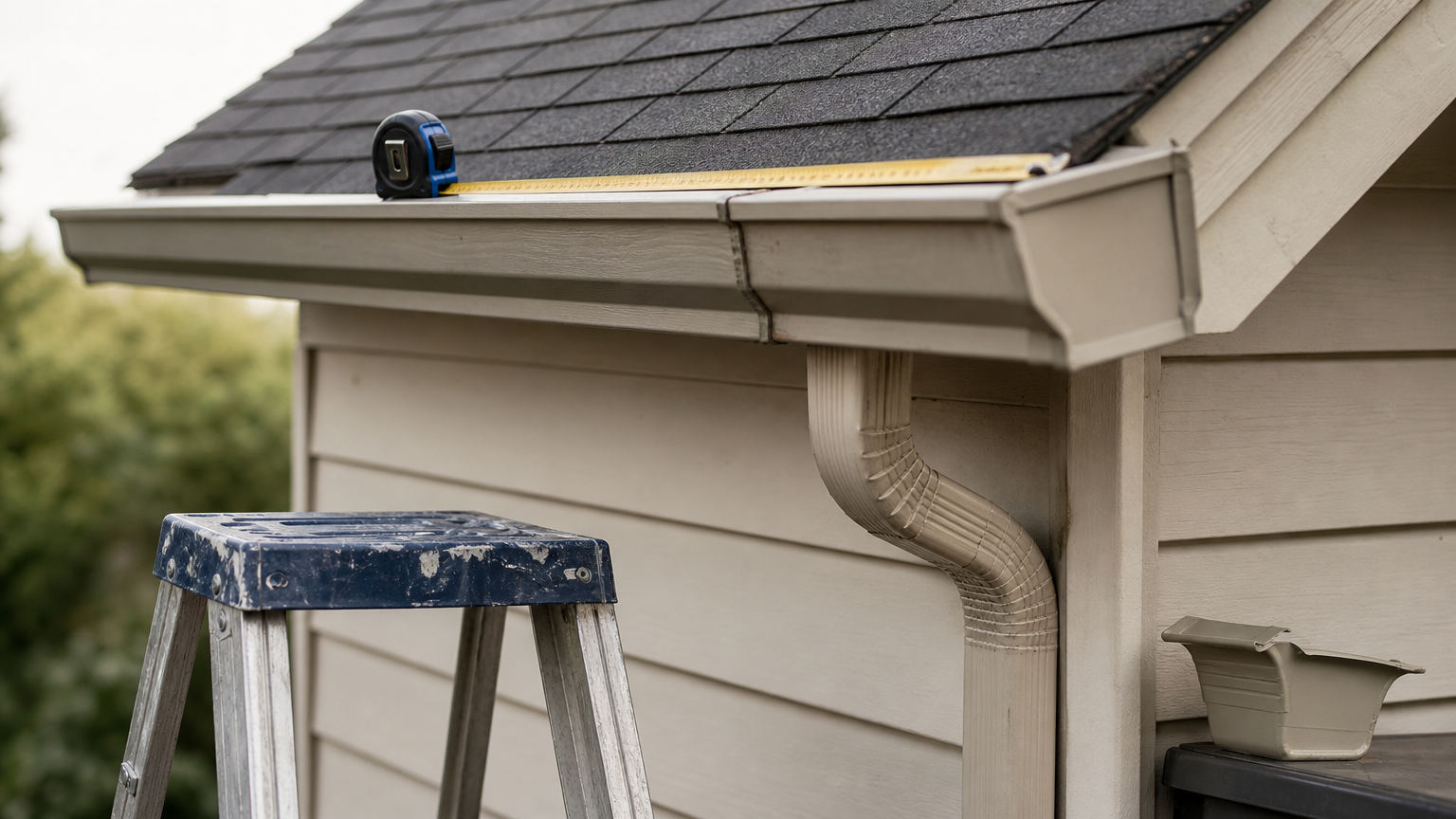
Round up and write down the total. A typical 2,000-square-foot home needs about 130 to 200 feet. Any installer will re-measure on site, but a number in hand lets you spot an inflated count in a quote.
Budget grid by length and price
This grid shows totals at four per-foot prices, from a basic screen to a national-brand system. It also answers the common question of what 100 feet of guard costs.
| Gutter length | $4 per foot | $10 per foot | $20 per foot | $40 per foot |
|---|---|---|---|---|
| 100 ft | $400 | $1,000 | $2,000 | $4,000 |
| 150 ft | $600 | $1,500 | $3,000 | $6,000 |
| 200 ft | $800 | $2,000 | $4,000 | $8,000 |
Worked example for a 2,000-square-foot ranch
Take the one-story ranch from earlier, with about 180 feet of eaves. Four common routes give very different totals:
| Route | Per foot | Total for 180 ft | Per sq ft of house |
|---|---|---|---|
| DIY aluminum screen | $3 | $540 | $0.27 |
| Local pro, metal screen | $7 | $1,260 | $0.63 |
| Local pro, metal micro-mesh | $14 | $2,520 | $1.26 |
| National-brand system | $40 | $7,200 | $3.60 |
Add a cushion for extras that sit outside the per-foot price: gutter repair or replacement, new downspouts, removal of old guards and any permit fees. If your gutters are sagging or failing, price the repair or replacement separately and decide whether to fix them before the guards go on.
The per-foot price is only the guard, so budget separately for gutter repairs, downspouts and removal.
How to judge a contractor’s per-foot quote
A fair quote names the guard type, states the linear feet, and lands inside the range for that type. Start by dividing the total by the footage, then ask questions about anything that falls outside the range.
Run the quick math
Divide the total by the feet quoted, then compare with the type ranges above. A $4,500 quote for 180 feet is $25 per foot. That is a fair independent price for reverse-curve or the top of the range for micro-mesh, and well above any plain screen. These tripwires tell you when to ask more questions:
- Over $10 per foot for a plain aluminum or steel screen
- Over $20 per foot for micro-mesh from an independent installer
- Over $25 per foot for reverse-curve from an independent installer
- Anything at $35 or more per foot, which should be compared with at least two independent quotes
Quotes that exceed these numbers are not automatically bad. They may include repairs, a tall roof or a long warranty, but the installer should be able to show where the money goes.
What a good quote includes
A usable quote lists the guard brand and model, the material, the linear feet, the labor and any extras as separate lines. It should also state the installation method, and the method should not push the guard under your shingles. Ask for the product and labor warranties in writing, along with proof of license and insurance. Get three quotes if you can, and make sure each covers the same footage and guard type.
Red flags
Pressure to sign the same day is the biggest warning sign. A discount that appears when you hesitate suggests the starting number was padded. Other warning signs include a vague line such as "gutter protection system" with no product named, a lump-sum total with no breakdown, and no mention of your gutters’ condition. We cannot recommend a specific contractor or handle disputes with a company you hire, so lean on your own paperwork and a clear written scope.
A quote you cannot divide into a guard type, a footage and a per-foot price is a quote you cannot compare.
Are gutter guards worth the price per foot?
Gutter guards are worth the price when your gutters clog more than once a year, when cleaning means a two-story ladder, or when overflow threatens your foundation. They are poor value on a low-debris, single-story house you can clean yourself in an hour.
Cost per foot per year of life
Price per foot hides how long the guard lasts. Dividing the installed mid-range price by the lifespan gives a fairer comparison:
| Guard | Installed mid price per foot | Assumed life | Cost per foot per year |
|---|---|---|---|
| Foam insert | $5 | 4 years | $1.25 |
| Plastic screen | $5 | 4 years | $1.25 |
| Aluminum or steel screen | $7 | 15 years | $0.47 |
| Micro-mesh, metal | $14 | 20 years | $0.70 |
| Reverse-curve | $18 | 20 years | $0.90 |
The cheapest sticker is not the cheapest guard once you count replacement, and a mid-priced metal screen often wins on cost per year. That comparison assumes every guard performs equally, and it does not. Micro-mesh earns its extra cost where fine debris is the problem.
Payback against cleaning costs
Professional cleaning often runs $150 or more per visit. Suppose you pay $200 twice a year, or $400 annually. A $2,520 micro-mesh install on 180 feet would pay back in about six years if it removed that spend entirely. Because guards still need an inspection at least once a year, expect closer to seven or eight.
If you clean your own gutters and have few trees, payback is not financial, and the case rests on ladder risk and overflow prevention. A guard that fits your debris and roof protects the fascia, siding and foundation from the water damage clogs cause. Skip guards if your gutters rarely clog and you are comfortable cleaning them.
Guards pay off fastest for tree-heavy homes with taller rooflines, and slowest for homeowners who clean their own low gutters.
What to do with these numbers
Gutter guards cost about $1 to $10 per foot for materials, $3 to $25 installed by an independent pro, and $35 to $60 or more from national brands. Measure your linear feet, pick the guard that matches your debris and climate, and divide every quote by the footage before you compare. Budget separately for gutter repairs, downspouts and removal.
When you are ready to hire, see your estimated cost range and request a free gutter guard quote before you talk to anyone. You will see a price range first, so you can judge what installers tell you against real numbers.
What should this cost you?
Answer four questions and get a fair price range for your home.