
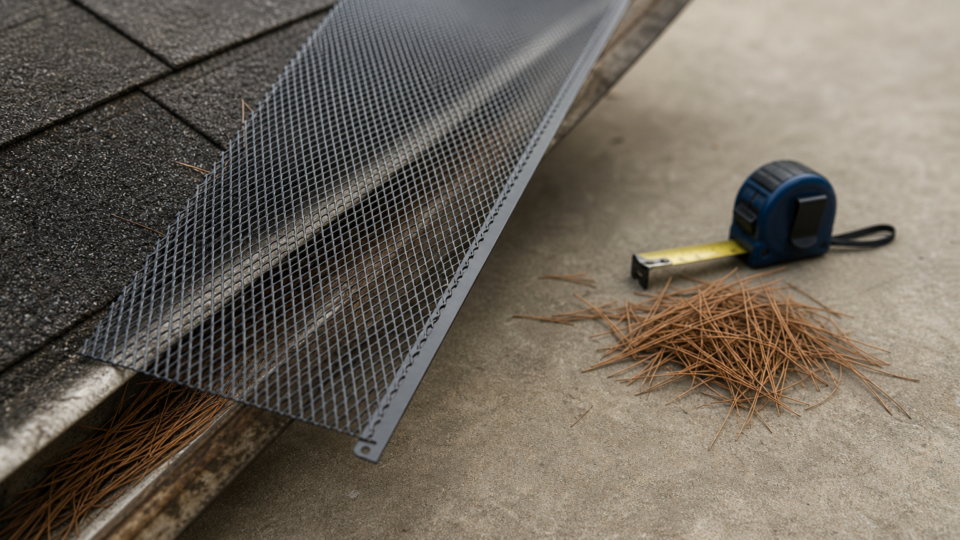
Short answer: You keep hearing that stainless steel micro mesh gutter guards are the best option on the market, but the price tag makes you pause before you commit. Some brands charge two or three times more than aluminum screen guards, and it’s fair to ask whether that stainless steel construction actually earns its keep or just pads a contractor’s margin. Ready for quotes? Compare local pros →
In this guide
The short answer: stainless steel micro mesh holds up better against rust, sagging, and pine needle infiltration than almost any other guard type, but it’s not the right call for every roof or budget. What matters is matching the mesh size and frame material to your actual debris load and climate, not just buying the priciest option on the shelf.
In this guide, we’ll break down what makes stainless steel micro mesh different from standard aluminum mesh, where the extra cost comes from, and the situations where it pays off versus where you’re overspending. We’ll also cover realistic price ranges by brand and installation type, so you walk into any quote already knowing what a fair number looks like.
Why stainless steel micro mesh outperforms other guards
Most gutter guard failures trace back to the frame or mesh corroding, sagging, or stretching until debris finds a gap. Stainless steel micro mesh solves that problem at the material level instead of relying on coatings or clips that wear out. The steel itself resists rust, and the tight weave physically blocks particles that other guard types let through. That combination is why installers who’ve replaced enough failed screens tend to steer customers toward stainless steel once budget allows it.
The metal matters more than the mesh pattern
Aluminum screen and reverse-curve guards use aluminum or vinyl frames that hold up fine for a few years, then start pitting or warping once they take on years of freeze-thaw cycles and standing moisture. Stainless steel doesn’t corrode the same way, and it keeps its shape under the weight of wet leaves, ice, and snow load. That rigidity matters because a sagging guard creates gaps at the seams, exactly where small debris sneaks through.
The guard that resists rust is the guard that still works in year fifteen.
Mesh size keeps out what other guards miss
Most stainless steel micro mesh products use holes between 50 and 275 microns, fine enough to stop pine needles, asphalt shingle grit, and helicopter seeds that pass right through standard aluminum screen. Foam and brush inserts, by comparison, catch large leaves but let fine debris settle into the material itself, where it decomposes and creates a growing medium for weeds and moss. Reverse-curve guards handle heavy leaf volume well but struggle with fine grit and can overshoot water during intense downpours.
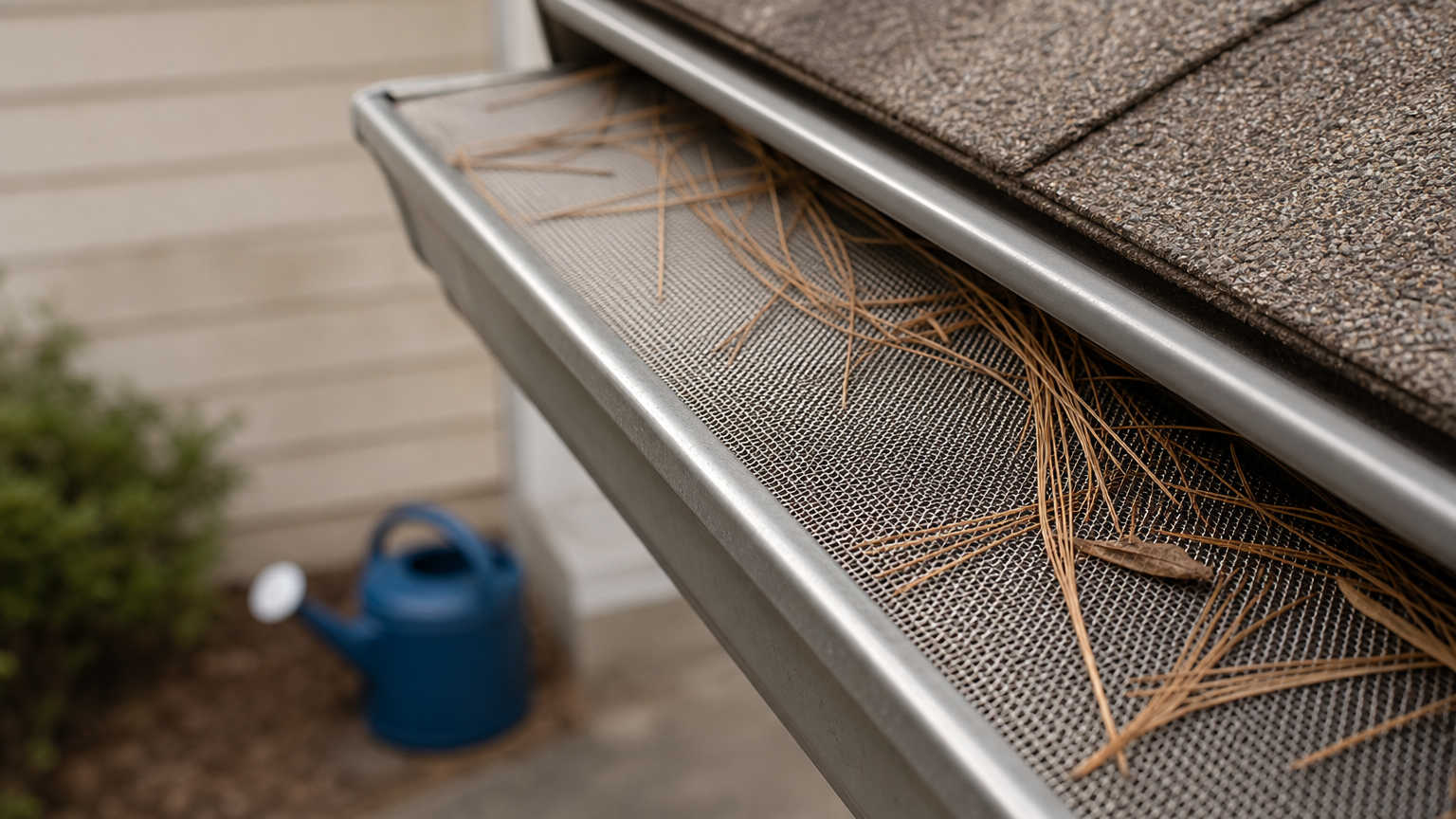
| Guard type | Debris it blocks well | Common failure point |
|---|---|---|
| Stainless steel micro mesh | Pine needles, grit, seeds, large leaves | Rarely fails if installed correctly |
| Aluminum micro mesh | Large leaves, most needles | Mesh corrosion over time |
| Reverse-curve | Large leaves | Fine debris, water overshoot |
| Foam/brush inserts | Large leaves only | Debris embeds in material, decomposes |
Built to survive decades on the roof, not just a few seasons
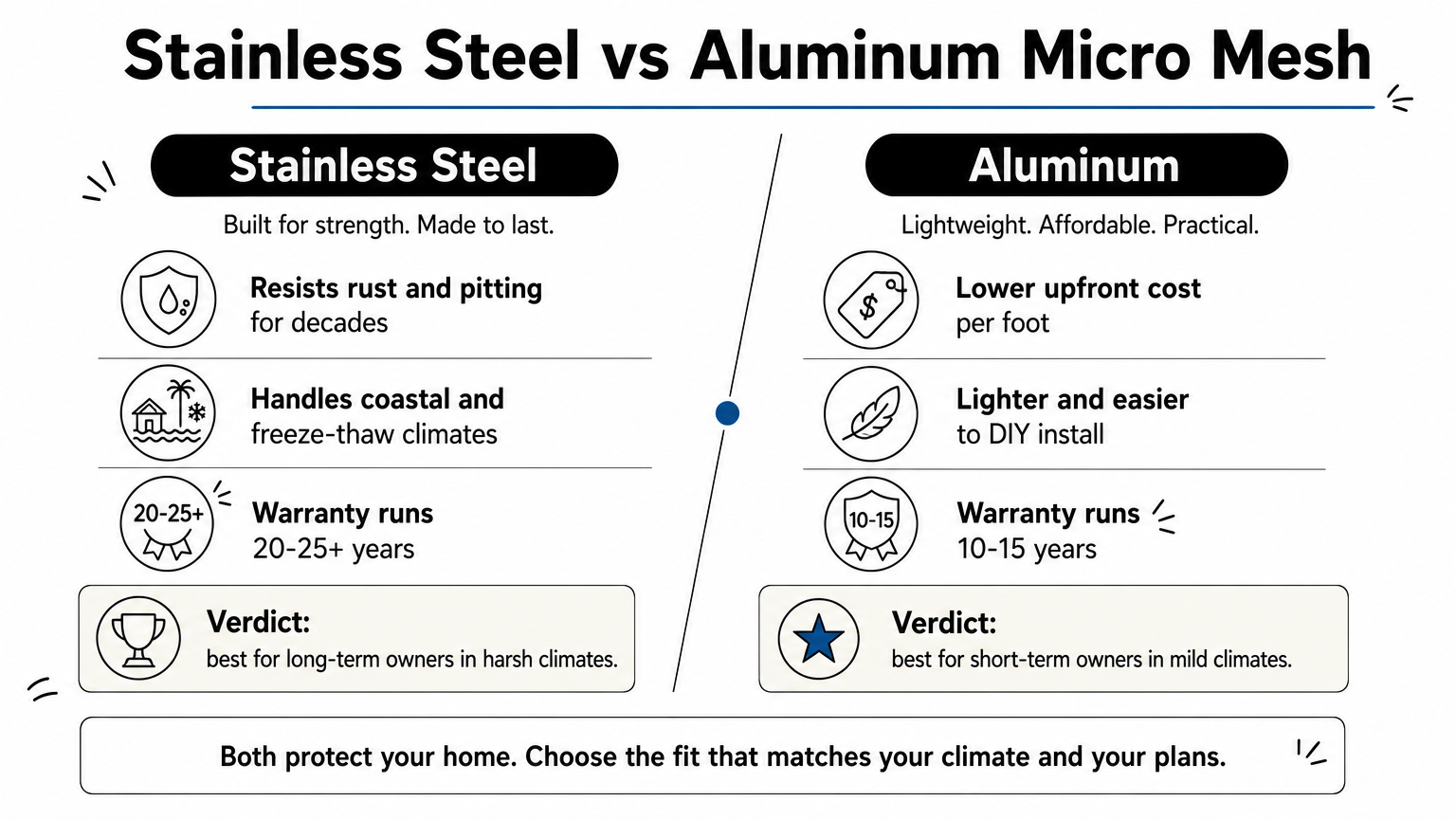
Manufacturers back stainless steel micro mesh with warranties that run 20 to 25 years or longer, a signal of how confident they are in the material’s lifespan compared to the 10 to 15 year warranties typical of aluminum screen products. That longevity changes the math on cost per year, even though the upfront price is higher. A homeowner replacing aluminum screens twice over 25 years often spends close to what stainless steel would have cost installed once, without factoring in the labor and ladder trips that come with each replacement.
Stainless steel also handles harsh coastal and high-humidity climates better than other metals, which matters if you’re near saltwater or live somewhere with heavy year-round rainfall. Aluminum can develop white oxidation stains in those conditions, and while it’s mostly cosmetic, it’s a sign the metal is degrading faster than it would inland. If your home sits in one of those tougher environments, the extra durability of stainless steel earns back more of its premium than it would on a mild, dry roof with light debris.
What should this cost you?
Answer four questions and get a fair price range for your home.
How to choose the right micro mesh gutter guard
Picking a guard isn’t just about grabbing the word "stainless steel" off a shelf. Micro mesh gutter guards vary widely in hole size, frame gauge, and how they attach to your existing gutters, and getting any of those wrong can mean water overshoot or clogged mesh within a year or two.
Match mesh size to your actual tree cover
Start with what’s actually falling on your roof. Pine needles and small seed pods need a mesh under 100 microns to stay blocked, while homes surrounded mostly by oak or maple can often get away with a looser weave in the 175 to 275 micron range. Going tighter than you need isn’t free either: extremely fine mesh can slow water flow during heavy downpours if it’s not paired with enough surface area.
Buy for the debris on your roof, not the debris in the brochure.
Check the frame gauge and attachment style
The mesh gets the marketing attention, but the frame is what keeps it anchored to your fascia or gutter lip for the next 20 years. Look for 304 or 316 stainless steel frames rather than thin aluminum brackets bolted to a stainless mesh, since that hybrid setup corrodes at the seam and defeats the point of paying for stainless in the first place. Confirm the attachment method works with your existing gutter style too. Some guards hook under the shingles, others clip to the gutter’s front lip, and mismatched hardware is a common cause of guards popping loose in high wind.
Verify installation angle and roof pitch compatibility
Steep roofs shed water fast enough that a flat-mounted micro mesh guard can let water shoot straight over the gutter instead of into it. Manufacturers rate their products for pitch ranges, and installers who skip that check are the ones you’ll hear complaining about overshoot later. Ask any brand or installer these three questions before you commit:
- What micron rating does the mesh use, and does it match your predominant tree species?
- Is the entire frame stainless steel, or just the mesh panel?
- Is the product rated for your roof’s pitch and your local rainfall intensity?
Getting these three answers right up front saves you from a callback six months later.
What stainless steel micro mesh gutter guards cost
Expect to pay more upfront for stainless steel micro mesh than for any other guard type on the market, and go in knowing why. Material and labor costs for stainless steel run higher because the metal itself is pricier to source and harder to cut and form than aluminum, and installers often charge more per linear foot to account for the extra care needed during installation.
Typical price ranges by installation type
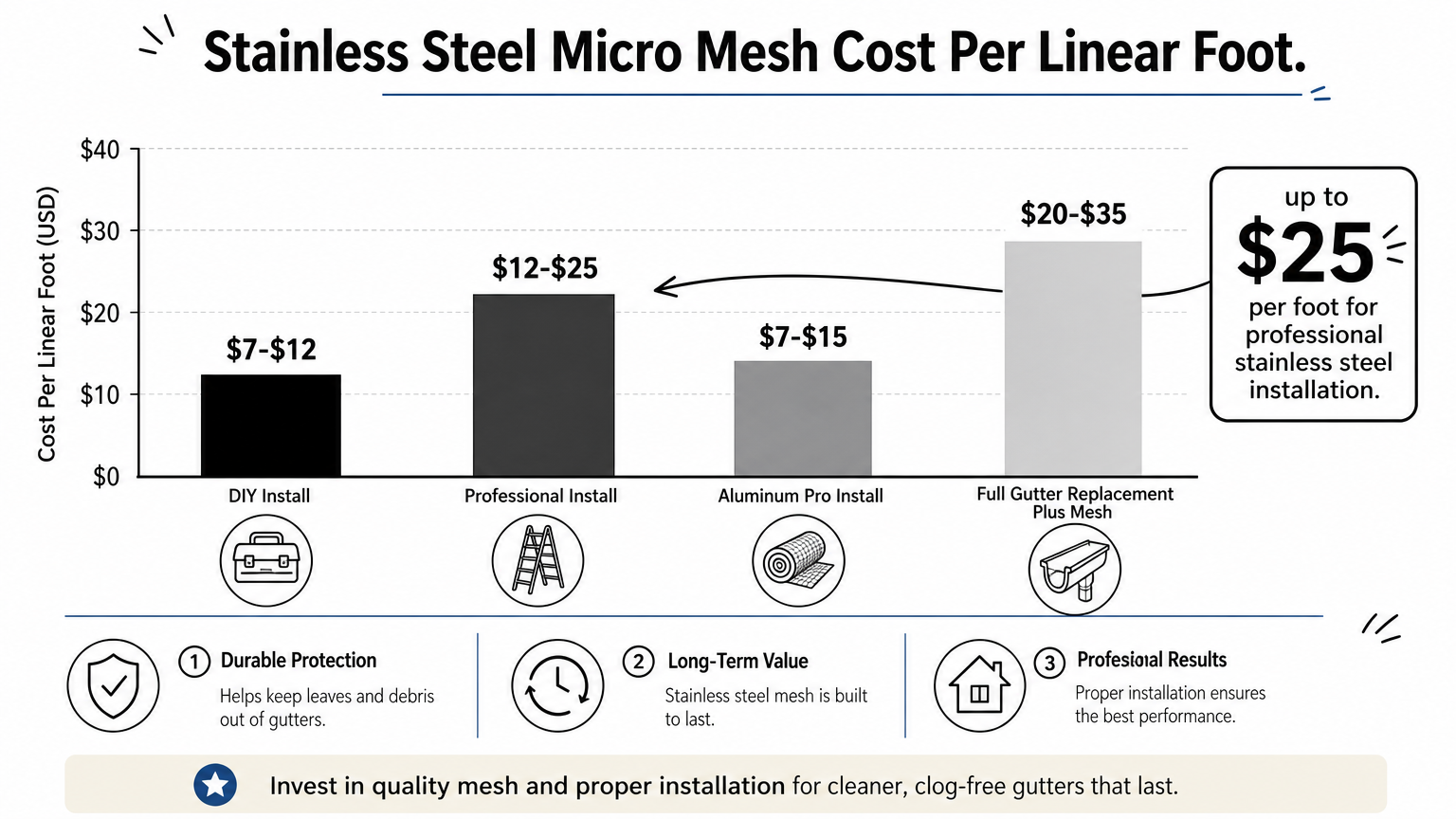
Pricing swings based on your home’s linear footage, story count, and whether you’re installing on existing gutters or taking on a full gutter replacement at the same time. Here’s what homeowners typically report paying:
| Project scope | Price per linear foot | Total for average home (150-200 ft) |
|---|---|---|
| Stainless steel micro mesh, DIY install | $7 – $12 | $1,050 – $2,400 |
| Stainless steel micro mesh, professional install | $12 – $25 | $1,800 – $5,000 |
| Aluminum micro mesh, professional install | $7 – $15 | $1,050 – $3,000 |
| Full gutter replacement plus stainless mesh | $20 – $35 | $3,000 – $7,000 |
The premium isn’t in the metal alone, it’s in the labor to install it right.
Where the extra dollars actually go
Gauge and finish quality drive a big chunk of the price spread within the stainless steel category itself. A 316-grade frame built for coastal exposure costs more than a standard 304-grade version meant for inland climates, and brands that hand-fit each section to your fascia charge more than those selling snap-on universal panels. Homeowners on steep or multi-story roofs also pay a labor premium, since installers need extra scaffolding or ladder work that flat single-story homes don’t require.
Regional labor rates shift these numbers too. Installers in high cost-of-living metro areas can charge 20 to 30 percent more than the national averages above, while rural markets with less installer competition sometimes run higher for the opposite reason: fewer contractors to bid the job. If you want a number specific to your home instead of a national range, see what gutter guards cost with installation included and run your project details for your linear footage, story count, and region before you request quotes.
Stainless steel vs aluminum micro mesh: which wins
Aluminum micro mesh isn’t a bad product, and for a lot of homes it’s the smarter buy. The real question isn’t which metal is "better" in a vacuum, it’s which one matches your climate, budget, and how long you plan to stay in the house. Aluminum micro mesh costs less upfront and performs fine in mild, dry regions where corrosion pressure is low.
Where aluminum still makes sense
Owners planning to sell within five to seven years, or living somewhere without heavy coastal humidity or road salt spray, often get full value from aluminum without ever seeing the downsides show up. It’s lighter to handle during a DIY install, cheaper per linear foot, and widely stocked at home improvement stores, so replacement parts are easy to find if a section gets damaged.
Choose the metal that matches how long you’ll own the roof, not just the one with the longer warranty.
Where stainless steel pulls ahead
Homes near saltwater, in freeze-thaw climates, or under heavy pine cover see the gap widen fast. Stainless steel resists the pitting and white oxidation that aluminum develops under repeated moisture exposure, and its rigidity holds mesh shape under ice load better over a 20-plus year span.
| Factor | Stainless steel | Aluminum |
|---|---|---|
| Upfront cost | Higher | Lower |
| Coastal/humid climate performance | Excellent | Fair, prone to oxidation |
| Typical warranty | 20-25+ years | 10-15 years |
| Weight/DIY handling | Heavier, stiffer | Lighter, easier to cut |
| Best fit | Long-term owners, harsh climates | Short-term owners, mild climates |
Run the numbers before you decide
Survey your gutters for existing pitting or oxidation stains before assuming either metal is the right call. If you’re seeing corrosion after only a few years on your current gutters, that’s a sign your local conditions favor stainless steel regardless of price. Compare both options side by side, along with reverse-curve and foam alternatives, in our breakdown of gutter guard prices by type and home size before you request quotes from a contractor.
Deciding if it’s right for your home
Stainless steel micro mesh earns its price on most roofs that deal with pine needles, coastal humidity, or freeze-thaw winters. Long-term ownership tips the math in its favor even after you account for the higher install cost, since you’re not replacing corroded aluminum screens twice over the same 20-year span. If you’re planning to sell soon, live somewhere mild and dry, or just need basic leaf protection, aluminum micro mesh still does the job without overspending.
Whatever you land on, get the mesh size, frame grade, and pitch rating matched to your actual roof, not the flashiest label on the packaging. Once you know which type fits your home, the next step is getting real numbers from a local installer. Get a free gutter guard installation quote from local pros and see your cost range before anyone shows up with a ladder.
What should this cost you?
Answer four questions and get a fair price range for your home.