
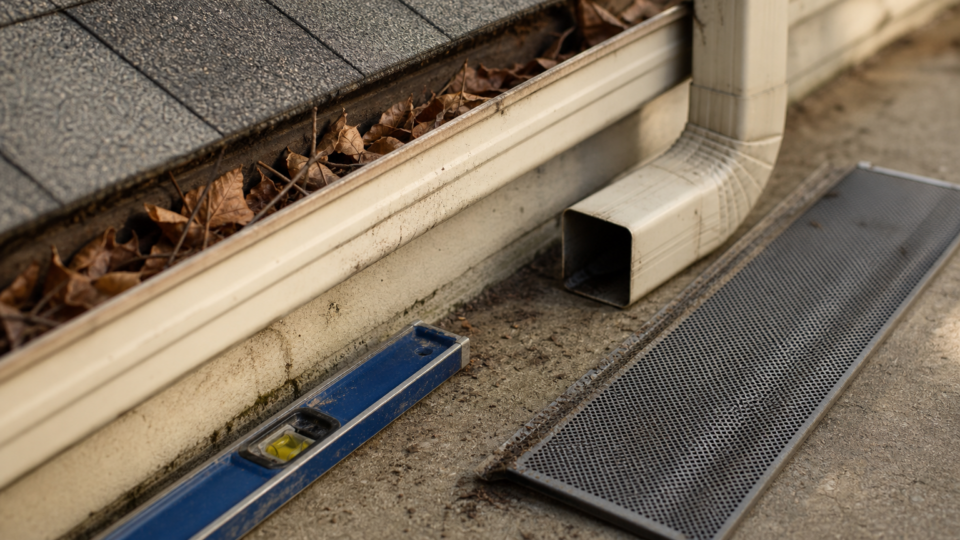
Short answer: The right overflowing gutters solution depends on why the water spills, and the cause is almost always one of five: a clog, a bad slope, undersized parts, roof water overshooting at a valley or corner, or debris that the wrong guard lets through. If you have not cleaned this season, start there. If the gutters are clean and still overflow in heavy rain, look at slope and capacity next. Quick fixes suit you if a storm is coming, re-pitching and extra downspouts suit the DIY homeowner, and guards suit anyone tired of climbing a ladder. Ready for quotes? Compare local pros →
In this guide
The frustrating part is cleaning the gutters and watching water pour over the front edge anyway. That water soaks the soil beside your foundation, stains siding, and washes out landscaping. Most guides stop at "clean them more often," which does not help when your gutters keep overflowing after a cleaning.
This article walks through five fixes in the order I would try them. Each one covers what it fixes, how to do it, and what it costs in time and effort. Guardian Gutter Guide is written by a former gutter installer and reviewed by a home inspector, so the steps come from real jobs. Where a fix is beyond DIY, I say so.
1. Clear the gutters and downspouts
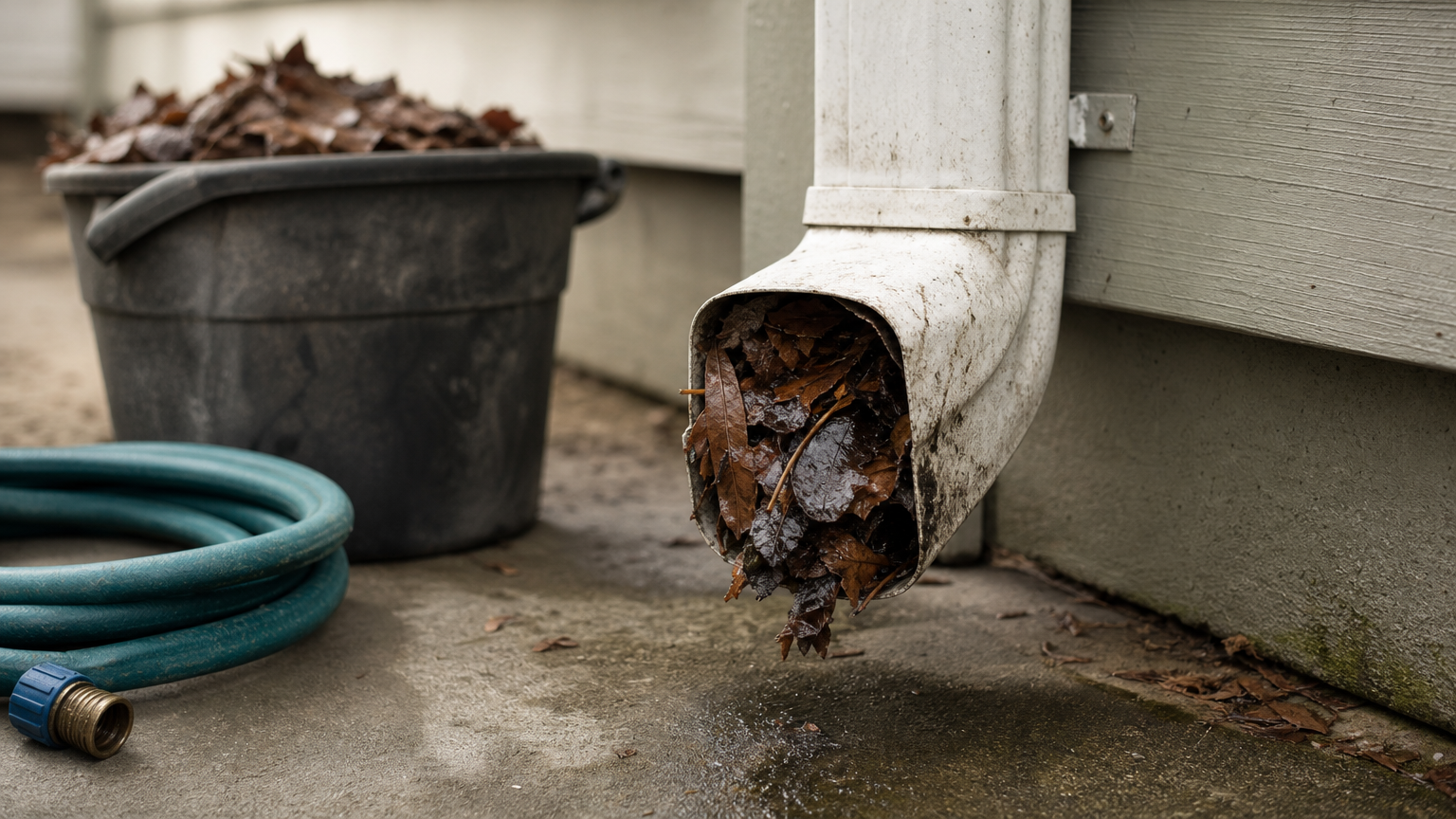
Clearing clogs is the first fix because blocked gutters and downspouts cause most overflow. One handful of debris at a downspout outlet can back water up the entire run.
What it fixes
Water has nowhere to go when the outlet, the elbows at the top of the downspout, or an underground drain line is blocked. A gutter can look clean from the ladder and still be plugged a few feet down the pipe. That is the usual answer to why gutters overflow right after a cleaning.
A gutter is only as clear as its downspout.
How to do it
Set the ladder on level ground and wear gloves and safety goggles. Then work through this order:
- Scoop debris by hand into a bucket, working toward the downspout.
- Flush the gutter with a hose and watch the outlet.
- Run water into the downspout for 5 to 15 minutes. If it backs up, the clog is inside the pipe.
- Push a hose or plumber’s snake down from the top. Tap the pipe gently to loosen debris.
- Drop a small screw down the downspout. If it clinks out at the bottom, the pipe is clear.
- If the downspout feeds an underground drain, disconnect it and flush the drain separately. A drain that backs up needs a pro with drain equipment, especially if tree roots are involved.
Cost, time, and difficulty
This costs nothing if you own a ladder and a hose, and takes one to two hours on a single-story house. Skip it and hire a pro if the roof is steep or the gutters sit above the first floor.
What should this cost you?
Answer four questions and get a fair price range for your home.
2. Re-pitch and re-hang sagging gutters
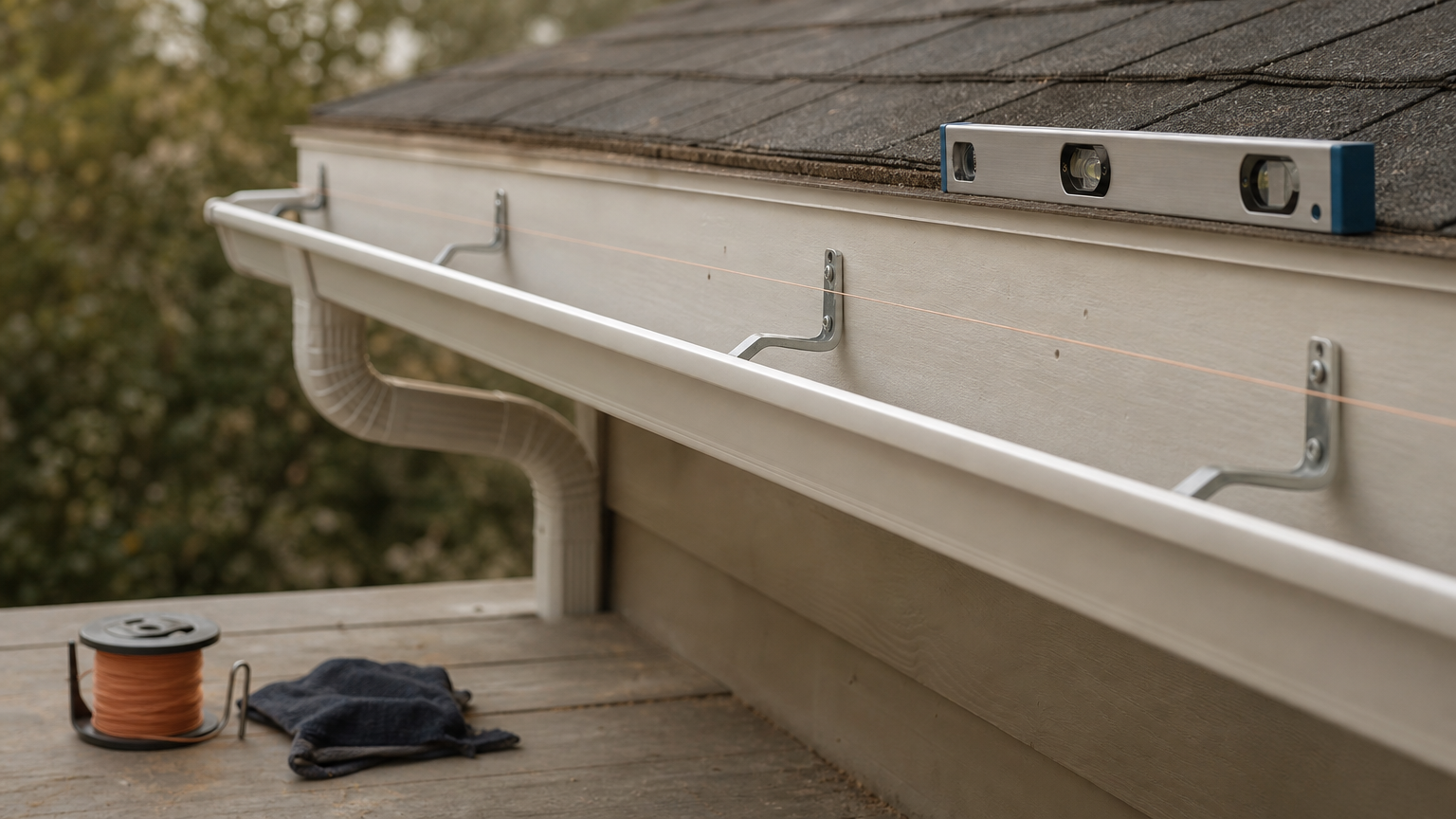
A gutter should drop about a quarter inch for every 10 feet toward the downspout. Flat or backward-sloped gutters hold water and spill it over the front edge, even when they are spotless.
What it fixes
Sagging hangers, ice damage, soft fascia, or a sloppy original install all flatten the slope. The clues are standing water a day after rain, dirt-streaked water lines inside the gutter, and overflow in the middle of a run. Too steep a pitch is also a problem, because water can race past the outlet.
How to do it
Find the high end and the downspout, then snap a chalk line that drops a quarter inch per 10 feet. Loosen the hangers, move the gutter to the line, and add hangers every 2 to 3 feet. Test with a hose. Replace soft or rotted fascia first, since screws will not hold in it.
| Run length | Total drop, downspout at one end | Drop per side, downspout centered |
|---|---|---|
| 20 ft | 0.5 in | 0.25 in |
| 40 ft | 1 in | 0.5 in |
| 60 ft | 1.5 in | 0.75 in |
If water pools after the rain stops, the problem is slope, not debris.
Cost, time, and difficulty
Hangers and screws cost a few dollars each, and a short run takes a half day with a helper. Long runs, two-story walls, or gutters pulling away from the fascia are repair work, so get a pro to look at them.
3. Add downspouts or upsize the system
When clean, well-pitched gutters overflow only in heavy rain, they lack capacity. The fix is more outlets or larger parts.
What it fixes
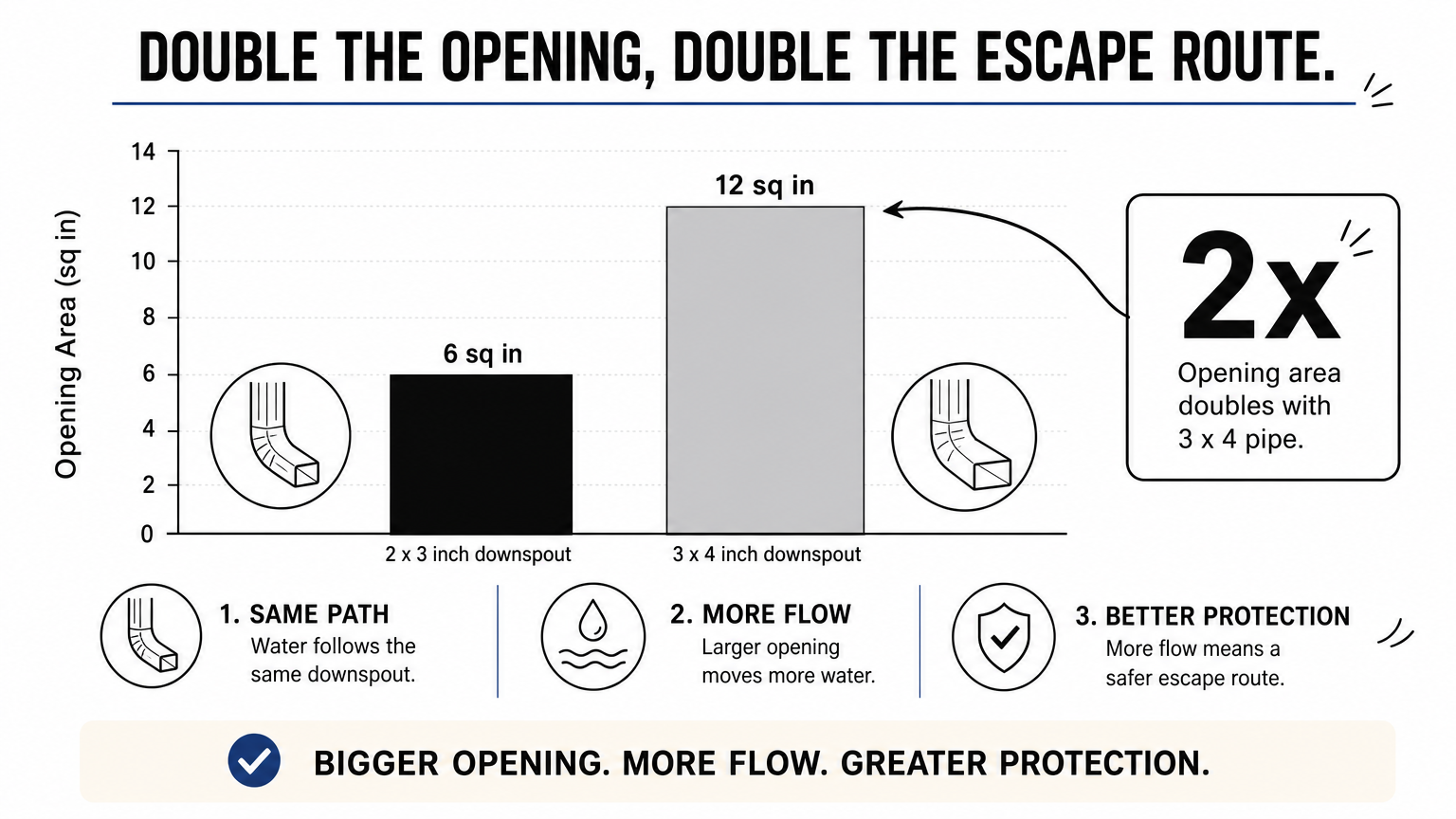
A common rule of thumb is one downspout for every 30 to 40 feet of gutter. A 60-foot run with a single downspout at one end is overloaded in a downpour. Downspout size matters even more than most people expect.
| Downspout size | Opening area |
|---|---|
| 2 x 3 inches | 6 sq in |
| 3 x 4 inches | 12 sq in |
Moving from 2×3 to 3×4 doubles the opening. Pairing 6-inch gutters with 3×4 downspouts is the standard upgrade for big roofs.
How to do it
Adding a downspout means cutting an outlet hole, fitting a drop outlet, and strapping the pipe to the wall. Upsizing the whole system is a replacement job for a pro. Either way, send the water away from the house. Extend each downspout at least 4 to 6 feet past the foundation, or connect it to a drain with a clean-out.
More outlets beat bigger buckets: double the opening and you double the escape route.
Cost, time, and difficulty
An extra downspout is a half-day DIY job with tin snips and a few parts. Replacing the whole system is priced by linear foot, so compare at least two quotes.
4. Divert roof water at valleys and corners
If the overflow happens at one spot, usually a corner or below a roof valley, a diverter or splash guard fixes it. It is also the best quick, temporary fix.
What it fixes
A valley collects water from two roof planes and sends it down in one fast stream. That stream shoots past the gutter instead of dropping into it. Inside and outside corners fail for related reasons, because debris piles up at the seam and the water has no outlet nearby.
How to do it
Install a valley diverter or splash guard at the bottom of the valley. Follow the product instructions, since many slide under the first course of shingles. Then clean the corner seam and check that the gutter is not sagging there. If the corner still spills, add a downspout close to it. Do not walk on a wet or steep roof to do this.
When overflow hits one spot, treat that spot instead of rebuilding the whole system.
Cost, time, and difficulty
Diverters are inexpensive and take about 30 minutes from a ladder. A steep roof or a heavy valley flow is a job for a roofer or gutter pro.
5. Install the right gutter guards
Guards are the lasting fix for debris-driven overflow, but the wrong type can make heavy-rain overflow worse. Match the guard to your roof, trees, and rainfall.
What it fixes
Guards keep leaves and twigs out so the gutters and downspouts stay open. They do nothing for slope or capacity, so do fixes 2 and 3 first.
| Guard type | Strength | Watch for |
|---|---|---|
| Micro-mesh | Blocks fine debris like shingle grit | Surface film can shed water in downpours |
| Aluminum screen | Low cost, easy install | Small debris passes through |
| Reverse-curve | Solid cover, sheds leaves | Can shoot water over in heavy rain |
| Foam or brush | Simple insert | Holds debris and needs cleaning |
A guard that blocks leaves but sheds rain just moves the overflow somewhere else.
How to do it
Choose a type, measure your gutter width and linear feet, and install it on clean, correctly pitched gutters. Pro installers usually fit micro-mesh and reverse-curve systems, while screen and foam are common DIY choices.
Cost, time, and difficulty
Price depends on guard type, linear feet, and number of stories, so get a price range by guard type before you commit. A DIY snap-in screen takes a weekend, while a pro crew typically finishes a whole house in a day.
Pick the fix that matches your cause
Overflow is a symptom, and the cure follows the cause. Clear the gutters and downspouts first, then check slope, then capacity, then trouble spots at valleys and corners. Add guards last, once everything underneath works. If the water still spills after that, something is damaged or undersized in a way that needs hands-on inspection.
When you are ready for a pro to take over, get a free estimate for gutter repair and compare local quotes before you commit.
What should this cost you?
Answer four questions and get a fair price range for your home.