
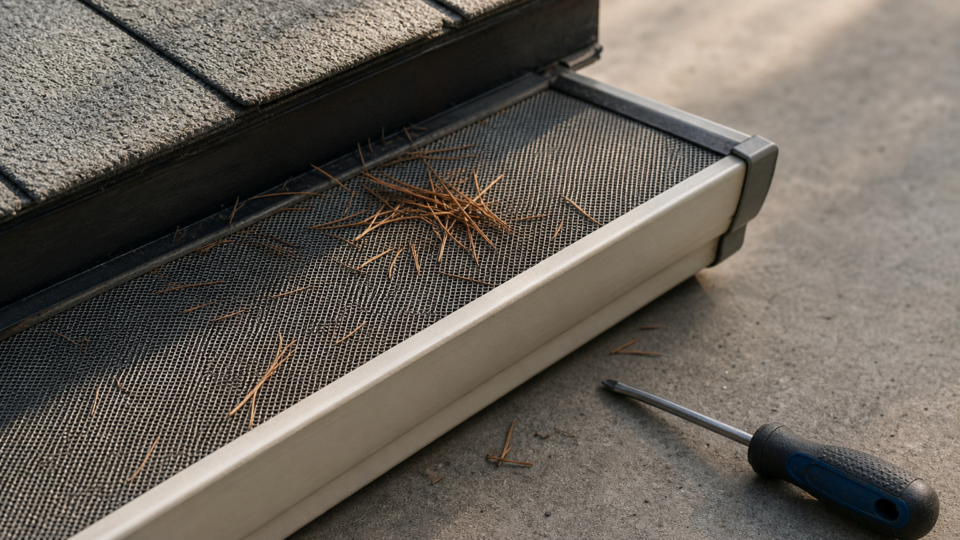
Short answer: If you’ve spent a weekend on a ladder scooping wet leaves out of your gutters, you’ve probably already looked into gutter guards micro mesh systems as a way out of that chore. They’re the finest-holed guard on the market, built to block seeds, pine needles, and grit that other guards let through, and that’s exactly why homeowners in leafy or pine-heavy neighborhoods keep asking about them. Ready for quotes? Compare local pros →
In this guide
Here’s the short answer: micro mesh gutter guards typically run $10 to $25 per linear foot installed, with the mesh itself made from either aluminum or stainless steel and framed to snap onto your existing gutters. The price swings based on frame material, mesh grade, your roof pitch, and whether you hire a pro or DIY it.
In this guide, we’ll break down what these guards actually are, how aluminum micro mesh gutter guards compare to stainless steel versions, what separates a $6-a-foot budget product from a $20-a-foot premium one, and where the real installation costs come from. As a site written by a former gutter installer, we’ll give you the straight numbers so you can shop smart before requesting a quote.
Why micro mesh gutter guards matter for your home
Clogged gutters don’t just mean an ugly mess of black sludge and sprouting weeds. Water that can’t drain properly backs up over the gutter edge and runs straight down your siding, pools next to your foundation, and soaks into fascia boards until they rot. The Environmental Protection Agency notes that directing roof runoff away from your home is one of the simplest ways to prevent basement water intrusion, and that starts with gutters that actually flow. Micro mesh gutter guards solve the root cause by keeping debris out in the first place, instead of leaving you to fish it out twice a year.
The real cost of a clogged gutter
Homeowners often underestimate what a $200 gutter cleaning skip actually costs down the line, especially once you compare it to what pros charge per cleaning visit. A backed-up gutter during a heavy rain can overflow enough water to erode landscaping beds, crack a concrete walkway from freeze-thaw cycling, or send water into a crawlspace. Foundation repair costs start in the low thousands and climb fast once cracks widen. Compare that to a one-time investment in guards, and the math tends to favor prevention.
A gutter that stays clear all year is cheaper than a foundation that doesn’t.
Why the fine mesh matters more than you’d think
Standard screen guards and foam inserts stop leaves just fine, but they let shingle grit, seeds, and pine needles slip through the gaps or get lodged on top and rot. Once that fine debris accumulates, it forms a dense mat that holds water like a sponge instead of letting it pass, and you’re back to climbing a ladder. This is where micro mesh rain gutter guards earn their higher price tag. The holes are small enough, often around 50 microns, to block even coarse asphalt shingle particles while still letting water through at a rate that outpaces most rainfall.
| Guard Type | Debris Blocked | Weak Point |
|---|---|---|
| Foam/brush inserts | Leaves, larger debris | Traps grit, degrades over time |
| Screen guards | Leaves, twigs | Seeds and pine needles pass through |
| Reverse-curve | Most debris via water surface tension | Struggles in heavy or light rain extremes |
| Micro mesh | Leaves, seeds, pine needles, grit | Higher upfront cost |
Who benefits most from micro mesh
Not every home needs the top-tier guard. If you’ve got a couple of oak trees dropping leaves twice a year, a basic screen might do fine. But gutter guards micro mesh systems earn their keep fastest in specific situations: homes surrounded by pine trees dropping needles year-round, properties near fields or open lots where wind carries seeds and dust, and roofs with heavy asphalt shingle granule shed. If any of those describe your yard, you already know the frustration of clearing a guard that let the small stuff through.
A practical way to think about the decision
Ask yourself how often you’re currently cleaning gutters and what’s clogging them. If it’s whole leaves, cheaper guards solve the problem. If it’s a fine sludge of needles and grit that rebuilds within a season, you’re paying for cleanings that micro mesh would eliminate. Run your specifics through our breakdown of gutter guard prices by type and home size to see how the guard type, your home’s linear footage, and local debris levels affect what you’d actually pay installed, before you start comparing brands or calling contractors.
What should this cost you?
Answer four questions and get a fair price range for your home.
How micro mesh gutter guards work
Every micro mesh system has two parts: a rigid frame and a woven mesh screen stretched across it. The frame is usually aluminum, bent to match your gutter’s profile, and it slides under the first row of shingles or clips onto the gutter’s front lip, depending on the brand. The mesh itself sits on top, welded or crimped to the frame so debris can’t work its way underneath. This two-piece design is what lets micro mesh aluminum gutter guards hold their shape through decades of snow load and foot traffic from roofers, unlike a floppy screen that sags between fasteners.
Why water gets through but debris doesn’t
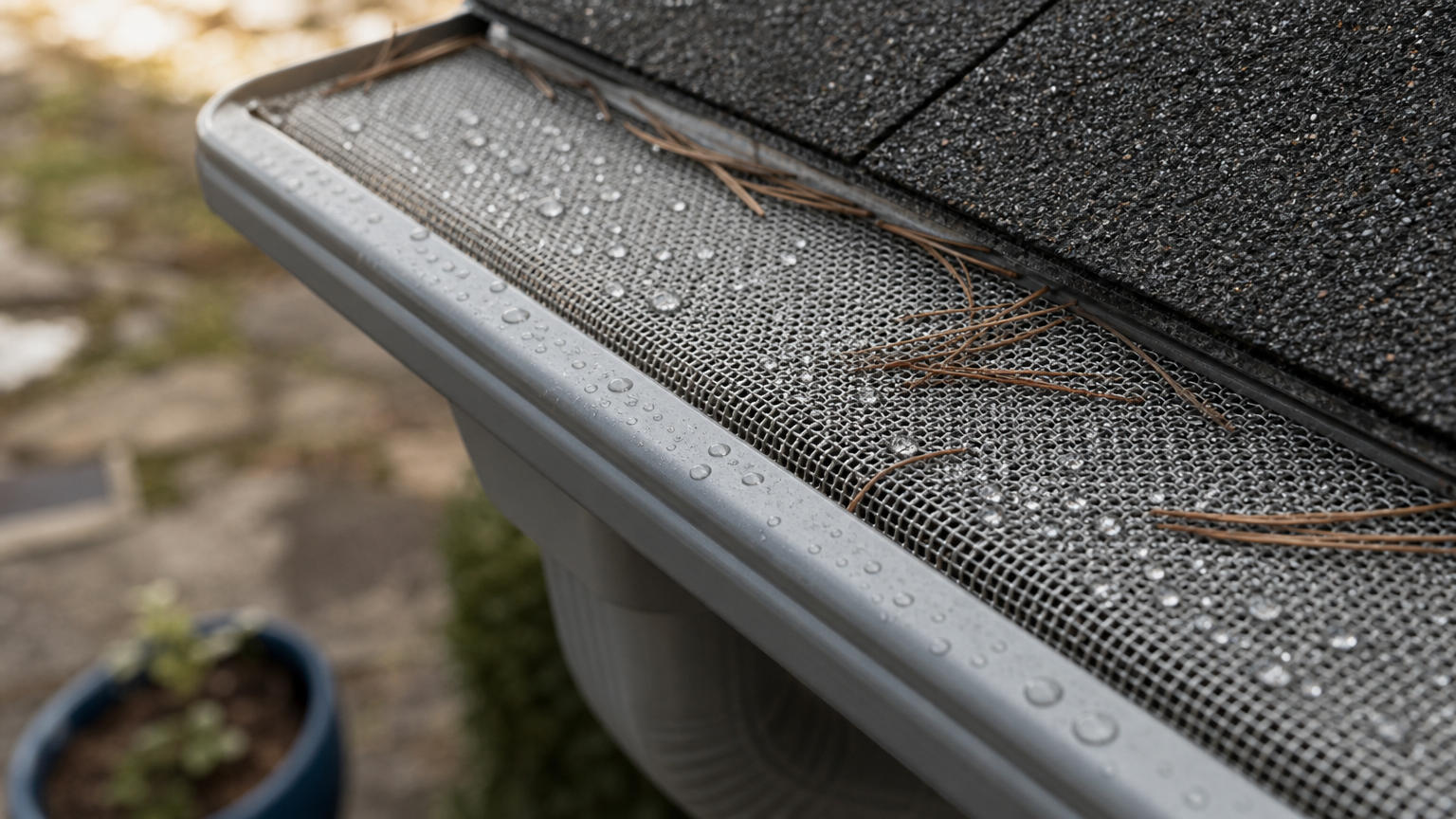
The mesh weave is the real engineering here. Holes typically measure around 50 to 100 microns, roughly the width of a human hair, which is fine enough to stop shingle grit and pine needles but still wide enough for water to pass through by gravity and surface tension. Rain lands on the mesh, beads up briefly, then drops through the openings into the gutter channel below. Leaves, seeds, and needles can’t fit through those same holes, so they simply blow or wash off the top edge instead of piling up inside the trough.
If water can find a hole, it’ll use it. Debris that can’t fit through just slides away.
How the mesh handles heavy rain
During a downpour, water volume matters more than mesh size. Quality micro mesh gutter guards are tested to handle several inches of rainfall per hour without overshooting the gutter, a spec worth asking about if you live somewhere with frequent cloudbursts. Cheaper mesh grades sometimes can’t keep pace, and water sheets off the front edge instead of draining through, which defeats the purpose of installing a guard in the first place.
Stainless steel versus aluminum mesh
Material choice changes both performance and price. Stainless steel mesh resists corrosion better and holds a tighter weave over time, which matters if you’re near salt air or heavy pollution. Aluminum mesh costs less and works fine in most inland climates, as long as the weave is tight enough to stop fine grit.
| Mesh Material | Corrosion Resistance | Typical Cost Premium |
|---|---|---|
| Aluminum | Good in inland climates | Lower |
| Stainless steel | Best, handles coastal/salt air | Higher |
Next, let’s look at what all this engineering actually costs once it’s on your roof.
How much do micro mesh gutter guards cost
Price for micro mesh gutter guards installed typically lands between $10 and $25 per linear foot, and that range covers everything from a budget aluminum system to a premium stainless steel setup with a lifetime warranty. On an average single-story home with 150 to 200 linear feet of gutter, that works out to roughly $1,500 to $5,000 for the whole job. Multi-story homes push labor costs higher because of scaffolding and safety gear, so don’t assume your neighbor’s quote will match yours if your roofline is steeper or taller.
What drives the price up or down
Material is the biggest lever. Micro mesh aluminum gutter guards sit at the lower end of the range, while stainless steel mesh, tighter weaves, and heavier-gauge frames push you toward $20 to $25 a foot. Roof pitch matters too: a steep or complex roofline takes longer to work on and adds labor hours regardless of the product. Your gutter’s condition plays a role as well, since sagging or damaged sections often need repair work quoted by a local contractor before guards go on, and that’s a separate line item most estimates don’t include upfront.
The mesh grade you pick swings your total cost more than almost anything else on the invoice.
DIY versus professional installation
Buying micro mesh rain gutter guards as a DIY kit can cut your cost by 40 to 60 percent, since you’re paying for materials only. Expect to spend $6 to $12 per linear foot on the product itself if you install it yourself. That said, working on a ladder along your roofline carries real fall risk, and a poor DIY fit lets water sheet over the front edge instead of draining through the mesh, which defeats the entire purpose.
| Cost Factor | Typical Range | Notes |
|---|---|---|
| Materials only (DIY) | $6-$12/ft | Aluminum frame, mid-grade mesh |
| Professional install | $10-$25/ft | Includes labor, warranty |
| Stainless steel upgrade | +$3-$8/ft | Better for coastal/salt air |
| Pre-install gutter repair | $200-$600 | Often needed on older homes |
Regional labor rates shift these numbers too. Contractors in high cost-of-living metro areas often charge 15 to 20 percent above the national average, while rural markets sometimes run lower. Since your linear footage, stories, and region all factor into the final number, see what gutter guards really cost installed before you start collecting quotes, so you know whether a bid is fair or padded.
How to choose the right micro mesh gutter guards
Picking a guard isn’t just about grabbing the top result from a search for gutter guards micro mesh. You need to match the product to your roof, your climate, and your budget, because the "best" guard on a review site might be overkill for a mild climate or underbuilt for a coastal home. Start by identifying your actual debris problem, then work backward to the mesh grade and frame that solve it.
Check the mesh grade and hole size
Manufacturers rarely advertise micron size clearly, so ask directly. A tight weave around 50 microns blocks shingle grit and fine seeds, while looser weaves in the 100-plus micron range let more through but drain faster in heavy storms. If you’re in a region with intense downpours, a slightly looser weave paired with a steep enough roof pitch can actually outperform an ultra-fine mesh that struggles to keep up with volume.
The tightest mesh isn’t always the best mesh if your gutters can’t drain it fast enough.
Match the frame material to your climate
Aluminum frames handle most inland climates without issue, but if you’re within a few miles of saltwater or live somewhere with heavy road salt exposure, spend the extra money on micro mesh aluminum gutter guards with a marine-grade coating, or go stainless steel entirely. Corrosion on the frame weakens the whole system faster than the mesh wearing out.
Compare warranty terms line by line
Warranties range from 10 years to lifetime, but read what’s actually covered. Some only cover the frame, not the mesh, which is backwards since the mesh clogs first. Look for:
- Coverage on both frame and mesh, not just one
- A clog-free guarantee with a clear claims process
- Transferability if you sell the house within the warranty period
- Confirmation the warranty covers labor for reinstallation, not just materials
Get quotes that specify the exact product
Request quotes that name the exact mesh grade and frame gauge, not just "micro mesh gutter guards" as a generic line item. Vague quotes make it impossible to compare bids apples to apples, and some installers substitute cheaper mesh once the job starts. Run your home’s numbers through our cost estimator first, so you walk into quote conversations already knowing what a fair price range looks like for your specific setup.
How to install micro mesh gutter guards
Installing micro mesh gutter guards looks simple from the ground, but the details separate a system that works for twenty years from one that lets water sheet over the front edge in year two. Whether you’re hiring a pro or tackling it yourself, the same fundamentals apply: clean gutters first, a secure fit second, correct pitch third.
Prep work that gets skipped too often
Before any guard goes on, your gutters need a professional cleaning and inspection. Sagging sections, loose hangers, or separated seams should get fixed now, because covering a broken gutter with a guard just hides the problem until it fails during a storm. A rushed installer who skips this step is setting you up for a callback within a year.
The install sequence for most systems
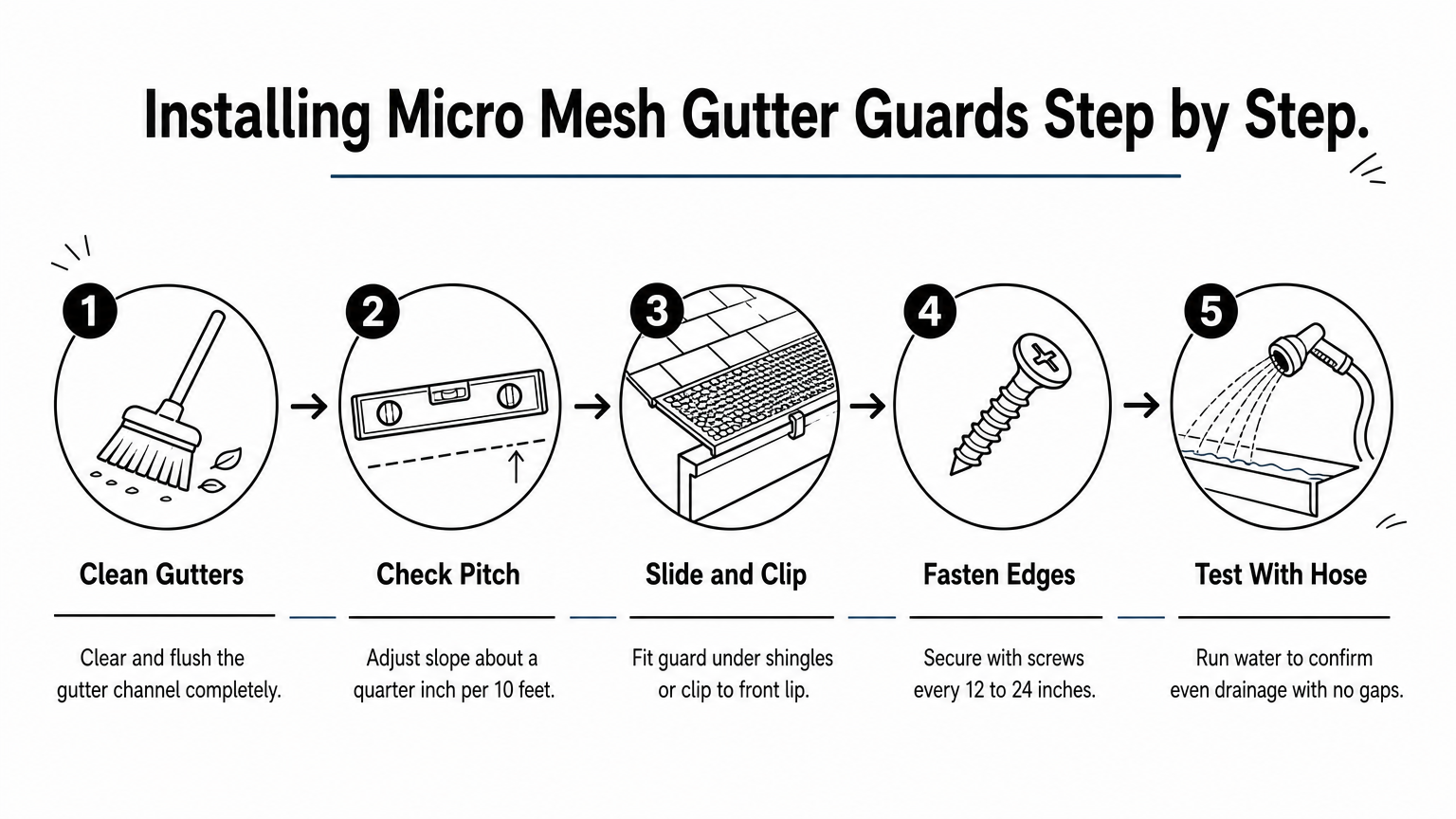
Most micro mesh aluminum gutter guards follow a similar installation order:
- Clear and flush the gutter channel completely.
- Check and adjust gutter pitch, roughly a quarter inch of slope per 10 feet toward the downspout.
- Slide the guard’s inner edge under the first course of shingles, or clip it to the gutter’s front lip depending on the product design.
- Fasten the outer edge with screws spaced every 12 to 24 inches, not just snap clips, which loosen over time.
- Seal any gaps where the guard meets end caps or corners, since debris finds every unfinished edge.
- Test with a hose before calling the job done.
A guard installed on a poorly pitched gutter will fail no matter how good the mesh is.
DIY versus hiring it out
DIY installation works fine for a single-story ranch with straightforward rooflines, and it’s how many homeowners cut their cost by 40 to 60 percent on micro mesh rain gutter guards. But steep pitches, second-story work, or gutters with existing damage push most people toward a professional. Falls from ladders are one of the most common home improvement injuries, and the Consumer Product Safety Commission tracks thousands of ladder-related ER visits every year tied to exactly this kind of job.
What a quality install looks like when it’s done
Run a hose over the roof section above the guard and watch the water. It should disappear into the mesh evenly along the whole run, with no sheeting off the front edge and no gaps at the corners. If you spot either, that’s a callback, not a wait-and-see situation.
How long micro mesh gutter guards last
Quality micro mesh gutter guards last 20 to 25 years on average, and premium stainless steel systems with lifetime warranties can outlast the roof they’re attached to. That’s a big spread compared to foam inserts, which break down in 5 to 10 years, or basic screens that warp and need replacement around the 10 to 15 year mark. The mesh itself rarely fails first. Frames loosen, fasteners corrode, or the mesh gets crushed by ice before the weave wears out.
Lifespan by guard type and material
Aluminum frames with aluminum mesh hold up well in most climates but show their age faster near coastlines. Stainless steel mesh, especially paired with a stainless or heavy-gauge aluminum frame, resists pitting and rust far longer, which is why aluminum micro mesh gutter guards cost less upfront but sometimes get outlived by pricier stainless setups.
| Guard Material | Typical Lifespan | Best Suited For |
|---|---|---|
| Foam/brush | 5-10 years | Mild climates, low budget |
| Standard screen | 10-15 years | Light debris, occasional cleaning |
| Aluminum micro mesh | 15-20 years | Most inland homes |
| Stainless steel micro mesh | 20-25+ years | Coastal, harsh climates |
The frame usually fails before the mesh does, so cheap fasteners undercut even good mesh.
What shortens the lifespan
Several things cut years off a guard’s service life regardless of material quality. Watch for these:
- Heavy snow and ice loads that bend or crack the frame
- Poor installation that leaves the mesh unsupported and prone to sagging
- Skipping occasional rinses, letting fine dust cake onto the mesh surface
- Corrosive exposure near salt air without a stainless steel upgrade
- Foot traffic from roofers or landscapers who don’t know guards are underfoot
Gutters near heavy tree cover also see faster mesh clogging from sap and pollen buildup, which isn’t a failure exactly, but it does mean more frequent rinsing to keep water flowing at full capacity.
Maintenance that stretches the lifespan
Rinsing the mesh with a garden hose once or twice a year keeps fine dust and pollen from caking on and slowing drainage. A quick visual check after major storms catches loose fasteners or shifted panels before they become bigger problems. Micro mesh rain gutter guards need far less attention than open gutters, but "low maintenance" isn’t "no maintenance," and skipping that annual rinse is the most common reason a 20-year guard starts underperforming by year eight.
Deciding if micro mesh is right for you
Micro mesh earns its price tag when your gutters clog with fine debris season after season, not just fallen leaves. If you’re surrounded by pines, live near open fields, or you’re tired of climbing the ladder every few months, micro mesh gutter guards pay for themselves by cutting cleanings down to almost nothing. If your debris is mostly big leaves and you clean twice a year without much hassle, a cheaper screen guard might be all you need.
Either way, don’t guess at the cost. Run your home’s linear footage, stories, and region through our cost estimator so you walk into any contractor conversation with real numbers instead of a sales pitch. Once you know what you’re working with, compare free micro mesh installation quotes from local pros and hold them against what you’ve learned here.
What should this cost you?
Answer four questions and get a fair price range for your home.