
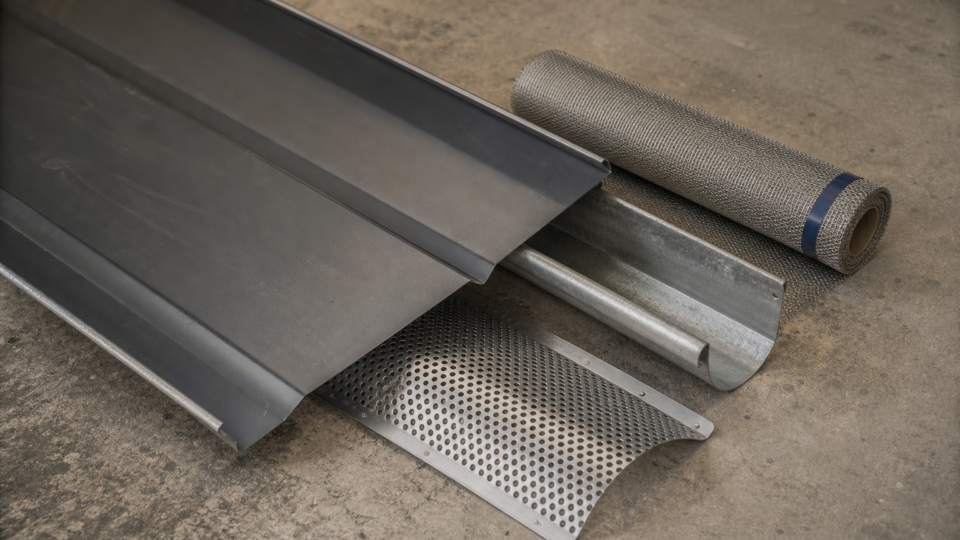
Short answer: The best gutter guards for metal roofs are rigid, perforated aluminum guards with a curved front edge, installed by a pro on properly sized gutters. If you want to do the work yourself, the best DIY pick is a rigid aluminum screen or mesh panel that attaches to the gutter, not to your roof. Reverse-curve covers suit homeowners who want a clean look and will pay for expert installation. Foam is only a stopgap. Yes, you can use gutter guards on a metal roof, but the type and the installation matter more than they do on asphalt shingles. Ready for quotes? Compare local pros →
In this guide
Metal roofs shed rain, snow and debris faster than any shingle surface. A guard that works fine on shingles can let a heavy storm overshoot the gutter, get crushed by a snow slide, or warp in summer heat. Many guards are also designed to slide under the first course of shingles, which is not an option on most metal panels.
This guide ranks five guard types by how they handle those problems, then helps you choose and gives you a DIY checklist. It was written by Marcus Delaney, a former gutter installer with 12 years of experience, and reviewed by home inspector Dana Whitfield. Guardian Gutter Guide is not a contractor, and contractors cannot pay to be recommended here.
Why metal roofs change which gutter guard works
Metal roofs are harder on gutter guards because smooth panels send water, snow and debris to the gutter faster and with more force than shingles do. Three things decide whether a guard holds up: how fast the runoff arrives, how snow releases, and how the roof edge is built.
Fast water and overshoot
Rain that lands on a metal panel keeps moving. It reaches the gutter edge with momentum, and in a downpour it can jump the front edge of any guard that has no way to turn it back. Valleys and inside corners are the worst spots, because they funnel water from two roof planes into a short stretch of gutter.
Gutter size matters as much as the guard. Many installers pair metal roofs with 6-inch gutters instead of 5-inch, and a guard on an undersized gutter will overflow no matter how good it is. If your budget covers only one upgrade, buy the bigger gutters first. You can add guards later.
On a metal roof, gutter capacity comes first and the guard second.
Sliding snow and ice
Snow does not melt in place on metal. It often lets go in one sheet, and that sheet lands on the gutter all at once. A thin guard that only rests on top can bend or tear loose, and the gutter itself can pull away from the fascia.
Look for rigid guards that tie into the gutter rather than flimsy sheets. Roof-mounted snow guards, also called snow retention, break up slides before they reach the gutter. Ask your roofer about them if you live where snow stays on the roof.
Roof edge, fasteners and metal compatibility
Panels that overhang the gutter too far cover the opening and can leave no room to fit a guard. Trimming panels is a job for a roofer, not a weekend project. Also, guards built to tuck under shingles generally do not suit metal panels, and you should never drive screws through panels, especially standing seam, without checking your roof manufacturer’s warranty.
Before you buy anything, check these four points:
- How far the panels overhang the gutter, and whether a guard will physically fit
- How the guard attaches (gutter lip, fascia or under the roof)
- What your roof warranty says about fasteners and contact
- Whether the guard metal is safe next to your gutter metal (avoid copper touching aluminum or steel)
What should this cost you?
Answer four questions and get a fair price range for your home.
1. Perforated aluminum guards with a curved front edge
This is the best overall pick for most metal roofs. It takes in a lot of water quickly, turns fast runoff back into the gutter, and stays rigid under snow.
How it performs on a metal roof
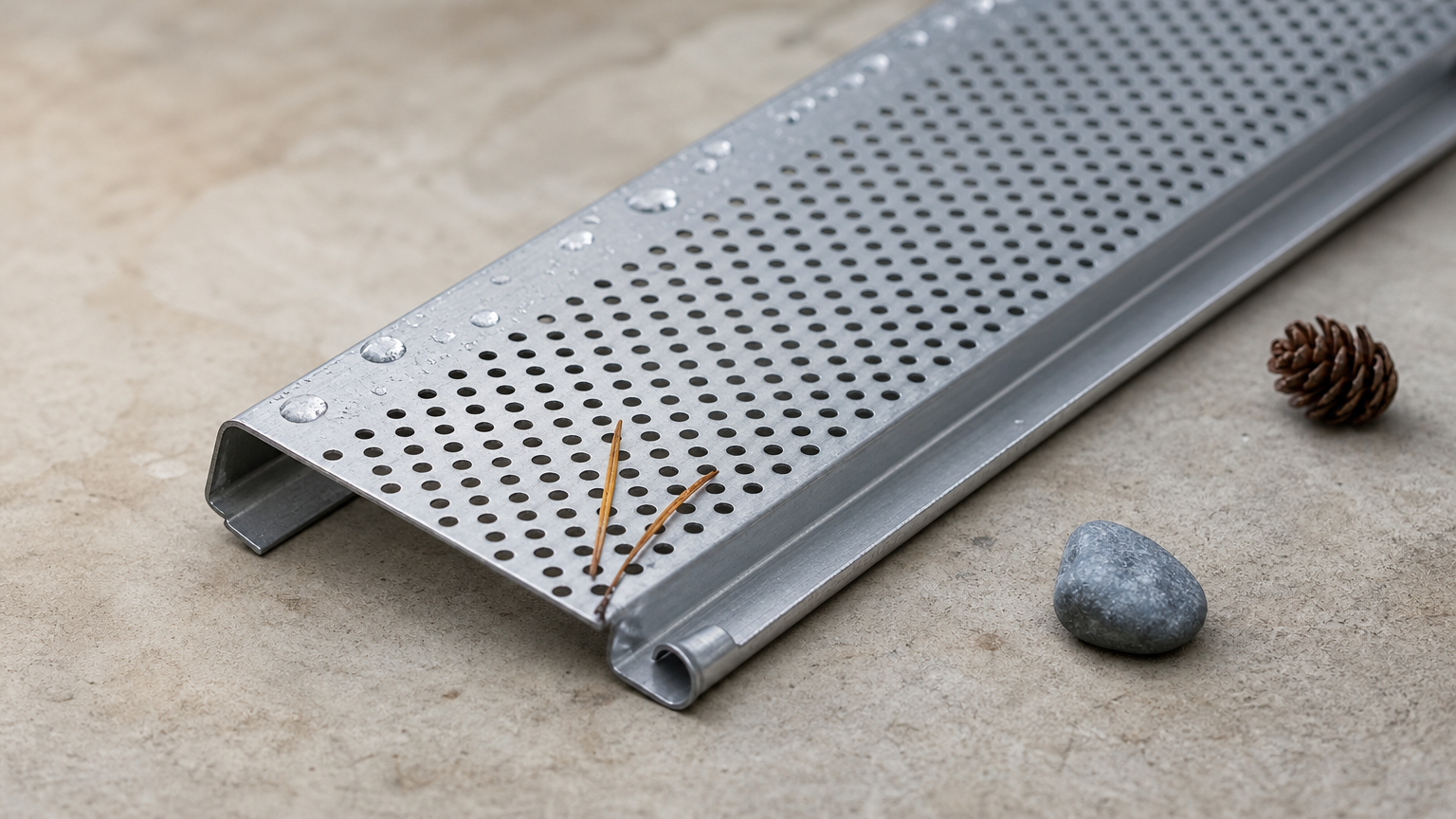
The guard is a rigid aluminum sheet with small holes. Water passes through, and leaves and needles ride off the surface. The better versions add a front edge that curls back toward the roof, which redirects splashing runoff into the gutter instead of letting it fly past.
The other feature worth paying for is full-length support. Systems that reinforce the whole gutter run, rather than relying on spaced brackets, stand up better to snow sheets. Aluminum does not rust, and a heavier gauge resists warping through freeze and thaw cycles.
On a metal roof, the front edge and the support matter more than the size of the holes.
Pros and cons
This type earns its price in rough weather, but it has trade-offs.
- Pro: high water intake for fast runoff
- Pro: rigid under snow and ice
- Pro: all-metal versions have no plastic to warp
- Con: higher price than screens, mesh or foam
- Con: usually professionally installed
- Con: tiny seeds can still lodge in the holes
Who it suits and what it costs
Choose it if you have a steep metal roof, real winters, or heavy tree cover. It works best when the gutters are 6-inch.
Expect it to sit at the high end of gutter guard pricing. Many premium systems are sold and warrantied only through installers, so read the warranty terms on clogging and sturdiness before you sign.
2. Reverse-curve solid covers
Reverse-curve gutter guards are a solid second choice when a pro installs them on right-sized gutters, but they are the most debated type on metal roofs.
How it performs on a metal roof
A solid hood sits over the gutter. Water clings to the curved nose by surface tension and drops into a slot, while leaves slide off. On a metal roof, water arrives fast, so light or older helmet-style units can let heavy rain run past the slot. Over time they can also warp.
Heavy-gauge covers on 6-inch gutters perform far better than thin ones on 5-inch gutters. Installers disagree on this type. Some call it the best match for metal, and others avoid it. My view: it works in moderate rainfall, but it is a risk in downpour-prone regions and under roof valleys.
A reverse-curve cover is only as good as its gauge, its gutter size and its installer.
Pros and cons
The look is the main draw, and the water handling is the main worry.
- Pro: smooth profile that follows the roofline
- Pro: blocks most leaves and pine needles
- Pro: durable when made from heavy metal
- Con: can overshoot in heavy rain
- Con: you cannot see inside the gutter without lifting it
- Con: poor installation causes real problems
Who it suits and what it costs
It suits homeowners who care about appearance and will hire a pro. Pricing runs mid to high, and the quote should say how the cover handles your roof’s valleys and your region’s heaviest storms.
Do not treat this as a DIY product. A cover that sits at the wrong angle or gap performs worse than no cover at all.
3. Stainless micro-mesh guards
Stainless micro-mesh blocks the finest debris, so it suits metal roofs under pines and seed-heavy trees, as long as the frame is rigid and the water does not arrive too fast.
How it performs on a metal roof
A fine stainless screen sits over an aluminum frame. Water clings to the mesh and passes through, and debris stays on top until wind or rain moves it. That is excellent for needles and seeds.
The weak point is geometry. Most micro-mesh sits flat across the gutter with no curved lip, so fast metal-roof runoff can skip over the front edge in a heavy storm. Debris left on top makes it worse. Many designs also tuck under shingles, so on metal you need a version that attaches to the gutter or fascia.
Micro-mesh stops the smallest debris, but it needs help with fast water.
Pros and cons
It is a good fit for debris, and a weaker fit for downpours.
- Pro: stops pine needles, seeds and grit
- Pro: stainless mesh does not rust
- Pro: low profile
- Con: flat design can overshoot in heavy rain
- Con: surface debris needs an occasional brush-off
- Con: budget versions with plastic frames can warp in heat
Who it suits and what it costs
It suits light-to-moderate rainfall regions with fine debris. Prices range widely, from budget DIY panels to premium pro-installed systems.
DIY versions exist, so confirm how they attach before ordering. If a panel needs to slide under roofing or be screwed through panels, it is wrong for your roof.
4. Rigid aluminum or steel screens
A rigid, thick aluminum screen that attaches to the gutter is the best DIY gutter guard for a metal roof. You can install it from a ladder without touching the roof panels.
How it performs on a metal roof
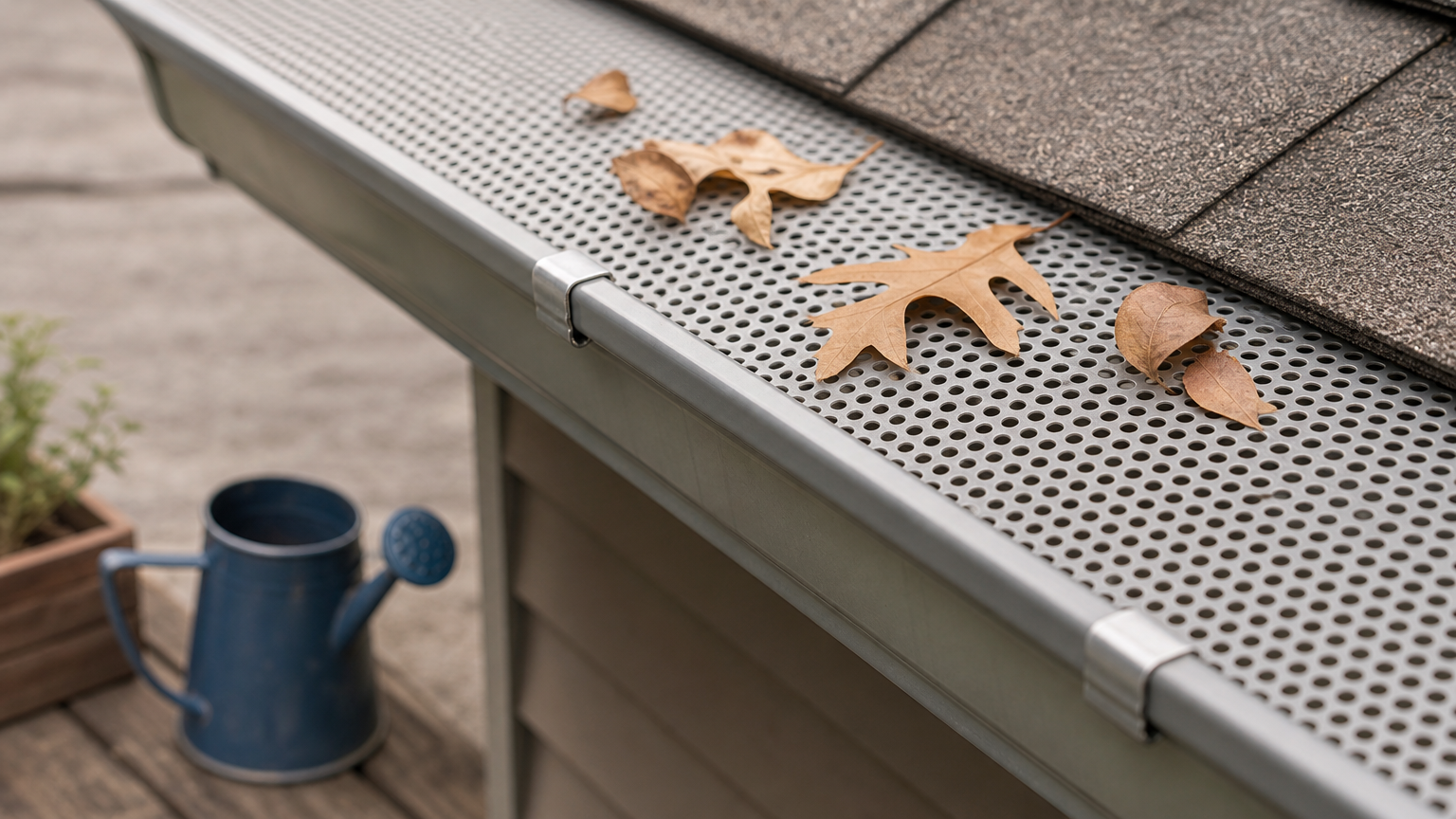
These are perforated or larger-hole screens that lay into or clip onto the gutter. They keep out leaves and twigs, and they are easy to lift out for cleaning. Powder-coated steel screens are another budget option.
Pick metal over plastic. Plastic screens soften in heat and cannot carry snow weight. Because the holes are larger, small debris still gets in, and debris piling on top can send water over the edge in a downpour. Secure them well, since loose screens shift with wind and weather, and birds will nest under any gap.
On a DIY budget, choose metal over plastic and gutter-mounted over roof-mounted.
Pros and cons
This is the practical choice when you are paying yourself.
- Pro: cheapest metal option, so you avoid plastic’s heat problems
- Pro: no roof contact
- Pro: easy to remove and clean under
- Con: lets small debris through
- Con: may need refastening after storms
- Con: weaker under heavy snow slides unless fully supported
Who it suits and what it costs
It suits comfortable ladder users with single-story or low eaves, mostly leaf-type debris, and a firm budget. Costs run low to moderate, and sections are easy to buy by the foot.
If your roof drops big snow sheets, treat screens as a seasonal measure and ask your roofer about snow retention too.
5. Foam inserts as a short-term fix
Foam gutter inserts are the cheapest way to keep leaves out, but on a metal roof they are a stopgap, not a solution.
How it performs on a metal roof
A foam wedge fills the gutter, and water soaks into it and down to the channel. Metal roofs deliver water faster than foam can absorb it, so heavy rain can overflow the gutter even when the foam is clean. Small debris also collects on and in the foam, which slows drainage further.
Foam also breaks down under UV and ice, so it needs replacing. It does not help against snow slides at all.
Foam keeps out leaves but not the work.
Pros and cons
Foam is attractive for price alone.
- Pro: lowest upfront cost
- Pro: no tools and no roof contact
- Pro: quick to install
- Con: clogs with fine debris
- Con: slow intake in heavy runoff
- Con: degrades and needs periodic replacement
Who it suits and what it costs
It suits renters, short-term owners, or anyone who wants to bridge a season while saving for better. Cost is the lowest of the five types, but replacing it every few years can erase the savings.
If you pick foam, plan to inspect it after storms and swap it as soon as it crumbles or compresses.
How to pick the right guard for your metal roof
Match the guard to your biggest risk. Heavy rain and snow point to perforated aluminum, fine debris points to micro-mesh, and a tight DIY budget points to a rigid metal screen.
Side-by-side comparison
The ratings below reflect installer field experience, not lab testing.
| Guard type | Heavy rain | Snow load | Fine debris | DIY-friendly | Cost level |
|---|---|---|---|---|---|
| Perforated aluminum, curved edge | Strong | Strong | Good | No | High |
| Reverse-curve solid cover | Fair to good | Good if heavy gauge | Good | No | Mid to high |
| Stainless micro-mesh | Fair | Fair to good | Excellent | Some versions | Low to high |
| Rigid aluminum or steel screen | Fair | Fair | Poor | Yes | Low to moderate |
| Foam insert | Poor | Poor | Poor | Yes | Lowest |
DIY checklist and a worked example
Start by measuring your gutter run and confirming gutter size. Work from a ladder, never from the roof, because wet or frosty metal is extremely slippery. Then follow this list:
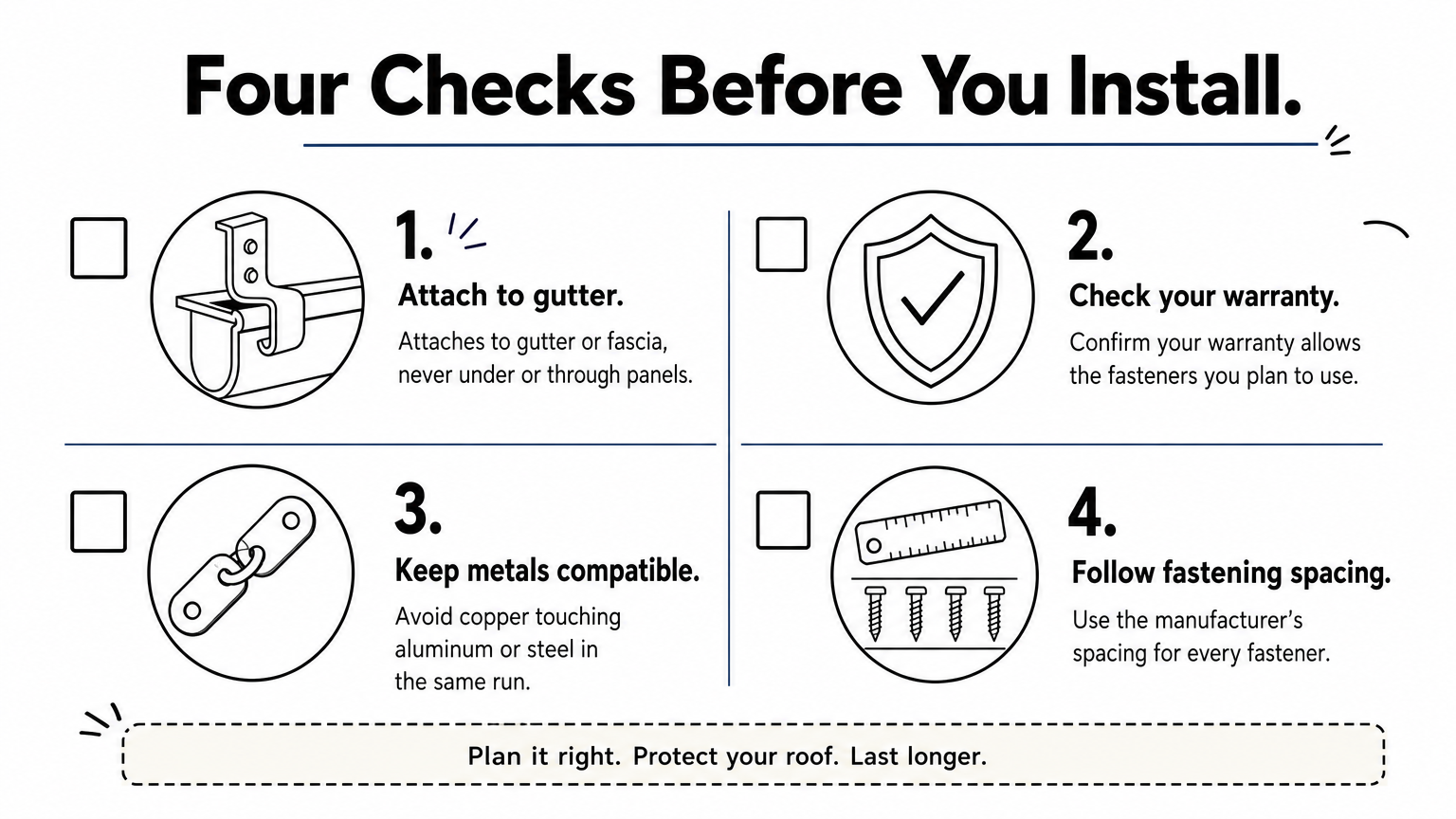
- Confirm the guard attaches to the gutter or fascia, not under or through panels
- Check your roof warranty for fastener rules
- Keep metals compatible
- Follow the manufacturer’s fastening spacing
Here is how quantities work. Say your home has 150 linear feet of gutter, and the guard comes in 4-foot sections. That is 37.5, so 38 sections. Add roughly 10 percent for cuts and corners and you order about 42.
Guards to skip on metal roofs
Skip brush guards. Fine debris gets trapped in the bristles, and they need frequent cleaning and eventual replacement. Skip plastic snap-in screens, which warp in heat and cannot hold snow. Skip thin helmet-style covers on 5-inch gutters, where overshoot is almost guaranteed.
Picking a guard that fits your roof
Metal roofs reward guards that are rigid, gutter-mounted and sized for fast water. For most homes that means perforated aluminum with a curved front edge, with a reverse-curve cover or micro-mesh as alternatives. For DIY, choose a metal screen that never touches your roof panels, and treat foam as temporary.
If you decide professional installation makes sense, you can get a free gutter guard quote with an estimated cost range before you talk to local contractors. Guardian Gutter Guide may earn a referral fee, which does not change the recommendations above.
What should this cost you?
Answer four questions and get a fair price range for your home.