
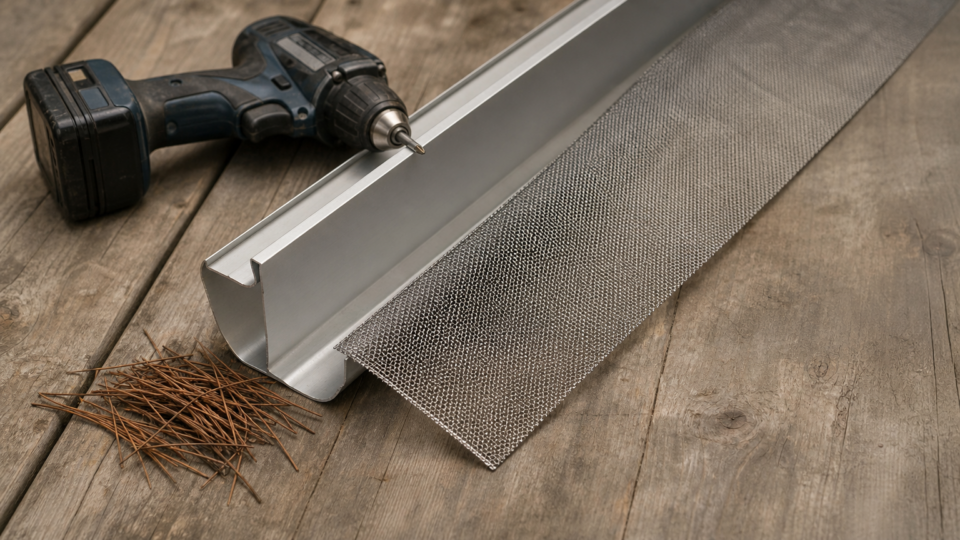
Short answer: The best 1 gutter guards search usually means one of two things: the Best-1 brand, or the single best guard for your house. Either way, a good pick matches your debris, your gutter width and your tolerance for ladders, not a brand name. Best-1 Flex-Fit suits homeowners with 6 in gutters who want stainless micro-mesh. Raptor suits 5 in gutters under pine trees. A-M covers a whole house in one box, GutterBrush needs no tools, GutterStuff foam disappears from view, and an installed system suits anyone who wants to skip the ladder. Ready for quotes? Compare local pros →
In this guide
Gutter guards are sold with big promises, and the packaging rarely tells you which gutter width fits, how many boxes your roof needs, or what will clog the guard itself. Buy the wrong type and you still climb the ladder. You just do it over a guard you have to unscrew first.
This guide compares six options side by side, with the same details for each so you can scan them. Marcus Delaney, a former gutter installer with 12 years in the trade, wrote it, and Dana Whitfield, a residential home inspector, reviewed it. Guardian Gutter Guide is not a contractor and does not sell guards. Specs come from manufacturer and retailer listings, and I leave out prices because they move. I show you how to work out cost per foot yourself.
1. Best-1 Flex-Fit 6 in. micro-mesh guard
Best-1 is the pick for homeowners with 6 in gutters. Its Flex-Fit 6 in. model pairs a stainless steel micro-mesh with an aluminum body and the brand’s raised leaf pattern screen. Best-1 markets its patented design as strong and low cost.
How it works
Water passes through the fine stainless mesh and into the gutter. Leaves and debris stay on top and, on a pitched roof, mostly slide or blow off.
- Type: aluminum mill finish with stainless steel micro-mesh
- Gutter width: 6 in
- Piece length: 3 ft
- Kit listed: 25 pieces, which equals 75 ft
Who it suits and what to watch
Most DIY guards are made for 5 in gutters, so a 6 in micro-mesh option is useful if your roof is large or steeply pitched and your gutters are the wider size. Measure the opening across the top before you order. A 6 in guard on a 5 in gutter will not sit right.
Two kits give you 150 ft, which covers a 120 ft house with 30 ft spare. Mill finish means bare aluminum, so it will show against dark trim. Best-1 sells more than one width, so confirm the exact version and its hanger compatibility on the product page before you buy.
If your gutters measure 6 in, Best-1 Flex-Fit is the micro-mesh option built for that width.
What should this cost you?
Answer four questions and get a fair price range for your home.
2. Raptor stainless micro-mesh kit
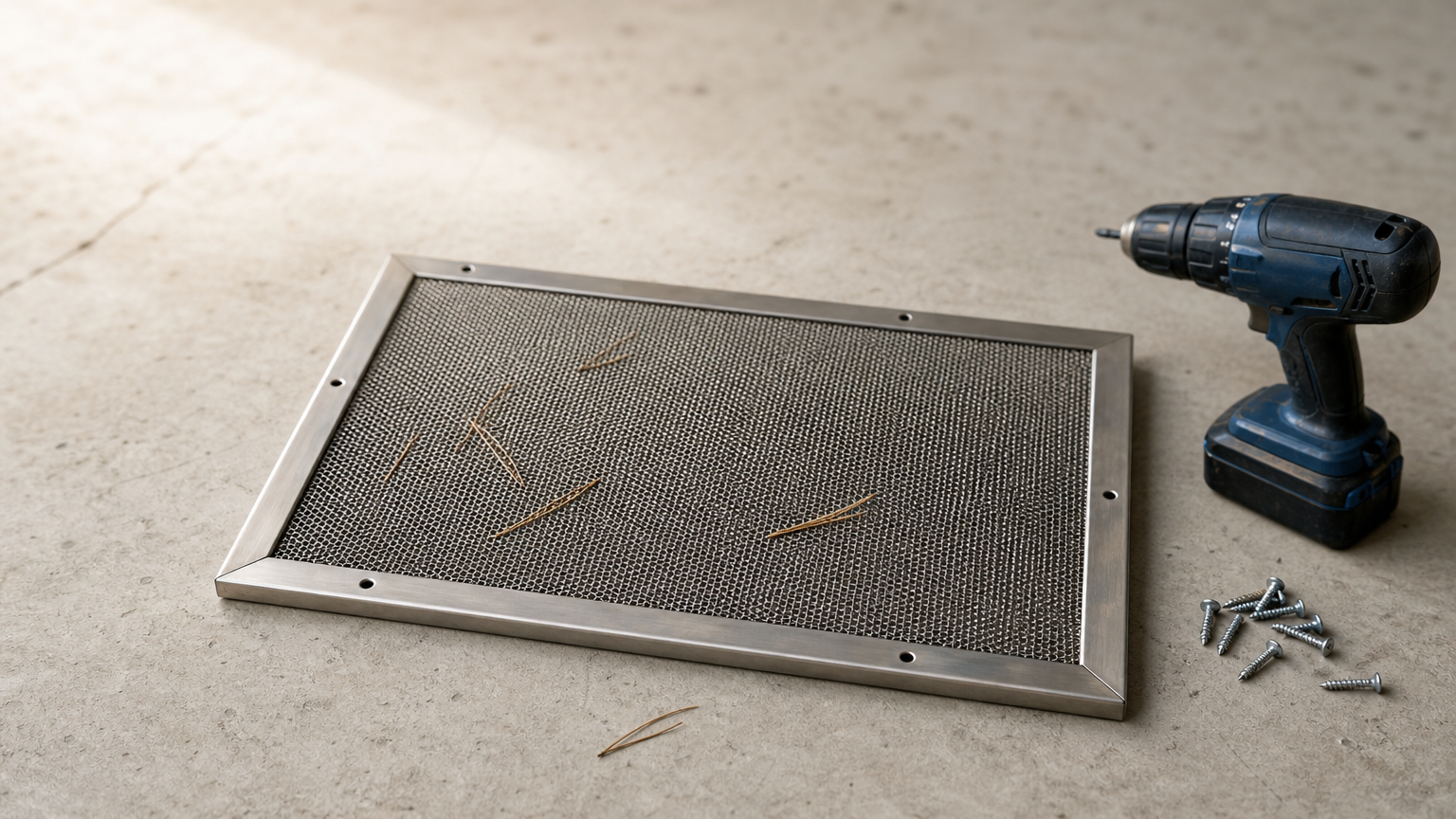
Raptor is the pick for pine needles and shingle grit on 5 in gutters. It is a stainless steel micro-mesh kit that screws down over the gutter.
How it works
The listing describes a V-Bend and Trough design that keeps water flowing while debris stays on the surface. The mesh opening is small enough that a needle cannot slip through end-first. That is the real reason micro-mesh beats coarser screens under evergreens.
- Type: stainless steel micro-mesh
- Gutter width: 5 in and smaller
- Length per kit: 48 ft nominal
- Fasteners: self-tapping screws in the box
Who it suits and what to watch
This one suits homeowners with pines, firs or gritty asphalt shingles who are comfortable with a drill. The screws are included, so you can start once the gutters are clean.
The trade-off is the box count. A 120 ft house needs three kits, which gives you 144 ft. The install is screw-down work from a ladder, and the listing states no finish color, so expect bare stainless. Micro-mesh still collects a thin film of fine debris on top, so plan a seasonal brush-off.
Under pine trees, spend the extra money on stainless micro-mesh instead of a coarser screen.
3. A-M perforated aluminum gutter guard
A-M is the pick for covering a whole house in one order. It is a perforated aluminum screen, the simplest and most familiar guard type, and the box is long.
How it works
Overlapping aluminum panels sit over the gutter. Holes let water through, and a bubbled design lets air move so leaves shed instead of matting.
- Type: perforated aluminum screen, .018 gauge
- Holes: 380 per linear foot
- Gutter width: 5 in
- Length per box: 200 ft installed
Who it suits and what to watch
A-M suits leaf-heavy yards on a budget. One box covers a 120 ft house with 80 ft to spare, and the listing names hidden hangers and spike and ferrule hangers as compatible. A-M also backs it with its own warranty against rust, rot and deterioration.
Perforated screens are coarser than micro-mesh. Needles, seed pods and shingle grit can pass through the holes and settle in the gutter. The listing does not include fasteners, so buy sheet-metal screws separately. Check your hanger type before ordering.
A perforated screen is the cheapest way to stop leaves, but it is not the answer for needles and grit.
4. GutterBrush brush insert
GutterBrush is the no-tools pick. It is a round bristle insert that sits down inside a 5 in K-style gutter.

How it works
Bristles let rainwater flow through while leaves, needles and roof debris rest on top of them. There is nothing to cut, clip or screw.
- Type: brush, 4.25 in diameter
- Construction: galvanized steel core, UV-protected bristles
- Gutter fit: 5 in K-style
- Length per kit: 60 ft in 3 ft sections
- Warranty listed: 10 years
Who it suits and what to watch
A brush suits low rooflines and renters-in-spirit, meaning homeowners who want a guard they can slide in from a short ladder. Two kits cover exactly 120 ft, so a house with any corner waste needs a third.
The weak point is fine debris. Small particles work down into the bristles, so you will need to lift out sections and rinse them now and then. That makes it a lower-maintenance gutter, not a no-maintenance one. Brushes also sit inside the channel, so the gutter must be clean and clear before they go in.
A brush is the easiest guard to install and the one most likely to need pulling out for a rinse.
5. GutterStuff Pro foam insert
GutterStuff Pro is the pick for short runs where you do not want to see the guard at all. It is a foam block that fills the gutter channel.
How it works
The foam sits inside a 5 in K-style gutter. Water soaks through and drains, while leaves rest on top of the foam. Nothing shows above the gutter lip from the ground.
- Type: foam insert with a moss protective coating
- Gutter fit: 5 in K-style
- Per box: eight 4 ft pieces, 32 ft
- Tools: none needed
Who it suits and what to watch
Foam suits short runs, porches and additions where appearance matters and the debris is mostly leaves. A 120 ft house needs four boxes (128 ft), which is a lot of foam to handle for a full-house job.
The known downside is moisture. Foam can hold water, and over time that encourages mold and moss unless you rinse or replace it. It also fills with fine debris, so it needs the same pull-and-rinse routine as a brush. Availability varies, so check stock before you plan a weekend around it.
Foam is invisible from the yard, but it is the guard most likely to hold moisture and need replacing.
6. Professionally installed systems
Installed systems are the pick when you want the job done without a ladder. The best-known names are LeafFilter, LeafGuard and Gutter Helmet, sold through local installers by quote.
How it works
These are three different designs under one label.
- LeafFilter: a micro-mesh guard installed over your gutters, designed to be nearly invisible from the ground
- LeafGuard: a one-piece, patented gutter and cover that replaces your existing gutters
- Gutter Helmet: a nose-forward, surface-tension hood that steers water around a curve into the gutter
Surface-tension (reverse-curve) covers are more visible and typically need a pro to fit correctly.
Who it suits and what to watch
An installed system suits tall or steep houses, multi-story roofs and anyone who will not climb a ladder. It also answers the common question of leaf guard versus LeafFilter. LeafGuard is a combined gutter and cover, so you replace your gutters. LeafFilter is a guard that goes onto gutters you already have.
Prices come by quote, and every installer’s estimate differs by roof access and local labor rates. Many include lifetime-style guarantees, so read the terms and exclusions before you sign. Ask which gutter size the system uses, because all-in-one products often use a smaller profile, and a gutter that is undersized for your roof will overflow no matter what covers it.
With an installed system you pay for labor and a warranty, so compare written quotes line by line.
How to choose the right gutter guard for your home
Choose by debris first, gutter width second and installation method third. Price comes after those three, because a cheap guard that clogs costs more than a pricier one that works. No single product is the number one guard for every house.
Match the guard to your debris
| Your main debris | Best fit | Why |
|---|---|---|
| Large leaves | Perforated aluminum or micro-mesh | Holes shed leaves and the cost is low |
| Pine needles, shingle grit | Micro-mesh (Raptor, Best-1) | Openings too small for needles |
| Mixed debris on a tall house | Installed system | Labor and warranty handled for you |
| Short runs, appearance first | Foam or brush | Sits in the gutter, no tools |
Measure gutter width and run length
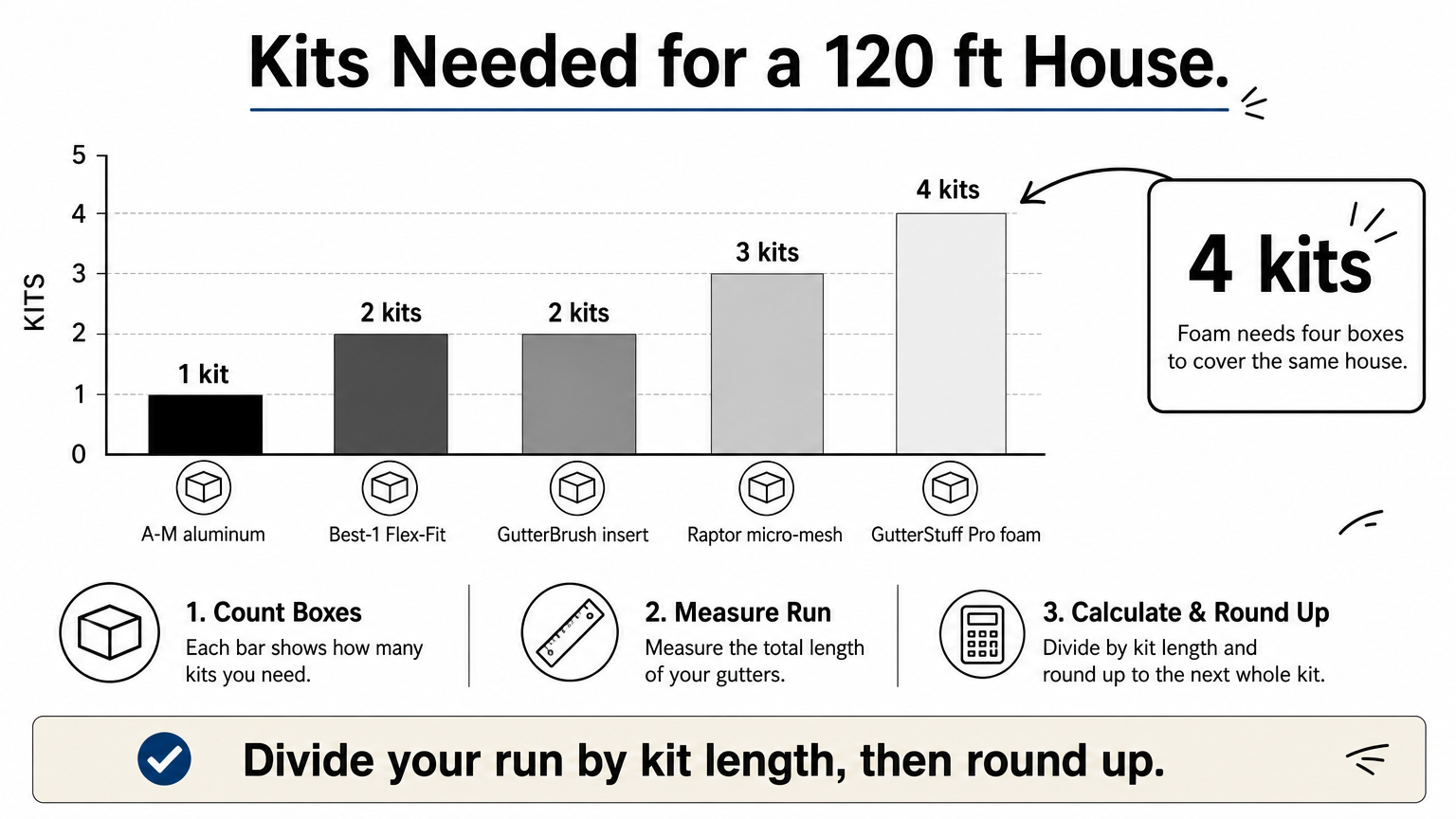
Measure across the opening from the back wall to the front lip. Then divide your total run by the kit length and round up. Here is the same 120 ft house across five DIY options:
| Guard | Gutter fit | Length per kit | Kits for 120 ft | Spare |
|---|---|---|---|---|
| Best-1 Flex-Fit 6 in. | 6 in | 75 ft | 2 | 30 ft |
| Raptor micro-mesh | 5 in and smaller | 48 ft nominal | 3 | 24 ft |
| A-M perforated aluminum | 5 in | 200 ft | 1 | 80 ft |
| GutterBrush | 5 in K-style | 60 ft | 2 | 0 ft |
| GutterStuff Pro foam | 5 in K-style | 32 ft | 4 | 8 ft |
To compare cost, divide the kit price by the kit length in feet. Use today’s retailer price, since it changes often. Buy one extra kit if the house has many inside corners.
Know what no guard fixes
Gutter guards do work, but they reduce cleaning rather than end it. Plan a check each fall after the leaves drop and another in spring. A guard also will not fix a sagging gutter or a wrong pitch, and it will not cure ice dams, which come from heat escaping through the roof. Clear and flush the gutter before any guard goes on, and confirm water reaches the downspout.
Fix the gutter first, then guard it, because a guard hides a bad slope but does not correct it.
Choosing your gutter guard
Match the guard to what falls on your roof. Micro-mesh handles needles and grit, perforated aluminum handles leaves for the least money, a brush or foam works for short runs, and an installed system takes the ladder out of the job. Measure your gutter width, round up to whole kits, and clean the run before anything goes in.
If you would rather have a pro handle it, the next step is a number you can compare. You can get a free gutter guard installation quote, which shows an estimated cost range first and then connects you with local contractors. Use that range to check any estimate you receive.
What should this cost you?
Answer four questions and get a fair price range for your home.