
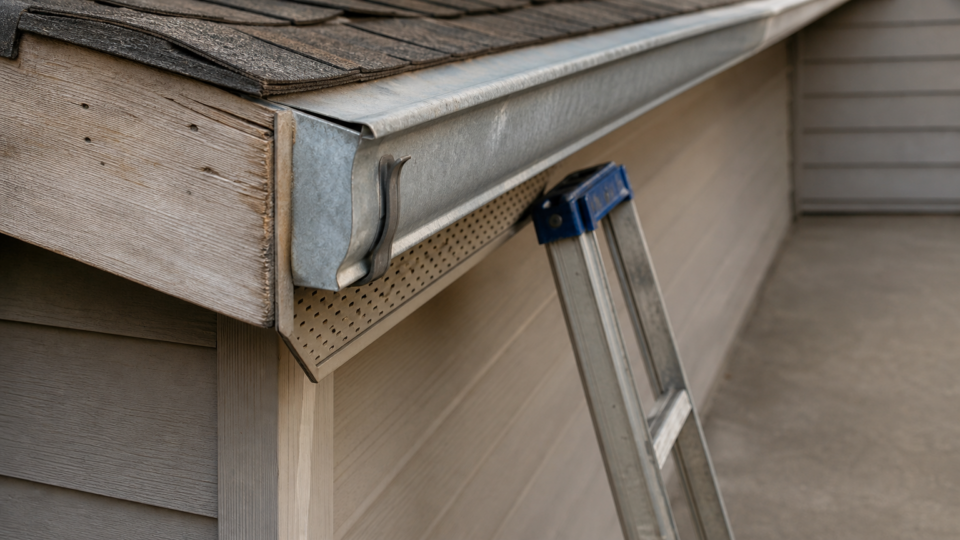
Short answer: You noticed rot along the roofline, or maybe a contractor pointed out that your fascia is soft and your soffit has gaps where birds keep getting in. Now you’re stuck figuring out what a full repair actually runs, because gutters alone are one price and gutters plus the wood behind them are a different animal entirely. The gutter soffit and fascia replacement cost question comes up constantly for homeowners who thought they just needed new gutters until an installer found bigger problems underneath. Ready for quotes? Compare local pros →
In this guide
For most homes, replacing all three components together runs $2,500 to $9,000, depending on linear footage, material choice, and how much of the fascia board has actual rot damage versus a straightforward swap. Material picks whether you’re closer to the low end with vinyl soffit and aluminum gutters, or the high end with wood fascia and copper gutters, and labor complexity climbs fast once carpenters have to cut out and rebuild damaged framing rather than just capping it.
This guide breaks down what drives that price range: cost per linear foot for each component, material comparisons, signs you need all three replaced versus gutters alone, and how regional labor rates shift your final number. You’ll walk away knowing what a fair quote looks like before you call anyone.
Why replacement costs vary so much from job to job
Ask five contractors for a gutter fascia replacement cost estimate on the same house, and you’ll get five different numbers. That’s not because someone’s padding the bill. Every one of these projects has multiple moving parts, and small differences in condition, materials, and access change the math fast. Understanding what drives the spread helps you spot a lowball quote that’s hiding future change orders, and it helps you spot a fair one too.
The condition of hidden wood matters more than anything else
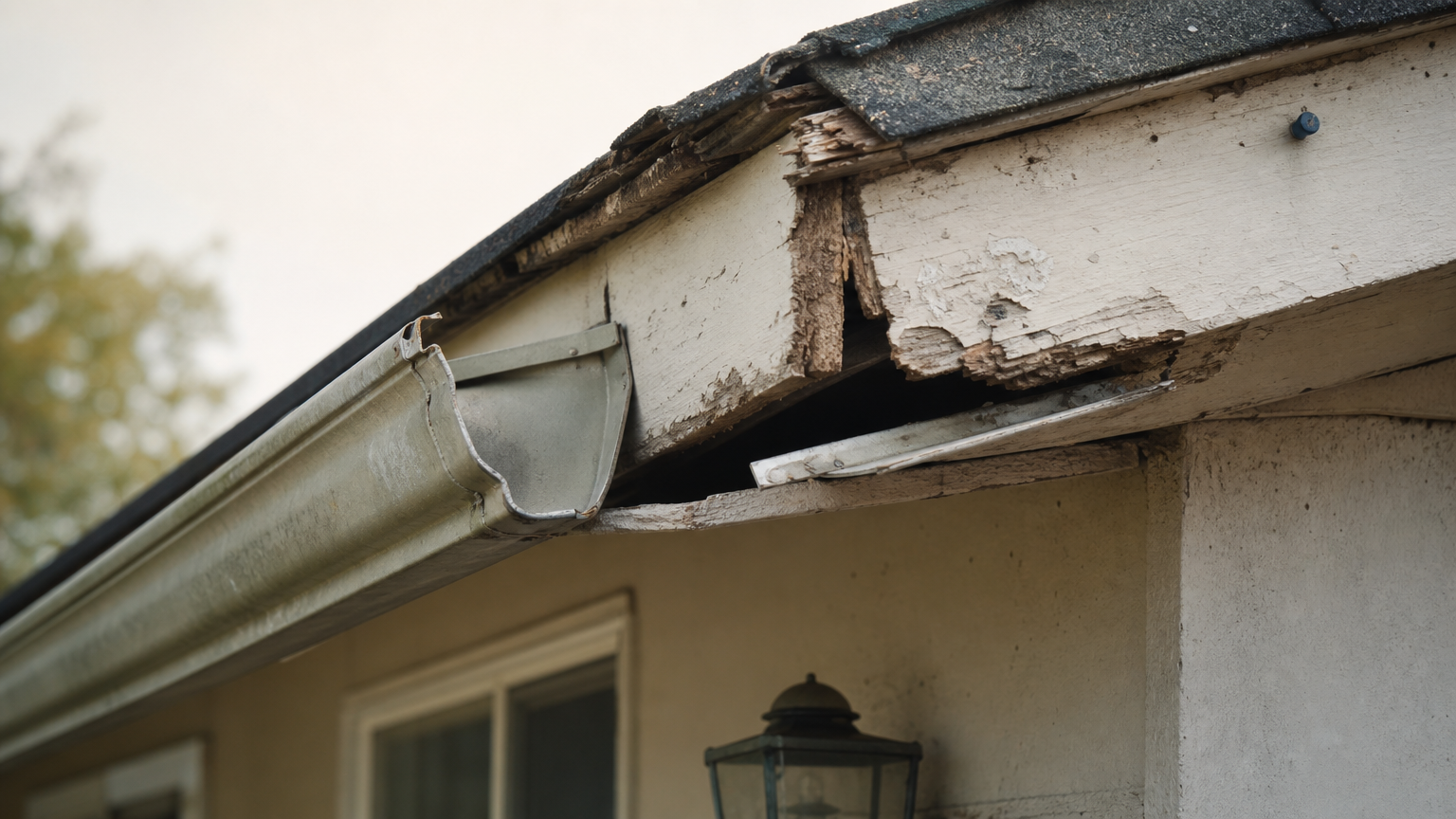
Rot is the single biggest cost driver in any gutter and fascia replacement cost estimate, and it’s the part homeowners underestimate the most. If your fascia board is solid and you’re just capping it or swapping it board-for-board, that’s a straightforward carpentry job. If water has been getting behind the gutters for a few seasons, the fascia might be soft, the soffit vents might be rusted through, and the rafter tails underneath could be compromised too. Contractors can’t always see the extent of rot until they pull the old gutters down, which is why some quotes include a contingency line for "additional rot repair, priced per linear foot if found."
The real cost of this project isn’t the materials, it’s how much rotten wood the contractor finds once the old gutters come down.
Linear footage and roofline complexity
A simple ranch with a rectangular footprint costs less per foot to redo than a house with dormers, multiple roof pitches, and lots of inside and outside corners. Every corner, transition, and cut adds labor time even though the material cost barely changes. Homes over 2,500 square feet often need 180 to 220 linear feet of gutter, soffit, and fascia combined, and that footage is what most quotes are built around.
Material choice sets your price floor
Before labor even enters the conversation, your material picks lock in a baseline. Vinyl soffit paired with aluminum gutters sits at the affordable end. Wood fascia, fiber cement soffit, or copper gutters push the number up considerably. Here’s how the main choices stack up on a per-linear-foot basis, installed, and if you’re weighing gutter metals specifically, our breakdown of aluminum vs. steel vs. copper seamless gutter prices goes deeper:
| Component | Budget option | Mid-range option | Premium option |
|---|---|---|---|
| Gutters | Aluminum ($6-$10/ft) | Steel ($9-$14/ft) | Copper ($25-$40/ft) |
| Fascia | Vinyl-wrapped ($8-$12/ft) | Wood ($10-$18/ft) | Composite ($15-$22/ft) |
| Soffit | Vinyl vented ($5-$9/ft) | Aluminum ($7-$11/ft) | Fiber cement ($10-$16/ft) |
Those ranges assume the substrate underneath is in decent shape. Add rot repair, and each category climbs.
Regional labor rates shift the whole estimate
Where you live changes your average cost of gutter and fascia replacement more than most homeowners expect. Labor in the Northeast and West Coast metro areas often runs 25% to 40% higher than in the Midwest or rural South, simply because contractor overhead, insurance, and demand differ by market. A job that costs $4,500 in Ohio might land closer to $6,200 in coastal California with identical materials and scope.
Access, height, and equipment needs
Single-story homes with easy ladder access are the cheapest to work on. Two- and three-story homes, steep rooflines, or houses surrounded by landscaping that limits ladder placement all require more time, sometimes lift rental, and more careful staging. A few practical factors that push labor costs up:
- Roof pitch above 6/12, which slows down safe movement along the roofline
- Second- and third-story fascia, requiring staging or lift equipment instead of standard ladders
- Limited ground clearance from fences, gardens, or tight side yards
- Existing paint or stain matching on wood fascia, which adds a finishing step
Each of these adds real hours to the job, and a contractor who skips over them in a walk-through is the one who calls back mid-project asking for more money.
What should this cost you?
Answer four questions and get a fair price range for your home.
How to estimate your total replacement cost
Before you call a single contractor, you can build a rough number yourself using the same math they use. A DIY estimate for gutter soffit and fascia replacement cost isn’t precise, but it gets you within a few hundred dollars, and it arms you to spot a quote that’s way out of line in either direction.
Start with your home’s linear footage
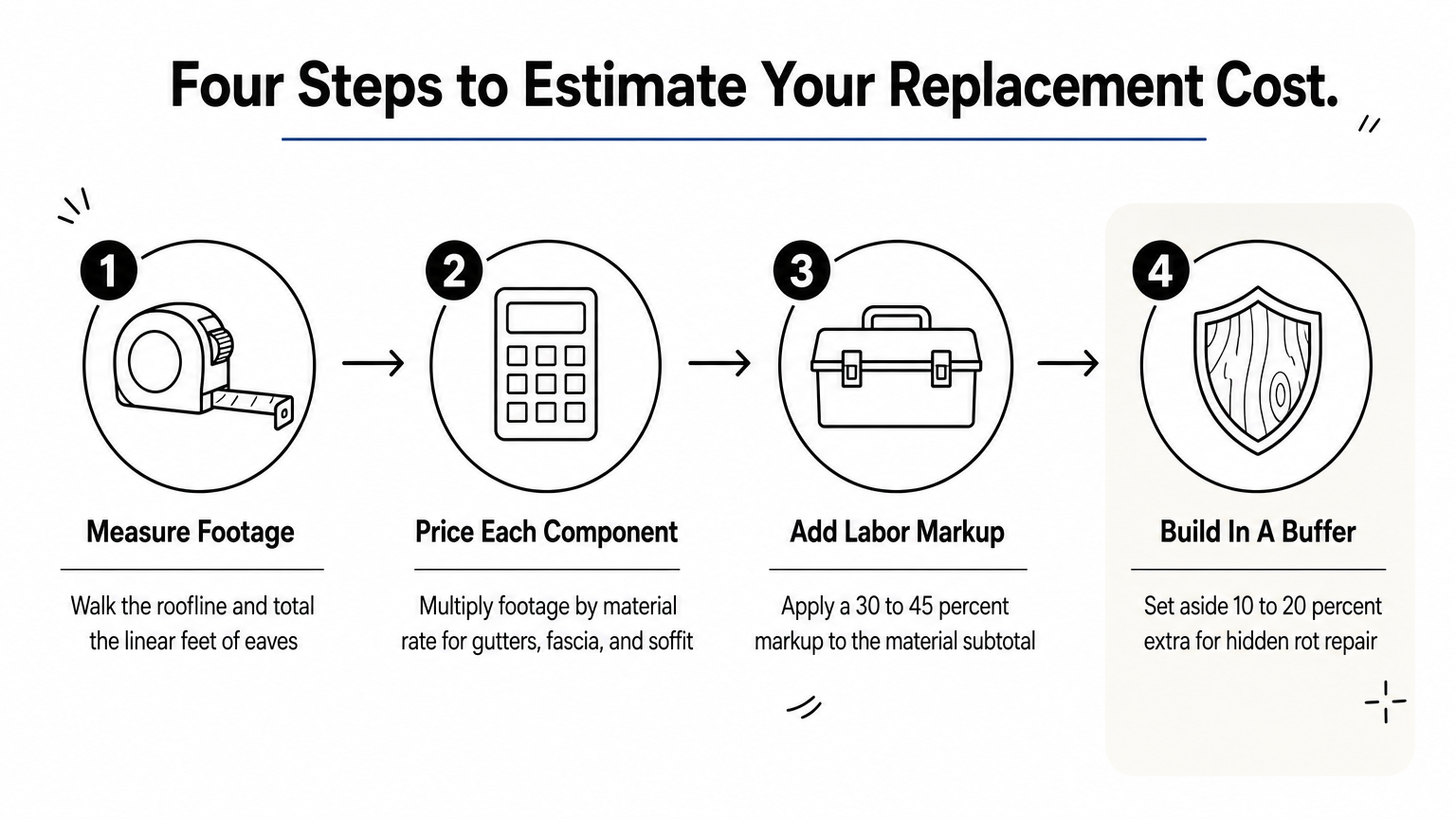
Grab a tape measure and walk your roofline, or pull up your home’s dimensions from a listing site if you don’t want to climb a ladder. Add up the total feet of gutter run, then note that soffit and fascia typically match that same footage since they run along the same eaves. A 2,000 square foot single-story home usually needs 150 to 180 linear feet total. Two-story homes with dormers or an L-shaped footprint often push past 200 feet, which changes your cost for new gutters soffit and fascia significantly since every extra foot multiplies across three components at once.
Break the estimate into three line items
Once you have footage, multiply it against the material rates from the earlier table, one line item per component instead of one lump sum. This is how contractors build their bids internally, and doing it yourself lets you see exactly where your money is going.
Gutters: (linear feet) x (material rate per foot) = subtotal
Fascia: (linear feet) x (material rate per foot) = subtotal
Soffit: (linear feet) x (material rate per foot) = subtotal
Subtotal + labor markup (typically 30-45%) = estimated total
A quote that skips this line-item breakdown is a quote you can’t verify, and that’s the one to question first.
Add a rot and complexity buffer
Even a careful measurement won’t catch hidden damage. Set aside an extra 10% to 20% of your subtotal as a rot contingency, especially if you’ve already noticed soft spots, water stains on the fascia, or soffit panels that sag or show daylight through the vents. Homes older than 25 years with original wood fascia should budget toward the higher end of that buffer, since exposed wood degrades faster than vinyl or aluminum ever will.
Use a calculator to sanity-check contractor bids
Running your own numbers by hand works, but it’s slower and easier to get wrong than plugging your specifics into a tool built for this. Guardian Gutter Guide’s cost estimator factors in your home size, linear feet, stories, guard type, material, and region to generate a realistic price range in a couple minutes, giving you a benchmark before any contractor walks your property.
Typical costs by material and project size
Size and material tier together explain most of the swing you’ll see between quotes. A soffit and gutter replacement cost on a small ranch with vinyl and aluminum looks nothing like a full copper-and-composite job on a sprawling two-story colonial, even though both fall under the same project category. Looking at real numbers by square footage makes the range easier to plan around instead of guessing at a single average.
Small homes vs. large homes
Home size drives linear footage, and linear footage drives almost every other number in the estimate. A 1,200 to 1,600 square foot single-story home typically needs 120 to 150 linear feet of combined gutter, soffit, and fascia, landing the cost of gutter and soffit replacement in the $2,500 to $4,000 range with mid-grade materials. Bump up to a 2,500 to 3,500 square foot two-story home with a more complex roofline, and footage often climbs to 220 to 280 feet, pushing the total to $6,000 to $9,500 even before any rot repair gets added in.
Budget, mid-range, and premium material packages
Material tier stacks on top of size to set your final number. Someone comparing the average cost of new gutters and soffits across tiers should expect roughly a two-to-three-times spread between the cheapest and priciest combination, purely from material choice on identical footage.
| Home size | Budget package (vinyl/aluminum) | Mid-range package (steel/composite) | Premium package (copper/wood, fiber cement) |
|---|---|---|---|
| Small (120-150 ft) | $2,200-$3,200 | $3,500-$5,000 | $6,000-$8,500 |
| Medium (150-200 ft) | $3,000-$4,500 | $5,000-$7,000 | $8,500-$12,000 |
| Large (200-280 ft) | $4,200-$6,000 | $7,000-$9,500 | $12,000-$17,000 |
Pick your material tier before you shop for contractors, since it swings your total more than any single labor variable ever will.
What a full-house project looks like in real numbers
Quotes rarely land exactly on a table figure because every roofline has its own quirks, but the pattern holds across most bids you’ll collect. Vinyl and aluminum on a mid-size home, done with no rot repair, commonly comes in around $4,200. Swap in wood fascia and steel gutters on that same house, and the number moves closer to $6,500 once the extra carpentry and finishing work gets factored in. Copper gutters alone can add $1,500 to $3,000 to any package regardless of home size, since copper’s per-foot cost dwarfs every other material on the table above. Weighing that premium against a 40-plus year lifespan is worth doing before you rule it out on price alone.
Repair, DIY, or hiring a pro: what makes sense
Not every damaged roofline needs a full teardown. Deciding between a spot repair, a DIY weekend project, and a full professional replacement comes down to how much rot you’re dealing with, how comfortable you are on a ladder two stories up, and whether the math actually favors patching versus starting fresh. Getting this call right saves real money, and getting it wrong means paying twice: once for a repair, then again a year later for the replacement you should have done first.
When repair alone still makes sense
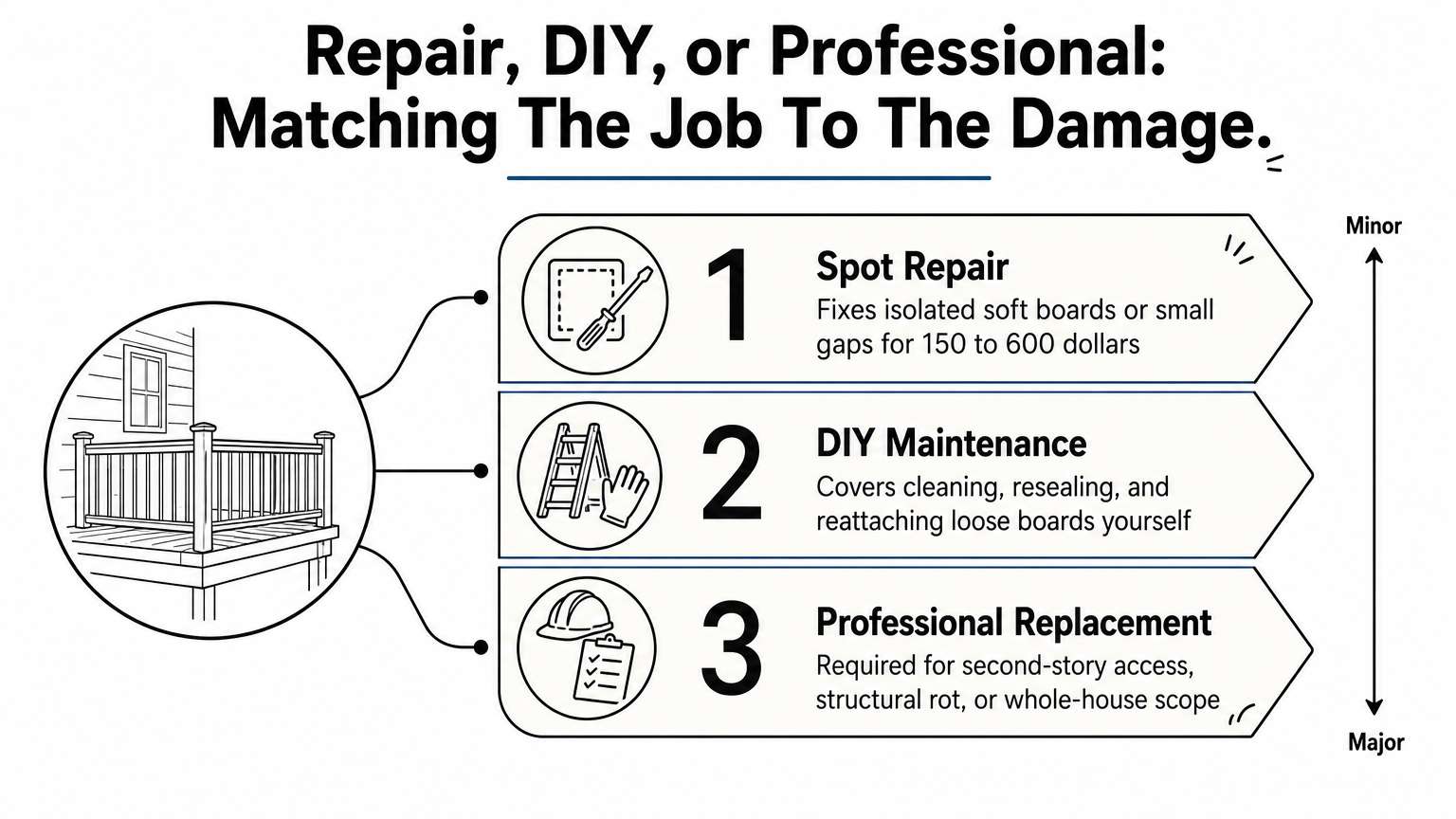
Sometimes the fix really is smaller than the fear. If your inspection turns up one or two soft fascia boards near a downspout, isolated soffit gaps from a squirrel or bird, or gutters sagging away from the house from bent hangers rather than rotten wood, targeted repair usually runs $150 to $600 per section and solves the problem without touching the rest of the roofline. Look for these signs before you commit to a full gutter/soffit and fascia replacement cost project:
- Rot limited to a 3 to 6 foot section near a corner or downspout
- Fascia that’s discolored but still firm when you press a screwdriver into it
- Soffit vents that are cracked or missing but not sagging or falling away
- Gutters pulling loose in one spot, with the rest of the run still solid
If you’re seeing two or more of the opposite conditions across multiple sections, you’re likely past the point where repair makes financial sense, so it’s worth checking what a section repair should cost before you commit either way.
Where DIY genuinely saves money
Clearing out your gutters, resealing minor seams, and reattaching loose fascia boards are all reasonable DIY jobs if you’re steady on a ladder and comfortable with basic carpentry. Where DIY gets risky is anywhere involving soffit removal, since that often exposes wiring, vent chases, or rot that needs a trained eye to assess correctly. Homeowners who attempt full soffit and fascia work themselves report saving 30% to 50% on labor, but that savings evaporates fast if a mistake leads to water intrusion behind new material.
DIY makes sense for maintenance and small fixes, but full soffit and fascia work is where amateur mistakes get expensive fast.
When hiring a professional is the only real option
Anything involving second-story access, structural rot in rafter tails, or a fascia and gutter replacement cost that spans the whole house belongs with a licensed contractor. Professionals carry the insurance, staging equipment, and experience to catch rot you’d miss from the ground, and most back their work with a warranty that a weekend DIY job simply can’t match.
Getting a fair, accurate quote for your home
A fair quote always breaks costs into line items for gutters, fascia, and soffit rather than one bundled number, and it names the material grade for each. The gutter soffit and fascia replacement cost you land on ultimately depends on footage, material tier, and how much hidden rot the contractor finds once the old gutters come down, so treat any bid that skips a walk-through with suspicion.
Before you sign anything, run your home’s specifics through a calculator so you know roughly what you should be paying. That number becomes your negotiating floor and keeps a contractor’s estimate honest. Once you’re ready to compare real bids from local pros, see what gutter replacement should cost for your home with our free estimator, then request quotes with confidence instead of guessing.
What should this cost you?
Answer four questions and get a fair price range for your home.