
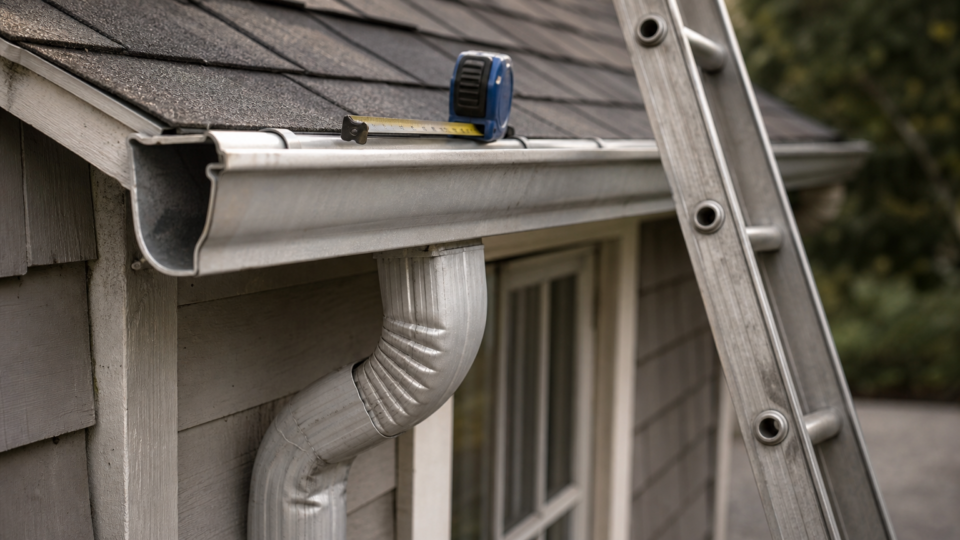
Short answer: Your gutters are sagging, rusted, or leaking at every seam, and you’re bracing for a quote that might not be fair. That’s the smart move. Gutter replacement cost varies wildly depending on who you call, and without a baseline number, you have no way to tell a fair bid from a padded one. Ready for quotes? Compare local pros →
In this guide
For most homes, a full gutter replacement runs $1,700 to $5,500, or roughly $4 to $30 per linear foot depending on material and home size. A modest single-story ranch with basic aluminum gutters sits at the low end. A two-story home with steel or copper gutters and extra downspouts climbs fast toward the high end. Where you live, how many stories you have, and what material you pick move that number more than almost anything else.
This guide breaks down what drives those numbers: material costs from vinyl to copper, labor rates by region, how home size and roofline affect linear footage, and where seamless gutters change the math. Written by a former gutter installer and reviewed by a home inspector, it gives you real ranges instead of a sales pitch, so you walk into any contractor conversation knowing what you should actually pay.
Why gutter replacement costs vary so much
Ask five contractors for a quote and you’ll likely get five different numbers, sometimes off by thousands of dollars. That’s not a scam, it’s the nature of gutter work. The cost of gutter replacement depends on a handful of variables that stack on top of each other, and each one can push your total up or down by hundreds of dollars.
Home size and linear footage
Most quotes start with linear footage, meaning the total length of gutter your house needs. A small ranch might need 120 to 150 linear feet, while a sprawling two-story home with multiple rooflines can require 250 feet or more. Every extra foot adds material and labor cost, so a bigger house doesn’t just cost more, it can cost proportionally more per project because of added downspouts, corners, and end caps.
Material choice
Material is the single biggest lever on average gutter replacement cost. Vinyl runs cheapest but degrades faster in extreme heat or cold. Aluminum is the industry standard because it balances price and durability. Steel and copper cost far more upfront but last decades longer and hold up better against ice and heavy debris.
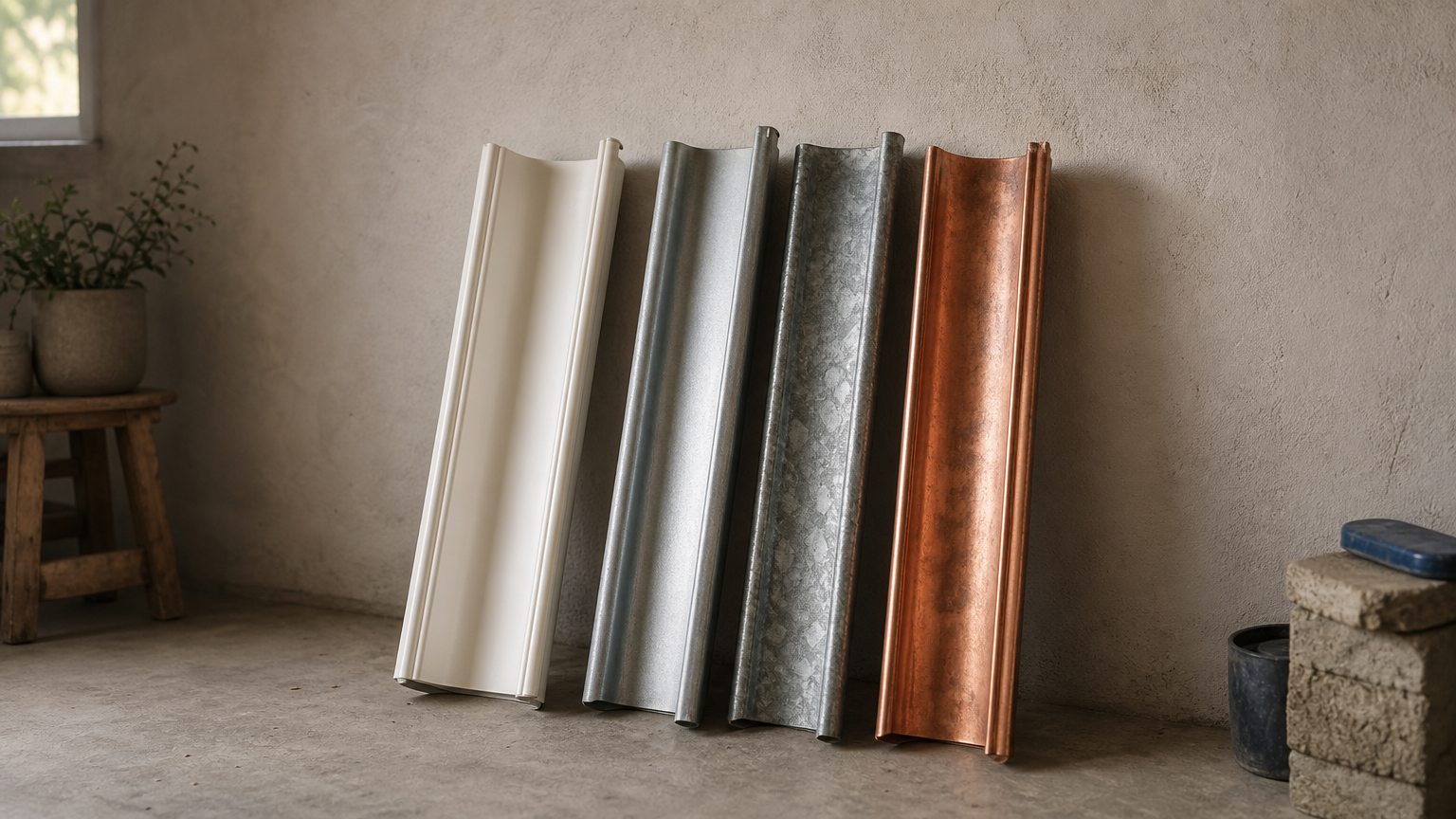
Material choice alone can double or triple your gutter replacement bill, so pick based on your climate and how long you plan to stay in the house.
Labor rates and your region
Labor costs shift by region just like every other home improvement trade. A crew in a major metro area on either coast typically charges more per hour than one in a smaller Midwest or Southern market. Local permit requirements, insurance costs, and even the going rate for skilled trade labor in your area all factor into what shows up on your quote.
| Factor | Low-cost scenario | High-cost scenario |
|---|---|---|
| Home size | Single-story ranch, ~120 ft | Two-story, complex roofline, 250+ ft |
| Material | Vinyl or aluminum | Steel or copper |
| Gutter style | Sectional | Seamless, custom-fabricated on site |
| Region | Rural or smaller metro | Major coastal metro |
| Accessibility | Single story, easy ladder access | Multi-story, steep roof, tight access |
Stories, roofline complexity, and gutter style
Second and third stories mean taller ladders, more safety equipment, and slower work, all of which add labor cost. A roofline with lots of valleys, dormers, or angles takes longer to measure and fit than a simple rectangular home. On top of that, seamless gutters, formed on site from a single aluminum coil, cost more per foot than sectional gutters but resist leaks better over time, which is why most installers recommend them despite the higher seamless gutter cost upfront.
What should this cost you?
Answer four questions and get a fair price range for your home.
How to estimate your gutter replacement cost
Getting a real number for your project starts with a few measurements you can take yourself before any contractor shows up. Estimating gutter replacement cost accurately means knowing your linear footage, your material preference, and your home’s story count going into the conversation, not walking in blind and hoping the first quote is fair.
Measure your own linear footage
Grab a tape measure or walk your roofline with a measuring wheel and add up every stretch where gutter runs, including both sides of the house and any additions. Round up to account for corners and end caps, since installers price by the foot and waste adds up fast on complex rooflines.
- Measure each straight run separately, then add them together
- Count downspouts you’ll need, typically one per 30 to 40 feet of gutter
- Note your story count, since second-story work adds labor
- Decide if you want gutter guards installed at the same time, and check what guards add to the bill
A tape measure and ten minutes on your roofline tells you more about your true cost than any single contractor quote will.
Use a calculator before you call anyone
Once you have your numbers, plug them into a tool built for this exact math. Our own gutter replacement cost estimator factors in linear feet, stories, material, debris level, and your region to hand you a realistic price range in under a minute, so you’re not guessing at what a fair average cost for gutter replacement looks like in your specific area.
Running your numbers through a calculator first also protects you from anchoring bias. If the first contractor you call quotes high, you’ll have your own baseline to push back with instead of just trusting their number because it’s the only one you’ve heard.
Comparing gutter costs by material
Material choice sets the ceiling and floor on your new gutters cost, so it deserves its own comparison before you talk to a single contractor. Vinyl and aluminum dominate the residential market because they hit the sweet spot most homeowners want, but steel and copper serve specific needs that justify their higher price tags.
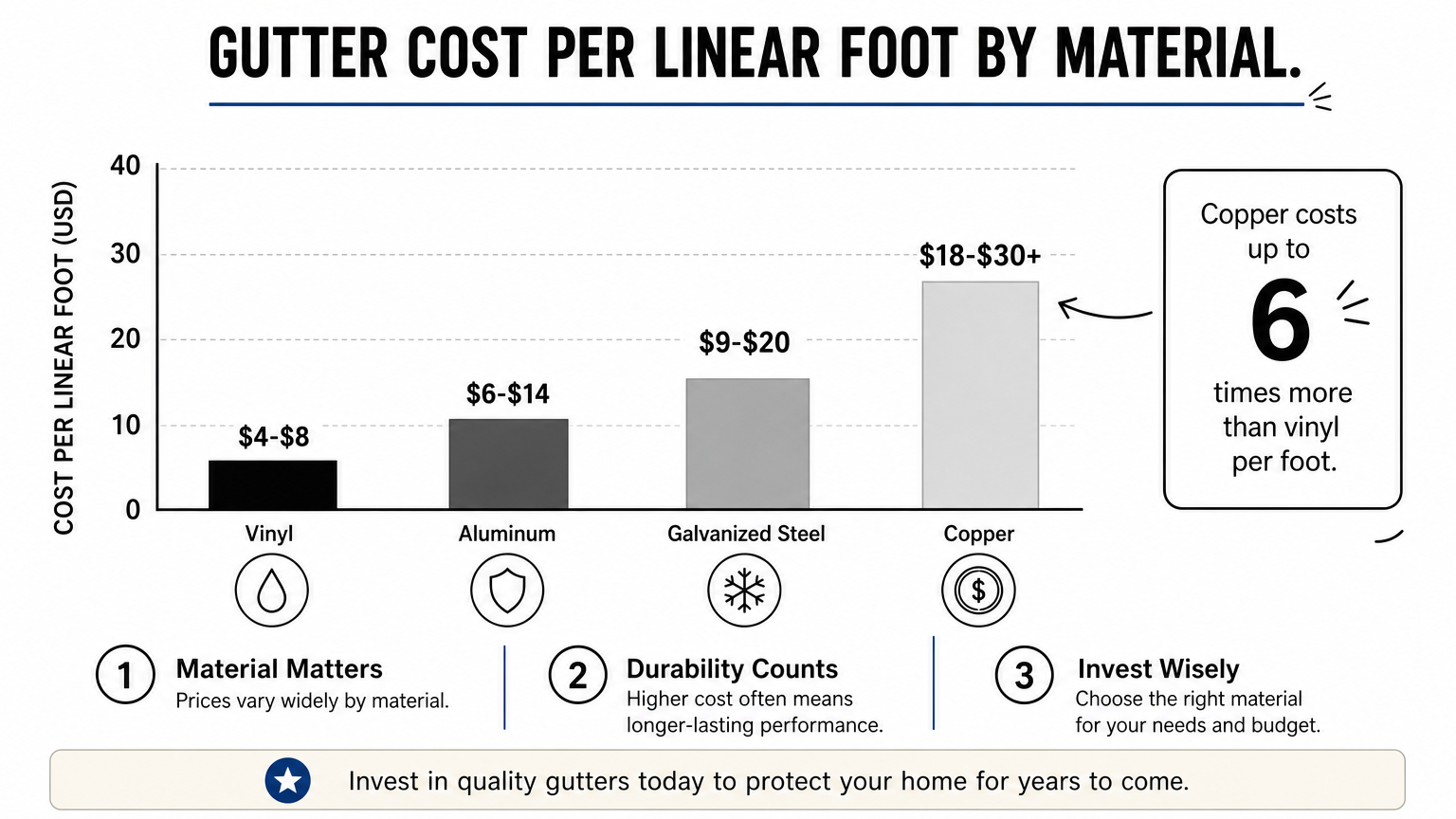
Material cost comparison table
| Material | Cost per linear foot | Lifespan | Best for |
|---|---|---|---|
| Vinyl | $4-$8 | 10-15 years | Mild climates, tight budgets |
| Aluminum | $6-$14 | 20-25 years | Most homes, all-around value |
| Galvanized steel | $9-$20 | 20-30 years | Heavy snow, ice, storm regions |
| Copper | $18-$30+ | 50+ years | Historic homes, high-end curb appeal |
Which material fits your budget
Given those numbers, replacement gutter cost decisions usually come down to how long you plan to own the house. Vinyl makes sense if you’re planning to sell within five years or live somewhere winters stay mild. Aluminum remains the default recommendation for most homeowners because it resists rust, takes paint well, and won’t put a serious dent in your budget.
Copper costs three to five times more than aluminum, but if you’re staying put for decades, the math often works out cheaper per year of use.
Steel earns its higher price in regions with heavy snow load or hail, where lighter materials dent or buckle. Copper rarely makes financial sense unless you’re matching a historic home’s original detailing or you simply want the patina and don’t mind paying for it. None of these numbers include installation labor, which typically adds $2 to $6 more per foot on top of material costs, so use the table as a starting point, not your final budget.
When to repair gutters instead of replacing them
Not every sagging or leaking gutter needs a full teardown. Repairing a gutter typically runs $150 to $600 per fix, a fraction of a full replacement, and plenty of problems fall into that cheaper category. Before you commit to the higher cost for gutter replacement, rule out whether a targeted repair solves the actual issue.
Signs a repair still makes sense
Isolated problems on gutters that are otherwise structurally sound are your best candidates for repair. A single leaking seam, one loose bracket, or a downspout that’s pulled away from the fascia can usually be fixed in an afternoon by a competent crew. Aluminum gutters under 10 years old with no widespread rust or warping almost always fall into this category too.
- One or two sections sagging or a gutter pulling away from the house
- Isolated leaks at seams or end caps
- Clogged or crushed downspouts
- Minor rust spots on an otherwise sound aluminum system
- Gutters under 15 years old with no structural warping
Signs you need a full replacement
Once damage spreads across most of the system, patching stops making financial sense. Rust that’s eaten through the metal in multiple spots, gutters pulling away along entire runs, or a system older than its expected lifespan all point toward replacement instead of another round of repairs.
If you’ve paid for the same repair twice in two years, you’re not fixing the gutters, you’re funding their slow replacement one patch at a time.
Timing matters here too. Widespread sagging often means the fascia board behind the gutter has rotted, and that’s a bigger repair than the gutter itself, with gutter, soffit, and fascia replacement priced together. If a contractor tells you the fascia needs replacing alongside the gutters, get a second opinion before assuming full replacement is your only option, since sometimes only a section of fascia needs work.
How to get a fair quote and avoid overpaying
Once you’ve got your own numbers, the real work is separating a fair bid from an inflated one. Getting a fair quote means comparing apples to apples, not just picking the lowest total on the page, since two quotes for the same house can hide very different materials, warranties, or crew experience behind similar-looking numbers.
What every quote should include
Before you sign anything, make sure the paperwork spells out exactly what you’re paying for. A vague one-line estimate is a red flag no matter how reasonable the total looks.
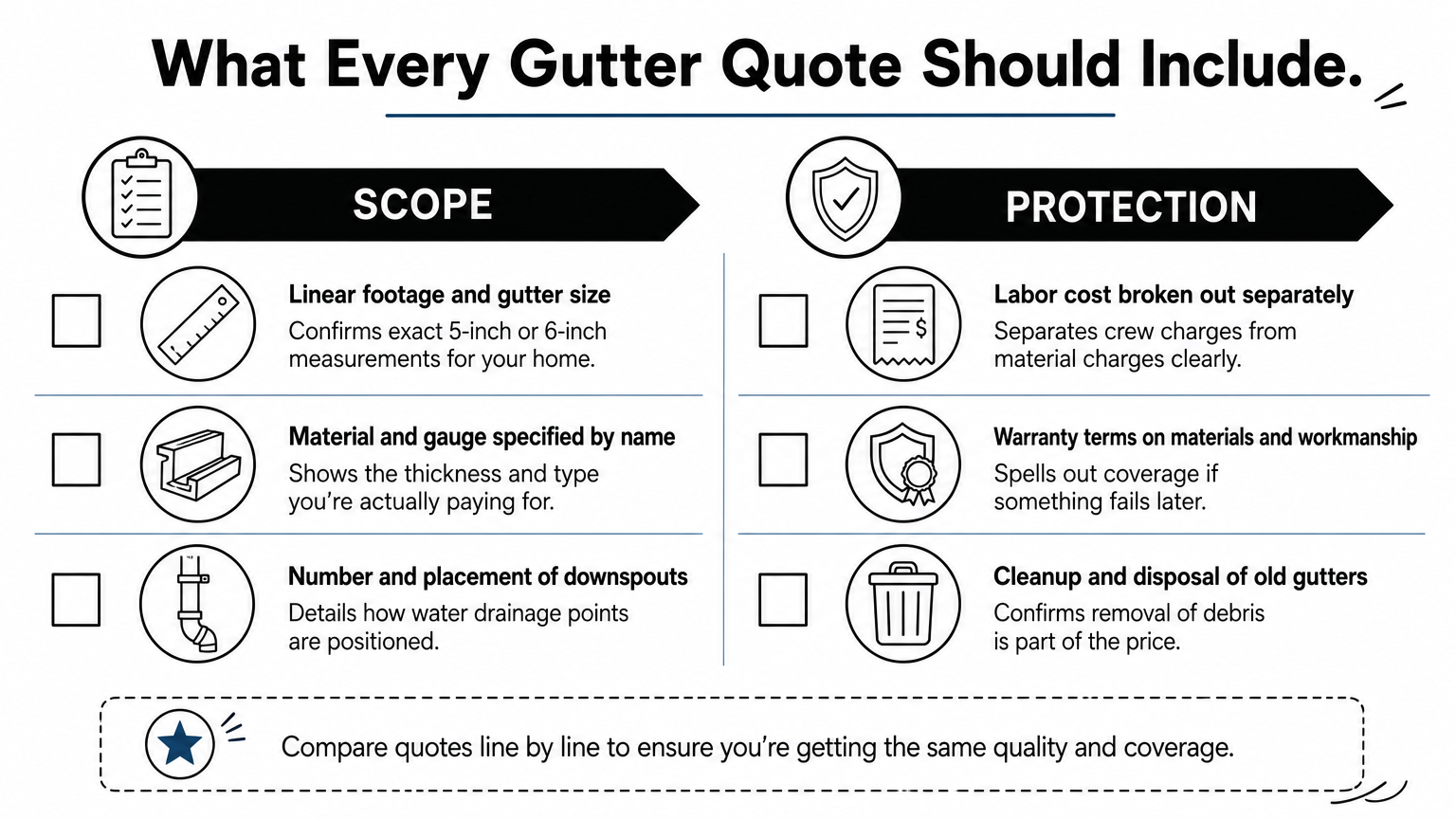
- Linear footage and gutter size (5-inch vs 6-inch)
- Material and gauge (thickness) specified by name
- Sectional or seamless construction
- Number of downspouts and their placement
- Labor cost broken out separately from materials
- Warranty terms on both materials and workmanship
- Cleanup and disposal of old gutters included
A quote without a material gauge or warranty listed isn’t a quote, it’s a guess with a dollar sign on it.
Collect at least three quotes
Gathering multiple bids is still the single best defense against overpaying. Three quotes from established local contractors give you a realistic range for your specific house, and any bid that comes in dramatically higher or lower than the other two deserves a second look before you sign. If one number seems too good to be true, ask what’s being cut, thinner gauge material and no warranty are common ways low bidders hit that price.
Watch for pressure tactics
Honest contractors let you think. Same-day discounts, high-pressure closers, or door-to-door sales pitches after a storm are classic signs of a company banking on emotion instead of a fair cost for new gutters. Take the quote home, sleep on it, and compare it against your own calculator estimate before committing to anyone.
Setting a realistic gutter budget
You now have what most homeowners never get before calling a contractor: real numbers. Gutter replacement cost lands between $1,700 and $5,500 for most homes, material choice moves that range more than anything else, and a handful of measurements from your own roofline tell you more than a single sales pitch ever will.
Budget with a buffer. Add 10 to 15 percent on top of your estimate for surprises like rotted fascia or extra downspouts you didn’t account for, and you won’t get blindsided mid-project. Use your own measurements and the material comparison above as your baseline, then compare every bid against that number instead of against each other.
When you’re ready to move past research and get real numbers for your specific house, request a free gutter replacement estimate and see how local pricing stacks up against everything you just learned.
What should this cost you?
Answer four questions and get a fair price range for your home.