
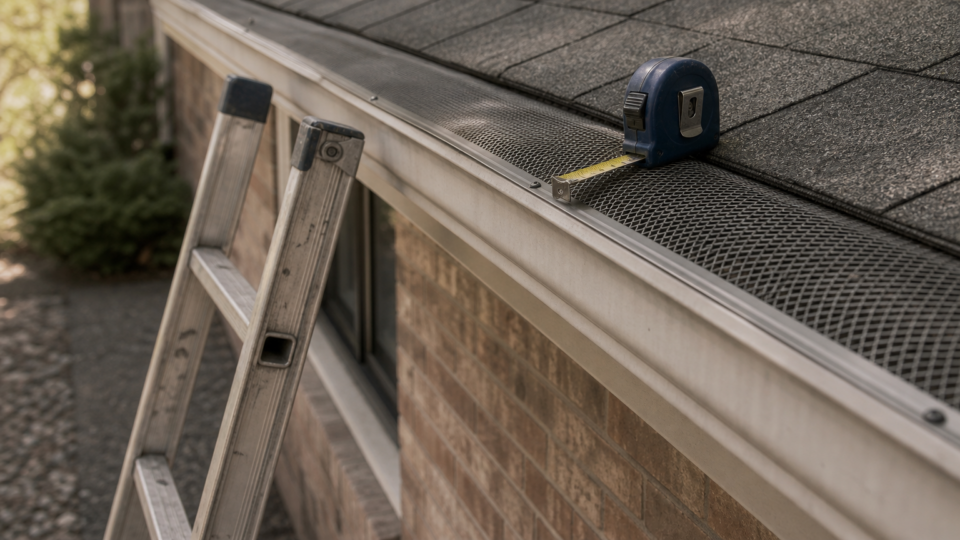
Short answer: You got a quote for gutter guards and now you’re wondering if the number makes sense. That’s smart. Prices for this stuff swing wildly depending on who you call, what material they push, and whether they quote by the job or by the foot. Gutter guards cost installed typically runs $7 to $30 per linear foot, which means a average single-story home can land anywhere from $1,000 to $4,500 once labor is included. That range isn’t a copout, it reflects real differences between foam inserts and micro-mesh systems, and between a two-man crew doing a quick screw-in job versus a full gutter replacement with guards built in. Ready for quotes? Compare local pros →
In this guide
Below, I’ll break down what drives that price, guard type by guard type, so you can figure out where your home and budget actually fall. You’ll see how material choice and linear footage change the math, what installers actually charge for labor versus materials, and where homeowners commonly get overcharged.
I spent years installing gutters before writing about them, and I know where the padding happens in these quotes. Use this as your baseline before you take a contractor’s number at face value.
Why gutter guard installation costs vary so much
Ask five contractors for a quote and you’ll get five different numbers, and it’s not because someone’s trying to rip you off. Gutter guard prices depend on a stack of variables that compound on top of each other, and most homeowners only think about one or two of them before calling around.
The guard type drives the biggest swing
Foam inserts and basic screen guards sit at the bottom of the price ladder, often $5 to $10 per linear foot installed, because the material is cheap and installation takes minutes per section. Micro-mesh systems sit at the top, frequently $15 to $30 per foot, because the mesh itself costs more to manufacture and the install usually involves fastening a hidden hanger system under the shingles rather than just clipping something over the existing gutter. Reverse-curve guards fall in between, but they need a skilled installer who understands water flow angles, which adds labor cost even when materials are moderate.
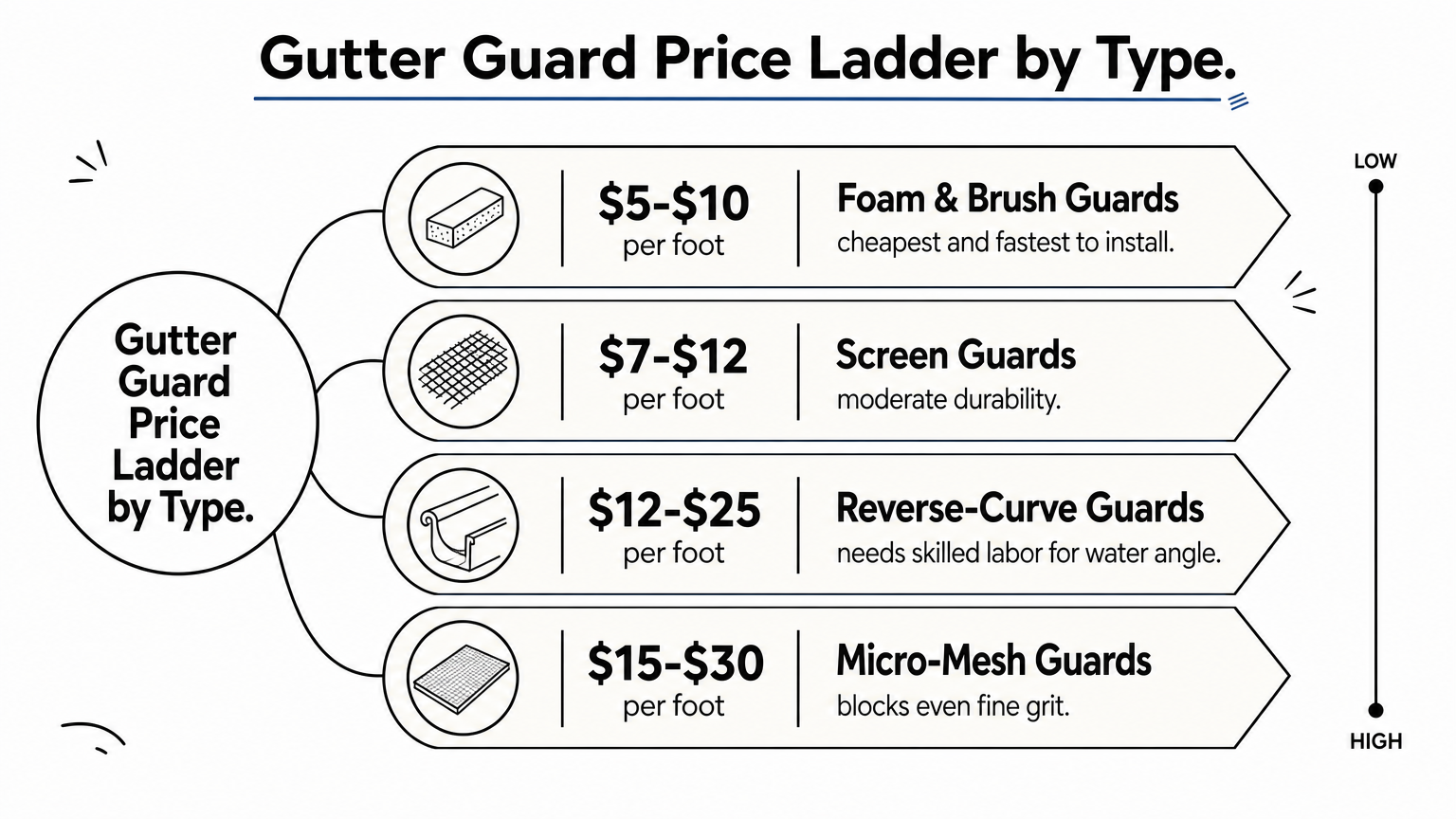
The guard type you pick swings your total cost more than any other single factor, sometimes by a factor of three or four.
Roof pitch, stories, and access change labor time
A single-story ranch with a low-pitch roof is the easiest job in this trade. A two-story colonial with a steep 8/12 pitch roof means the crew needs ladders, harnesses, and roof jacks, and that adds hours to a job that would otherwise take a morning. Contractors in most states also carry higher insurance premiums for steep or tall work, and that cost gets baked into your quote whether they mention it or not. If your home has dormers, multiple roof lines, or valleys that dump extra water into short gutter runs, expect a per-foot price on the higher end even if you’re using a mid-range guard.
Linear footage and home size set the baseline
Most quotes start with a simple linear footage measurement, and this is where the cost of gutter guards per foot actually gets multiplied into a real number. A typical single-story home runs 150 to 200 linear feet of gutter, while a larger two-story house can easily hit 250 to 300 feet. That’s why two homes with the same guard type can land on totally different final invoices.
| Home size | Typical linear feet | Estimated total (mid-range guard) |
|---|---|---|
| Small single-story | 100-150 ft | $1,000-$2,250 |
| Average single-story | 150-200 ft | $1,500-$3,000 |
| Two-story colonial | 200-250 ft | $2,400-$4,500 |
| Large two-story with dormers | 250-300+ ft | $3,000-$6,000+ |
Existing gutter condition adds hidden costs
Contractors can’t install guards on gutters that are already sagging, pulling away from the fascia, or rusted through. If your gutters need repair or replacement first, that cost gets tacked onto the guard installation, and a lot of homeowners don’t find this out until the crew is already on the roof. It’s worth having your gutters inspected and knowing what gutter repair should cost before you shop for guard quotes, so you’re not surprised by an add-on repair line item halfway through the job.
Regional labor rates and debris load matter too
Labor rates in the Northeast and West Coast run higher than in the Midwest or South, and that alone can shift a quote by several dollars per foot for identical work. Homes surrounded by heavy pine or oak cover also tend to need higher-capacity guard systems, since fine debris and pine needles clog basic screens fast, pushing homeowners toward pricier micro-mesh even when they’d rather save money. All of these variables stack together, which is why the same guard brand can cost noticeably different amounts from one zip code, and one roofline, to the next.
What should this cost you?
Answer four questions and get a fair price range for your home.
How to estimate your gutter guard installation cost
Getting a ballpark number before you call a contractor takes about five minutes and a tape measure. You don’t need a professional estimate to know roughly what you should expect to pay, and having your own number ready keeps you from nodding along to whatever a salesperson quotes you.
Measure your actual linear footage
Walk your home’s perimeter and count the total length of gutter you have, not the footprint of your house. Most single-story homes have 150 to 200 feet, but additions, garages, and porches all add footage that homeowners forget to count. Multiply that number by your target price per foot and you’ve got a working range. This is the single most useful step for figuring out the cost for gutter guards before anyone shows up with a ladder.
Use a simple calculation checklist
Run through these steps in order:
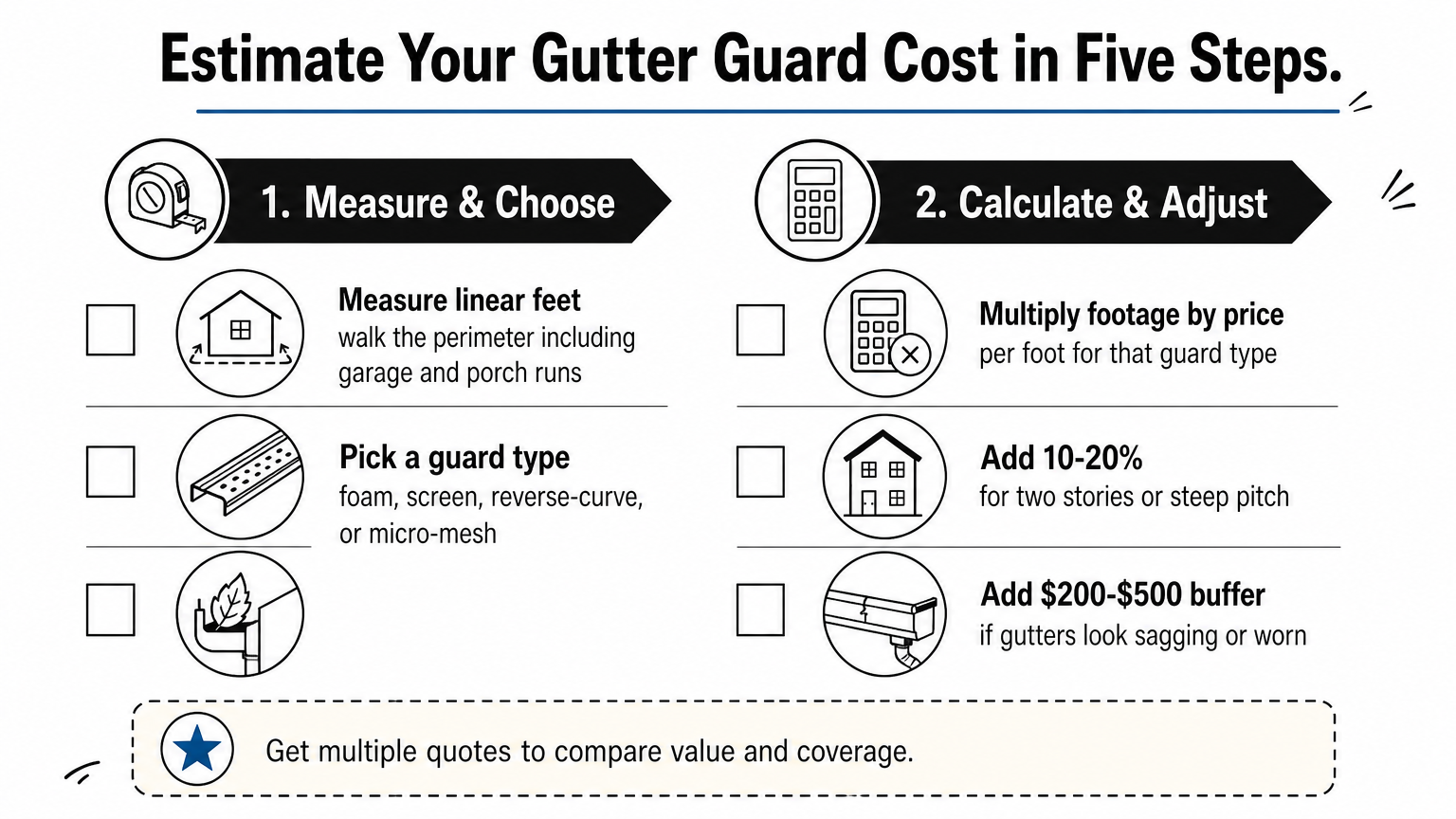
- Measure total linear feet of gutter, including garage and porch runs
- Pick a guard type (foam, screen, reverse-curve, or micro-mesh)
- Multiply footage by the per-foot price range for that guard type
- Add 10-20% if your home is two stories or has steep roof pitch
- Add a repair buffer of $200-$500 if your gutters look sagging or worn
A five-minute measurement gives you more negotiating power than any sales pitch a contractor can throw at you.
Get quotes that break down labor and materials separately
Any contractor worth hiring will show you a line for materials and a separate line for labor. If a quote just gives you one lump number, ask them to split it. This tells you whether you’re paying for a premium guard or paying for an inflated labor rate, and it makes comparing bids from different companies actually possible instead of guessing which one padded what.
Try an online cost estimator for a faster baseline
If measuring your roofline sounds like a hassle, plug your home’s basic details into our gutter guard cost estimator, which factors in linear feet, stories, guard type, material, debris level, and your region to spit out a realistic price range in seconds. It won’t replace an in-person quote, but it gives you a number to hold contractors accountable to before they walk your yard. Homeowners who show up to a consultation already knowing their expected range rarely get quoted the inflated "first offer" price that catches inexperienced buyers off guard.
Gutter guard prices by type and material
Every guard type carries its own price tag, and the material it’s built from shifts that number even further. Homeowners often get quoted a single price without realizing they’re comparing a $6-per-foot foam insert to a $25-per-foot micro-mesh system, which explains why two neighbors can pay wildly different amounts for what sounds like the same project. Knowing the going rate for each type before you call around keeps you from mistaking a premium product for a ripoff, or a bargain guard for a genuine deal, and our full breakdown of gutter guard prices by type and home size lays those numbers out side by side.
Foam and brush guards sit at the entry level
Foam inserts and brush-style guards are the cheapest option on the market, and they install fast because they just sit inside the existing gutter channel. They work fine for homes with light debris, but they trap fine grit and pine needles over time, which means more frequent cleaning than the salesperson usually mentions. Expect to pay on the low end of the range, and expect to replace them sooner than mesh or reverse-curve systems.
Screen and micro-mesh guards cover the middle and top tiers
Aluminum screen guards cost more than foam but less than micro-mesh, and they strike a reasonable balance for homes without heavy tree cover. Micro-mesh sits at the top of gutter guard prices because the fine weave blocks nearly everything, including shingle grit, and the install often involves a hidden hanger system that takes longer to fasten. Reverse-curve guards land in a similar price band to micro-mesh, driven mostly by the skilled labor needed to get the water-shedding angle right.
Pick the guard that matches your debris load, not the one with the flashiest marketing, and you’ll spend less over the life of your gutters.
Material and guard type comparison
| Guard type | Material | Typical installed cost per foot |
|---|---|---|
| Foam insert | Polyurethane foam | $5-$10 |
| Brush guard | Nylon/polypropylene | $5-$9 |
| Screen guard | Aluminum or vinyl | $7-$12 |
| Reverse-curve | Aluminum or steel | $12-$25 |
| Micro-mesh | Stainless steel mesh, aluminum frame | $15-$30 |
The frame material affects longevity, not just price
Aluminum frames dominate the market because they resist rust and stay light enough to install without extra bracing. Steel frames cost more but handle heavy snow loads better, which matters if you’re in a region with real winters. Copper-framed guards exist too, mostly paired with copper gutters on higher-end homes, and they carry a price premium that has more to do with matching aesthetics than functional performance.
DIY vs. professional installation costs
Most homeowners weigh DIY installation against hiring a pro once they see how big the labor line is on a quote. Materials alone for a basic foam or screen guard run $2 to $8 per foot at a hardware store or online, so a 200-foot home might cost $400 to $1,600 in parts if you install it yourself. That’s a real gap compared to the average cost to install gutter guards professionally, which folds labor, warranty, and liability into the price.
What DIY actually costs
Buying the guards is the easy part. You’ll also need a sturdy ladder, roof stabilizers if your home has a steep pitch, tin snips or a hacksaw for cutting sections to length, and screws or clips depending on the system. Budget for these extras even if you already own a ladder:
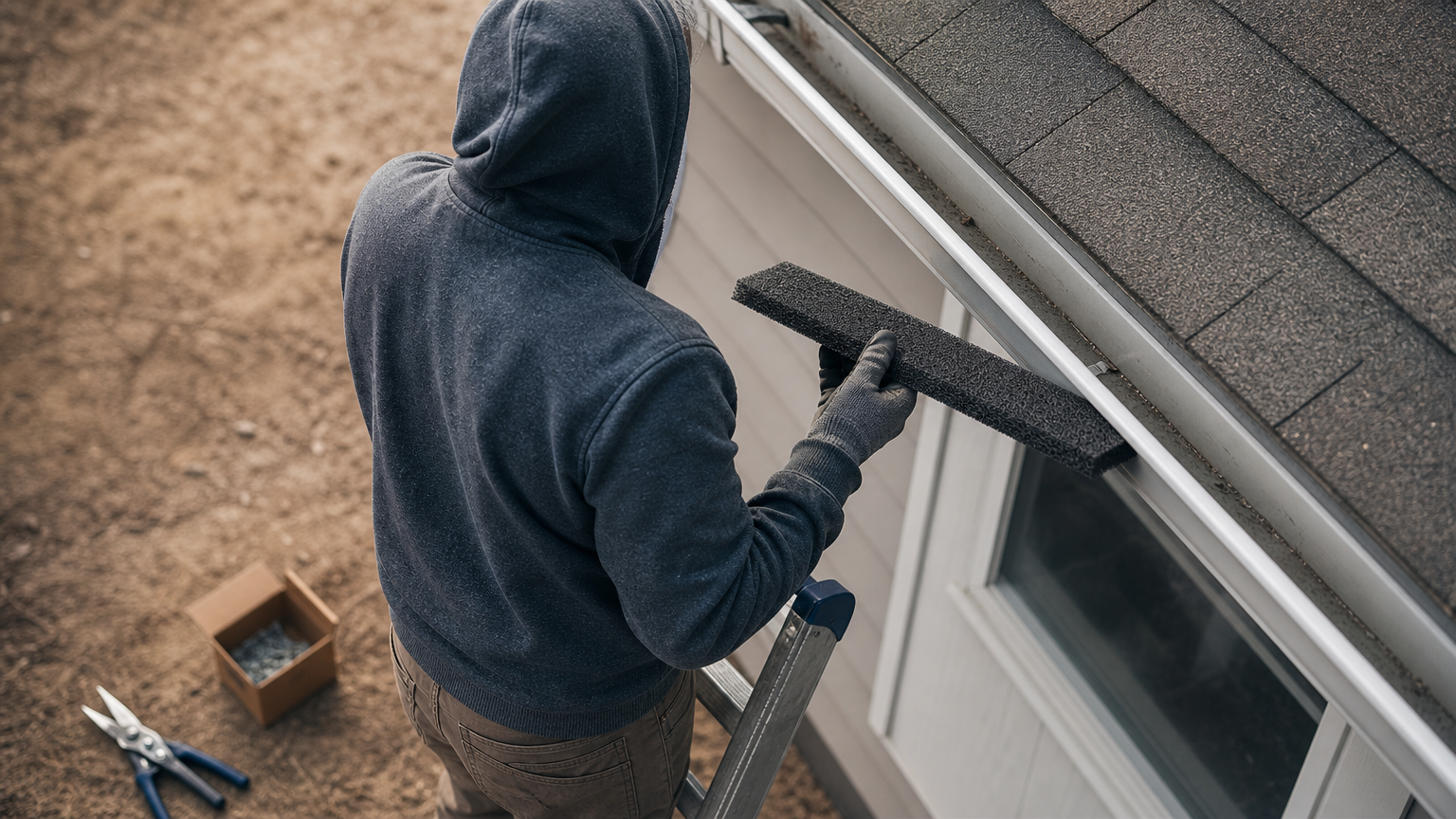
- Guard material: $2-$8 per foot (foam, brush, or basic screen)
- Fasteners and clips: $20-$50 total
- Ladder stabilizer or roof jacks: $40-$120 if you don’t already own one
- Half a day to a full weekend of labor, depending on home size
Micro-mesh and reverse-curve systems are much harder to install yourself, since they often require fastening under the shingle line, and a bad seal there can cause roof leaks that cost more than the guards did.
What you pay for with a professional
Contractors charge for more than just screwing a guard onto a bracket. You’re paying for measured, code-compliant installation, a labor warranty, and someone who carries liability insurance if a ladder slips or a shingle gets damaged.
| Approach | Typical cost (200 ft home) | What’s included |
|---|---|---|
| DIY, foam or screen | $400-$1,600 | Materials only, your labor |
| Professional, foam or screen | $1,500-$2,400 | Materials, labor, basic warranty |
| DIY, micro-mesh (not recommended) | $3,000-$6,000 | Materials only, high risk of poor seal |
| Professional, micro-mesh | $3,000-$6,000+ | Materials, skilled labor, workmanship warranty |
DIY saves real money on basic guards, but it rarely saves anything on micro-mesh once you account for redo costs.
When DIY makes sense and when it doesn’t
Single-story homes with simple rooflines and light debris are reasonable DIY candidates, especially with foam or screen guards that just clip into place. Steep roofs, multiple stories, or micro-mesh systems tied into the shingle line are jobs where hiring out protects both your roof and your warranty. If you’re unsure which category you fall into, get a professional quote anyway, since comparing it against your own materials estimate tells you exactly what you’d be paying for labor.
Are gutter guards worth the investment?
Most homeowners ask this question after they’ve already cleaned their gutters twice in one fall and scraped their knuckles on a ladder rung. The honest answer depends on your tree cover, your tolerance for ladder work, and how long you plan to stay in the house. Gutter guards don’t eliminate maintenance entirely, but they stretch the time between cleanings from twice a year to once every year or two, and for a lot of homeowners that trade is worth the upfront cost.
Weigh the cost against what you’re currently paying to clean gutters
Consider what you already spend without guards. A professional gutter cleaning runs $150 to $300 per visit, and most homes need two visits a year, spring and fall. Over five years, that’s $1,500 to $3,000 in cleaning costs alone, which lands right in the same range as a mid-tier guard installation. Once you frame it that way, guards start to look less like an add-on expense and more like a prepaid maintenance plan.
If you’re already paying a crew to clean your gutters twice a year, guards often pay for themselves within five years.
Factor in the damage guards prevent, not just the cleaning they save
Clogged gutters don’t just look bad, they cause real damage. Overflow rots fascia boards, soaks foundation soil next to your basement, and in cold climates it feeds ice dams that can tear gutters clean off the house. Repairing fascia damage alone can run $500 to $1,500 per section, and that’s before you factor in basement waterproofing if water’s been pooling at the foundation for a season or two. Guards won’t stop every problem, but they remove the number one cause of overflow, which is debris buildup blocking the channel.
When guards aren’t worth it
A few situations make guards a weaker bet:
- You’re planning to sell within a year or two and won’t recoup the cost
- Your gutters already need full replacement, which changes the math entirely
- You have minimal tree cover and already clean gutters once a year in ten minutes
- You’re on a tight budget and simple, consistent DIY cleaning handles the job fine
The verdict for most homeowners
For anyone staying put for five years or more, dealing with real tree cover, or physically unable to get on a ladder safely, gutter guards are worth the money. The cost of gutter guards installed stops feeling steep once you compare it to five years of cleaning bills plus the risk of one bad overflow season. Homeowners in light-debris areas with easy-access single-story homes have a fair case for skipping guards and sticking with occasional DIY cleaning instead.
Getting the right price for your home
You now know more about gutter guards cost installed than most people who call a contractor for a quote. The range is wide because your home is specific: your roofline, your tree cover, your gutter condition, and your region all push the number up or down. That’s not a sales tactic, it’s just how this trade actually prices out.
Use the numbers here as your floor and ceiling, not a guess. Measure your linear footage, decide which guard type fits your debris load, and walk into any consultation already knowing what a fair number looks like. A contractor who respects that homework will give you a straight answer instead of a scare tactic.
When you’re ready to compare real bids against your own baseline, get a free gutter guard installation estimate and see where you land before anyone shows up with a ladder.
What should this cost you?
Answer four questions and get a fair price range for your home.