
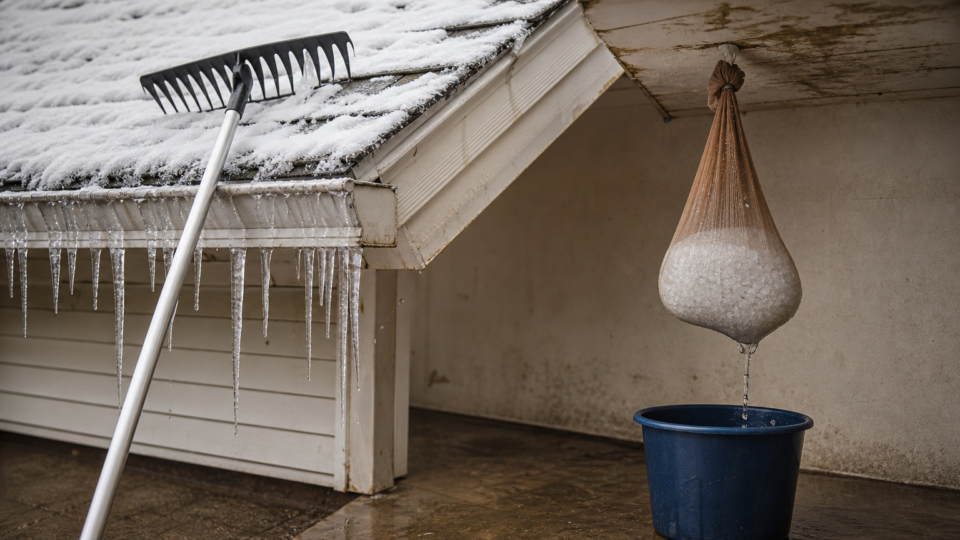
Short answer: The fastest way to stop frozen gutters leaking into your house is to work in a set order. Contain the water inside, clear snow from the lowest few feet of roof, melt a narrow drainage channel through the ice, then seal the attic air leaks that built the ice in the first place. Chipping at the gutters is what most people try first, and it helps least. Ready for quotes? Compare local pros →
In this guide
The trouble is that the leak shows up at the worst time. A brown ceiling stain, water running down a window frame, or a drip from a light fixture appears during a thaw, and the ice outside looks like a gutter problem. It usually isn’t. Ice has formed along the roof edge, and meltwater has nowhere to go except under your shingles.
This guide gives you four steps, written from a former installer’s point of view. You will learn why the water gets in, what to do in the first hour, which melting methods are safe, and how to keep it from happening next winter.
Why frozen gutters leak into your house
How an ice dam pushes water indoors
Frozen gutters causing leaking into your house is almost always an ice dam problem, not a gutter problem. Heat escapes from your living space into the attic, warms the roof deck, and melts the bottom layer of snow. That water runs down the slope until it reaches the cold overhang and refreezes. The ice grows into a ridge, and new meltwater pools behind it, backs up under the shingles, and drips into soffits, walls, and ceilings.
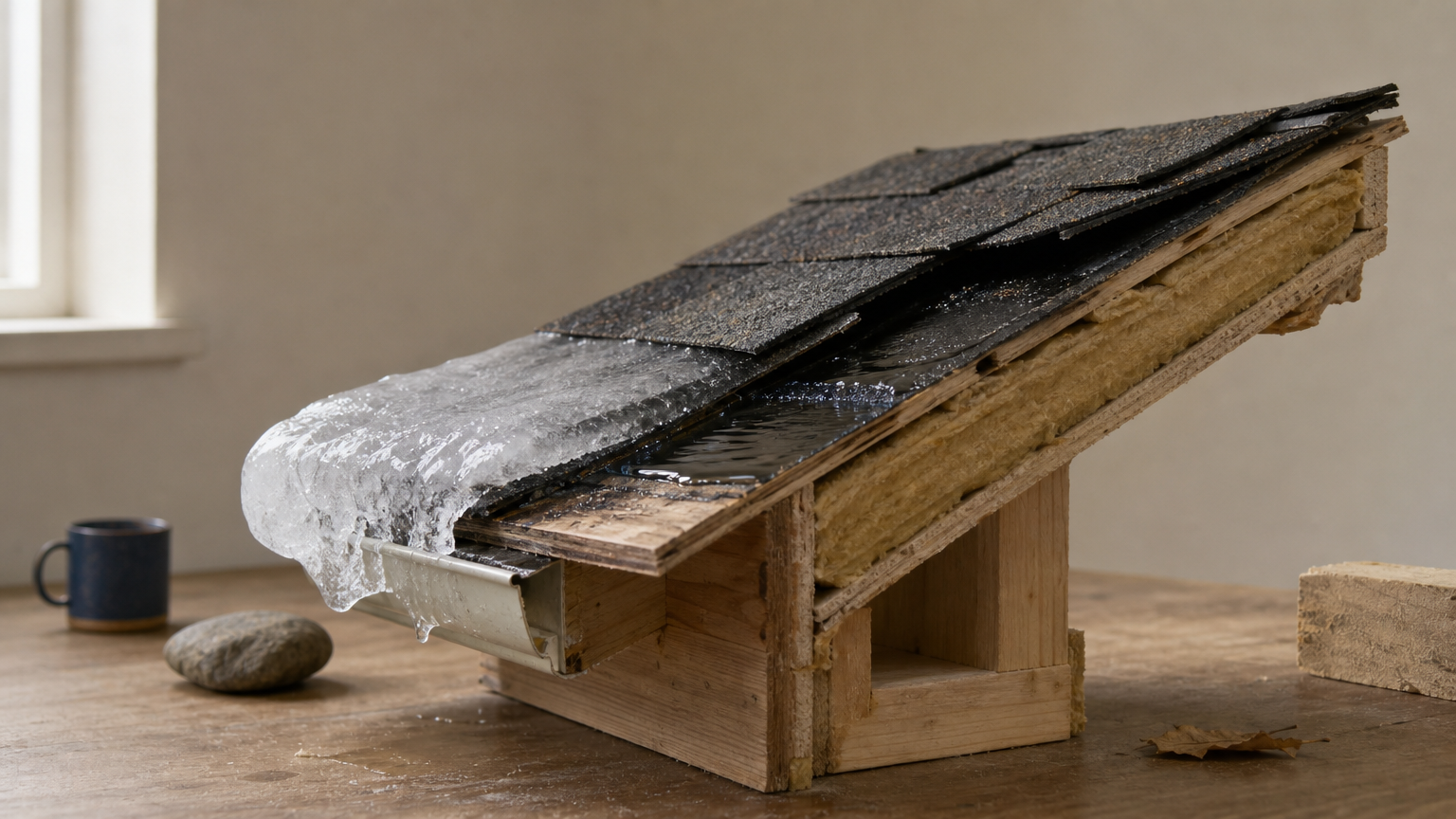
Gutters play a supporting role. They extend the overhang, which gives ice more cold surface to grab, and they hold the ice once it forms. Clearing a gutter without dealing with the dam only moves the problem a few inches up the roof.
Gutters hold the ice, but warm air leaking from your house is what builds the dam.
What has to line up
Ice dams need a specific combination of conditions:
- Several inches of snow on the roof, which insulates it and traps heat
- Heat leaking into the attic through gaps, recessed lights, and thin insulation
- Outdoor temperatures below freezing while the roof deck stays warm
- A cold overhang where meltwater refreezes
That is why a house can stay dry for years and then leak after one heavy snow followed by a hard cold snap.
What should this cost you?
Answer four questions and get a fair price range for your home.
Step 1. Stop the damage inside
Contain the water first
Start indoors, because the ice outside can wait an hour and your ceiling can’t. Work through this list:
- Move furniture and rugs away from the leak and set out buckets.
- If water is dripping through a light fixture or ceiling fan, switch off that circuit at the breaker and stay clear.
- If the ceiling is bulging with water, poke a small hole in the lowest point of the bulge with a screwdriver, with a bucket directly below.
A controlled hole drains the water. Letting the bulge keep filling can bring down a whole section of drywall.
Document and dry the area
Photos and video of every stain and the ice outside come next, before anything gets cleaned up. Call your homeowners insurer soon, because many policies cover sudden water damage from ice dams, though coverage varies. Then run fans and dehumidifiers. Mold can start growing on damp materials within 24 to 48 hours, so even a small leak from frozen gutters leaking into your house deserves fast drying.
Contain and document the water first, then deal with the ice.
Step 2. Clear snow from the roof edge
Rake from the ground
Removing snow cuts off the supply of meltwater, so it is the quickest way to slow the leak. Use a roof rake with an extendable handle and pull snow down from the first 3 to 4 feet of roof above the eave. Work from the ground. Never put a ladder on icy ground, and leave about an inch of snow on the shingles so the rake doesn’t scrape off granules.
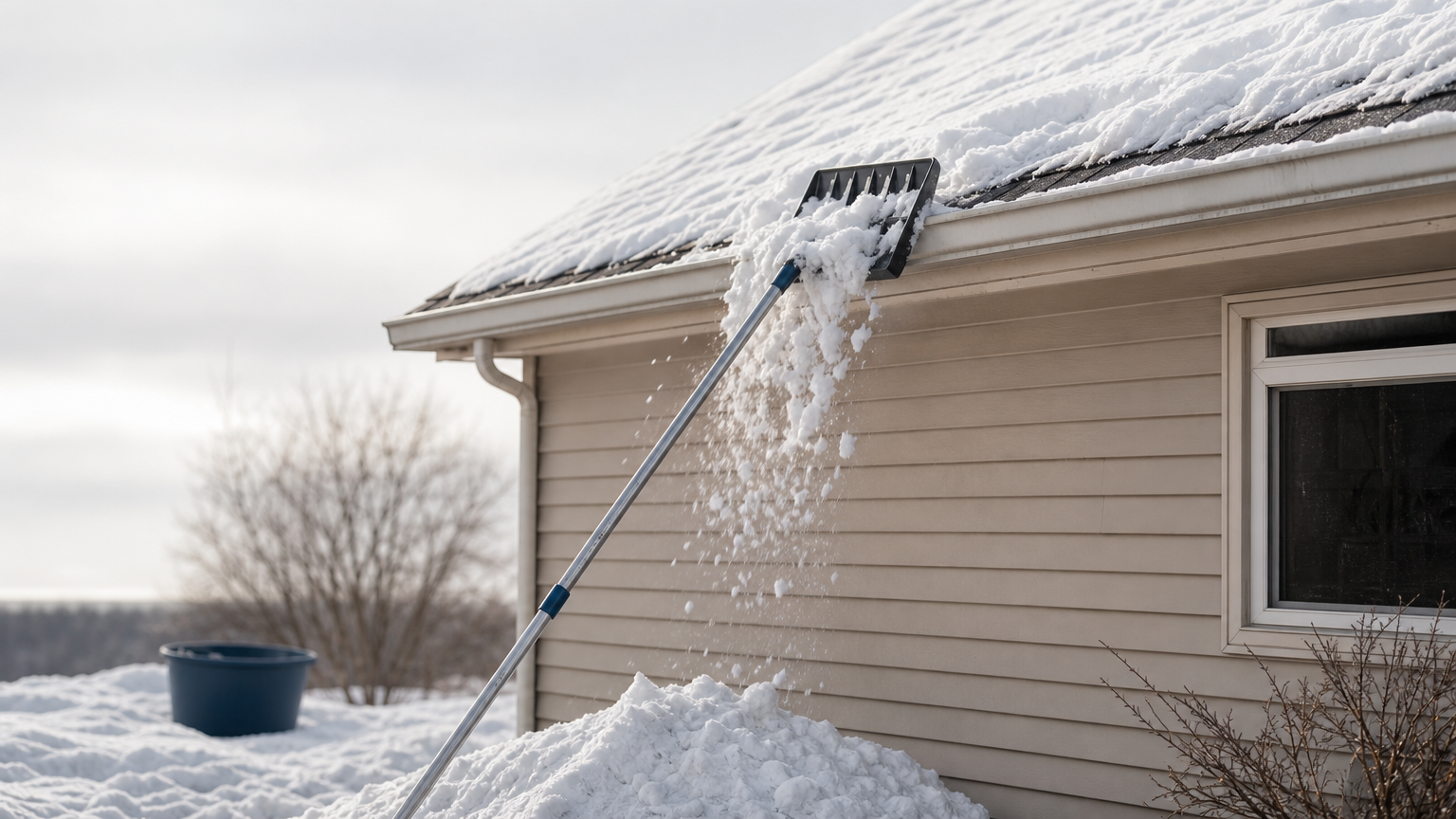
Pull the snow down in short, light passes and stand clear of what falls. Don’t rake the ice itself, since ice frozen to shingles tears them when it breaks loose.
Know when to hire out
Some roofs are not a DIY job. A steep pitch, a second story or higher, or a roof with visible sagging calls for a professional snow remover. Your safety matters more than a dry ceiling, and a fall costs far more than a service call. If frozen gutters leaking into your house have already soaked the ceiling, skip ahead and book steam removal.
Rake only what you can reach from solid ground, and hire out the rest.
Step 3. Melt the ice safely
Cut a drainage channel
You don’t need to remove the whole dam. You need to give meltwater a path off the roof. Fill the leg of a nylon stocking with calcium chloride ice melt, lay it vertically across the dam so it runs from the gutter up onto the ice, and let it melt a channel over several hours. Use calcium chloride, not rock salt, which corrodes metal and harms plants below. Use only a little, since it can still discolor shingles and metal.
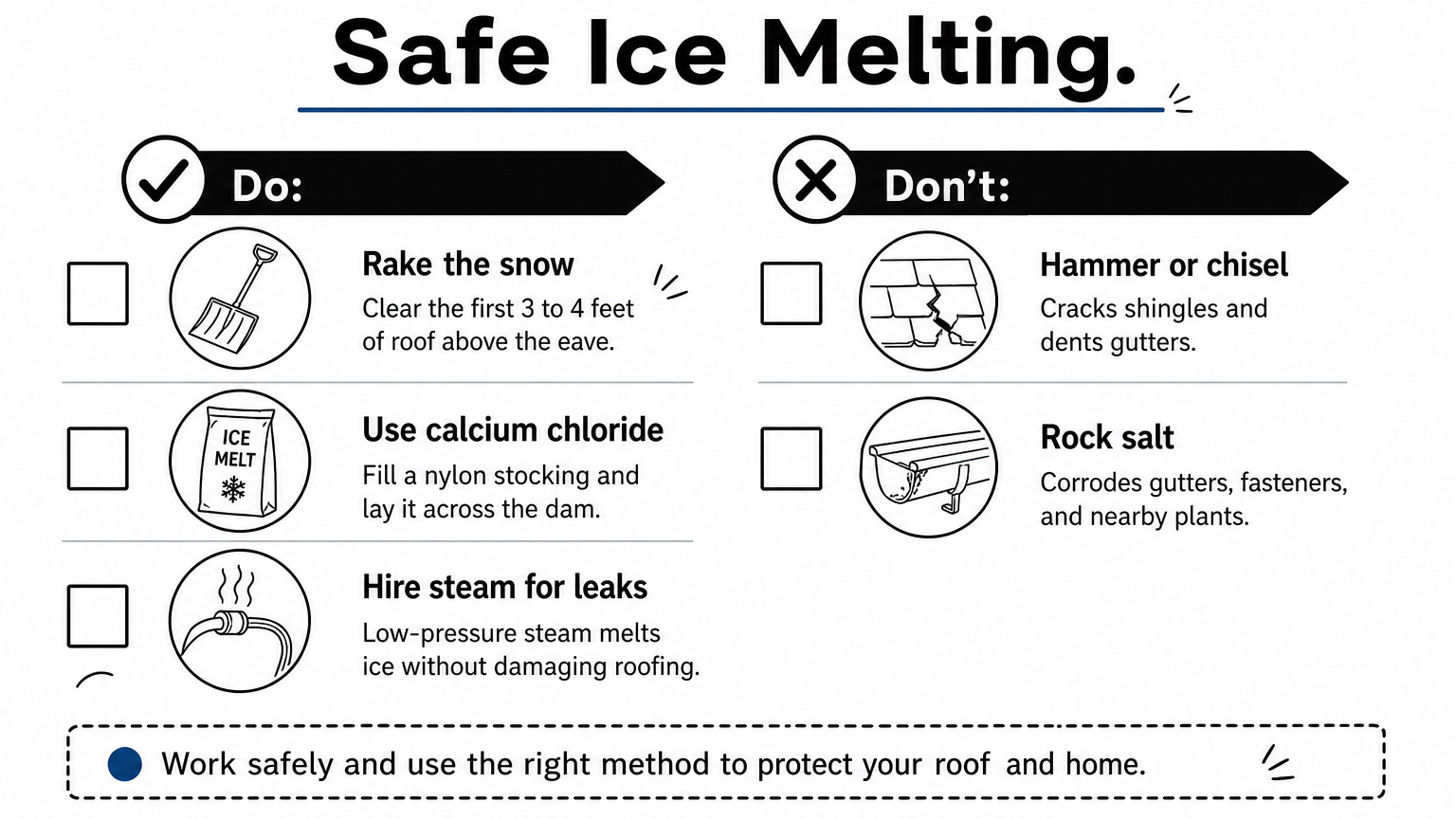
For an active leak, a professional using a low-pressure steamer is the best option. Steam melts ice without hammering your roof. Here is how common methods compare:
| Method | Verdict | Why |
|---|---|---|
| Roof rake on the snow | Do it | Removes the meltwater supply |
| Calcium chloride in a stocking | Use sparingly | Opens a drainage channel |
| Professional steam | Best for active leaks | Melts ice without damaging roofing |
| Hammer, chisel, or ice pick | Don’t | Cracks shingles and dents gutters |
| Rock salt | Don’t | Corrodes gutters and fasteners |
| Pouring hot water | Don’t | Refreezes and can crack cold materials |
Thaw a frozen downspout
Once the channel is open, check the downspout, because a plugged one sends water straight back up. For an above-ground downspout, wait for a milder day or flush it from the top with warm, not boiling, water. For an underground downspout frozen in its buried line, you can’t reach the ice. Disconnect the elbow if it comes apart easily, let the water discharge on the ground away from the foundation, and flush the line after the thaw.
Open a channel for the water to leave. Don’t try to remove all the ice.
Step 4. Fix the cause before next winter
Seal air leaks, then add insulation
The permanent fix for frozen gutters leaking into your house is stopping heat from reaching the roof deck. Seal first, insulate second. Caulk or foam the gaps around the attic hatch, recessed lights, plumbing stacks, wiring holes, and chimney chases. Then bring attic insulation up to about R-50 in cold climates, with extra attention near the eaves. Insulating over open leaks does little, because warm air still gets through.
A home energy assessment with an infrared camera shows you exactly where the heat escapes. Many utilities offer one, and an HVAC or insulation contractor can do it too.
Skip the fixes that don’t work
Some popular remedies treat only the symptom. Heat cables and gutter heaters can hold a channel open, but they add electricity cost and leave the leaking heat in place. Extra roof vents rarely cure a dam in a leaky attic. Even winter-rated gutter guards won’t prevent one either.
Roofers rarely cause ice dams, but one detail is worth asking about. When you reroof in a snowy region, request self-adhering ice and water membrane along the eaves. It is a backup layer that helps if a dam does form, not a cure.
Seal the air leaks, add insulation, and the ice dam has nothing to build on.
Next steps once the ice is gone
Frozen gutters leaking into your house come down to one chain of events. Warm air melts the snow, the water refreezes at the cold eave, and the dam pushes water under your shingles. Stop the water indoors, rake the edge, open a channel safely, and seal the attic. Do that, and the ice has nothing left to feed on.
After the thaw, check whether the weight of the ice pulled your gutters away from the fascia or bent the hangers. If it did, get a free estimate for the gutter repair and compare local contractor quotes before the next freeze.
What should this cost you?
Answer four questions and get a fair price range for your home.